In the line of fire: Birdlife in Australia

Life in the air


Your support will assist us to continue our research and content development, the greater our resources, the more we can do.
The more we have an accurate understanding of what is happening to nature, the more we can all do to protect what remains of our living planet.
This is also an opportunity for philanthropists to be part of an ongoing project that tells independent stories about the natural world, stories that will help us to better understand what is happening to species and places on our precious planet Earth.
Note: Creative Cowboy Films does NOT have tax deductible charity status.
Becoming a member of Creative cowboy films The Nature Knowledge Channel is a very real way you can help the precious natural world and support the work we do in creating knowledge about what is happening to it.

The Nature Knowledge Channel is a very real way you can help the precious natural world and support the work we do in creating knowledge about the natural world.
Annual membership of the Creative cowboy films - Nature Knowledge Channel gives you full access to content, stories and films, available on this website. Becoming a member of the Creative cowboy films - Nature Knowledge Channel is a very real way you can help the natural world and support our work in creating a greater understanding about what is happening to it.
A point of difference
Creative cowboy films is independent, is not funded by governments or industry, and is not influenced by their associated interest groups. For reasons of independent research and content development, Creative cowboy films does NOT have tax deductible charity status.
Life in the air
VICTORIA UPDATE - As of 11 February this is what the Victorian Government has announced to date. We should be in no doubt that the announcement, given the terrible environmental circumstances in Victoria, is deeply shocking and irresponsible. A situation is being created that will see the public react and those that care about birdlife will be placed at risk yet again, as we see violence erupt on Ramsar sites and other Victorian wetlands as members of the public try to rescue wounded birds.
Duck shooting season open: 8.00am on Wednesday, 18 March 2026. Duck shooting season closes: 30 minutes after sunset on Monday, 8 June 2026. Daily bag limit has now been announced and is 9 ducks per day per shooter, shocking given the environmental circumstances.
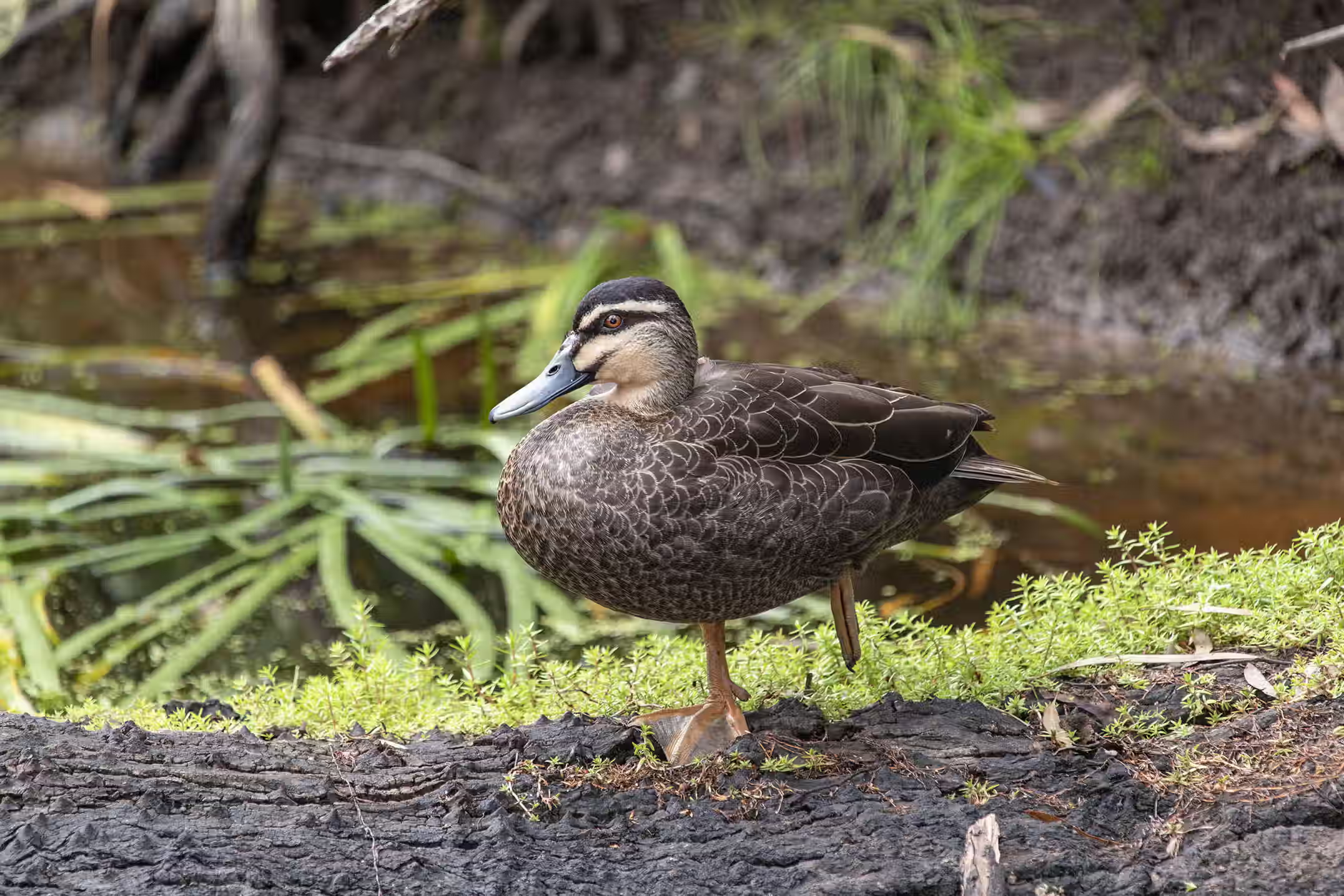
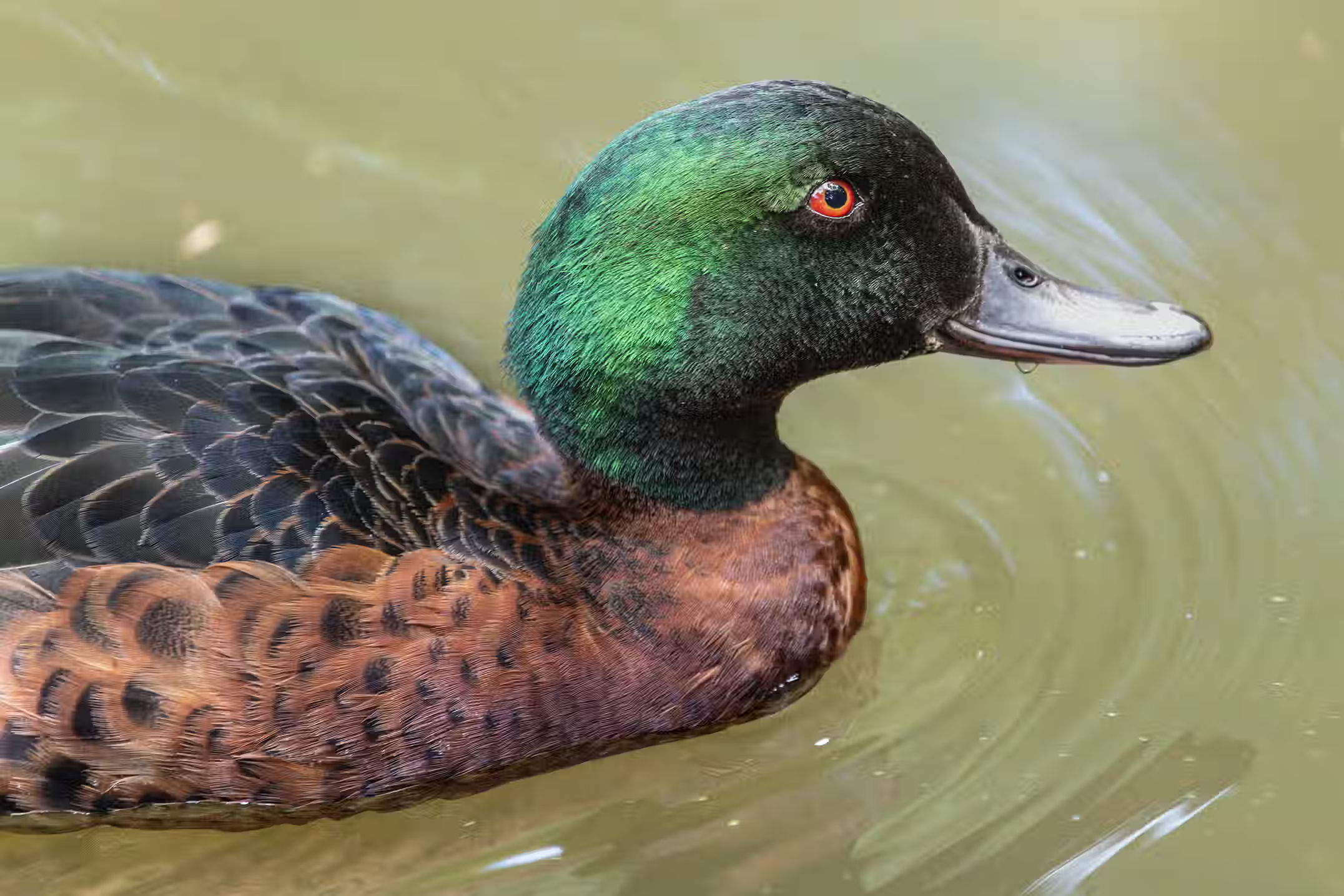
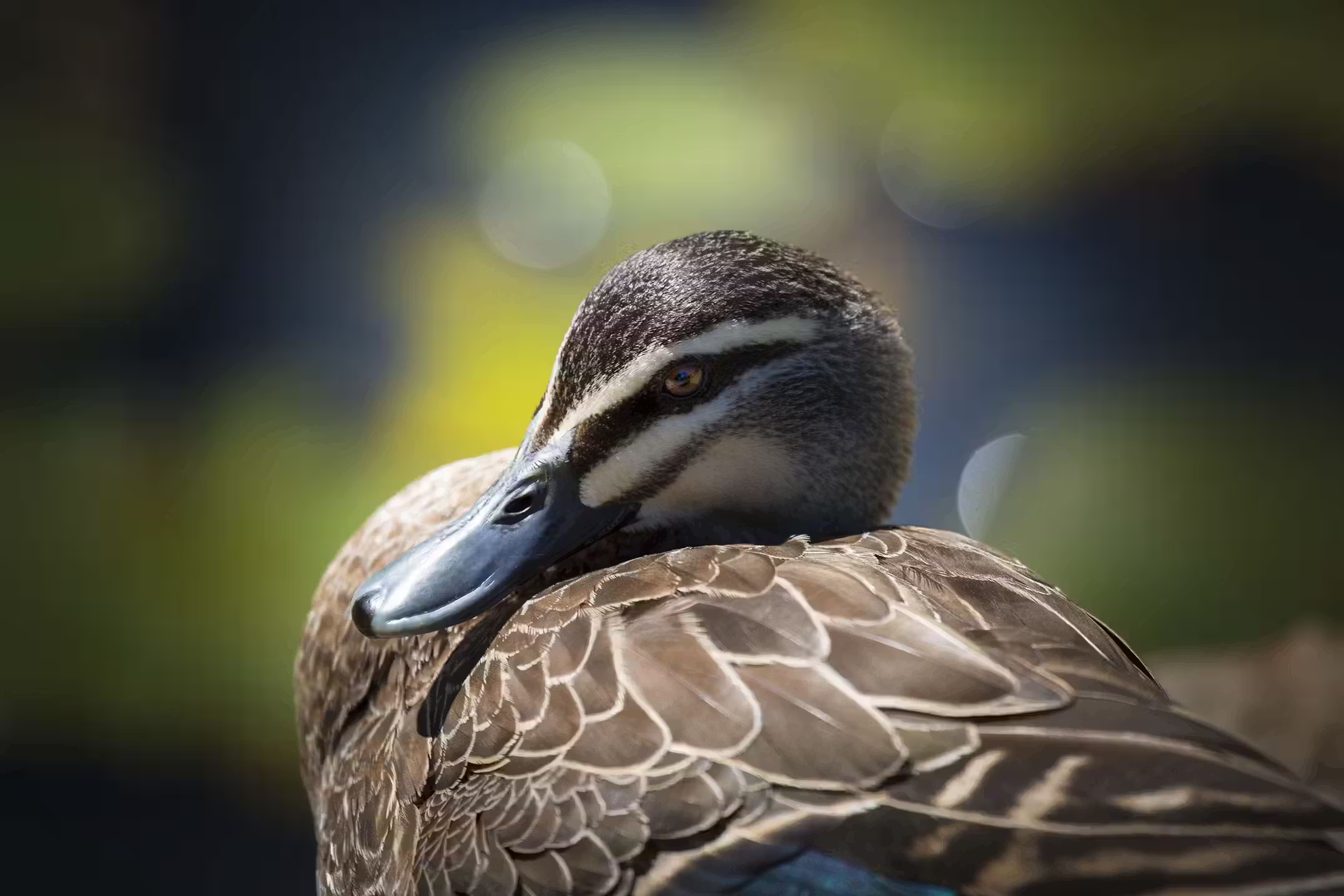
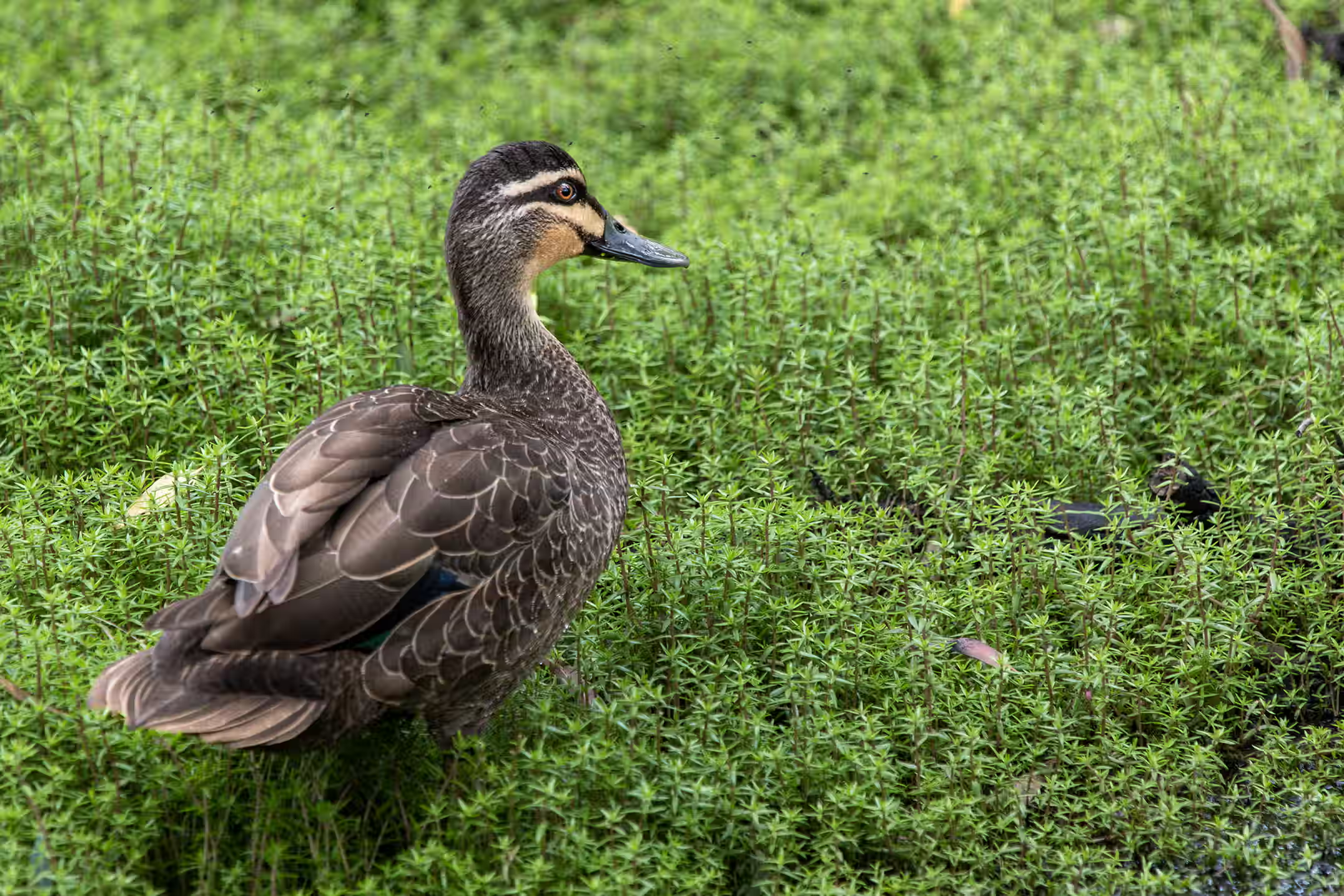
Seven duck species are on the kill list in 2026, these are the Pacific Black Duck, Mountain Duck, Chestnut Teal, Grey Teal, Pink-eared Duck, Wood Duck and Hardhead.
The Blue-winged Shoveler cannot be hunted and despite efforts to the contrary the species was listed as threatened under the Flora and Fauna Guarantee Act 1988 in 2021.
The Hardhead Aythya australis was removed from Victoria’s threatened species list under the Flora and Fauna Guarantee Act 1988 in June 2024 after requests by shooters who claimed the species had not reached the criteria for listing.
What did 2024 look like? The Blue-winged Shoveler and Hardhead were not to be hunted and the bag limit was 6 ducks per day per shooters – so in 2026, all gloves are off.
UPDATED 22 February 2026
As climate change induced fires, floods, cyclones, droughts and extreme heat rage across the Australian Continent, in just 7 weeks from the time of writing, the native duck and quail season will commence and the slaughter will begin again.
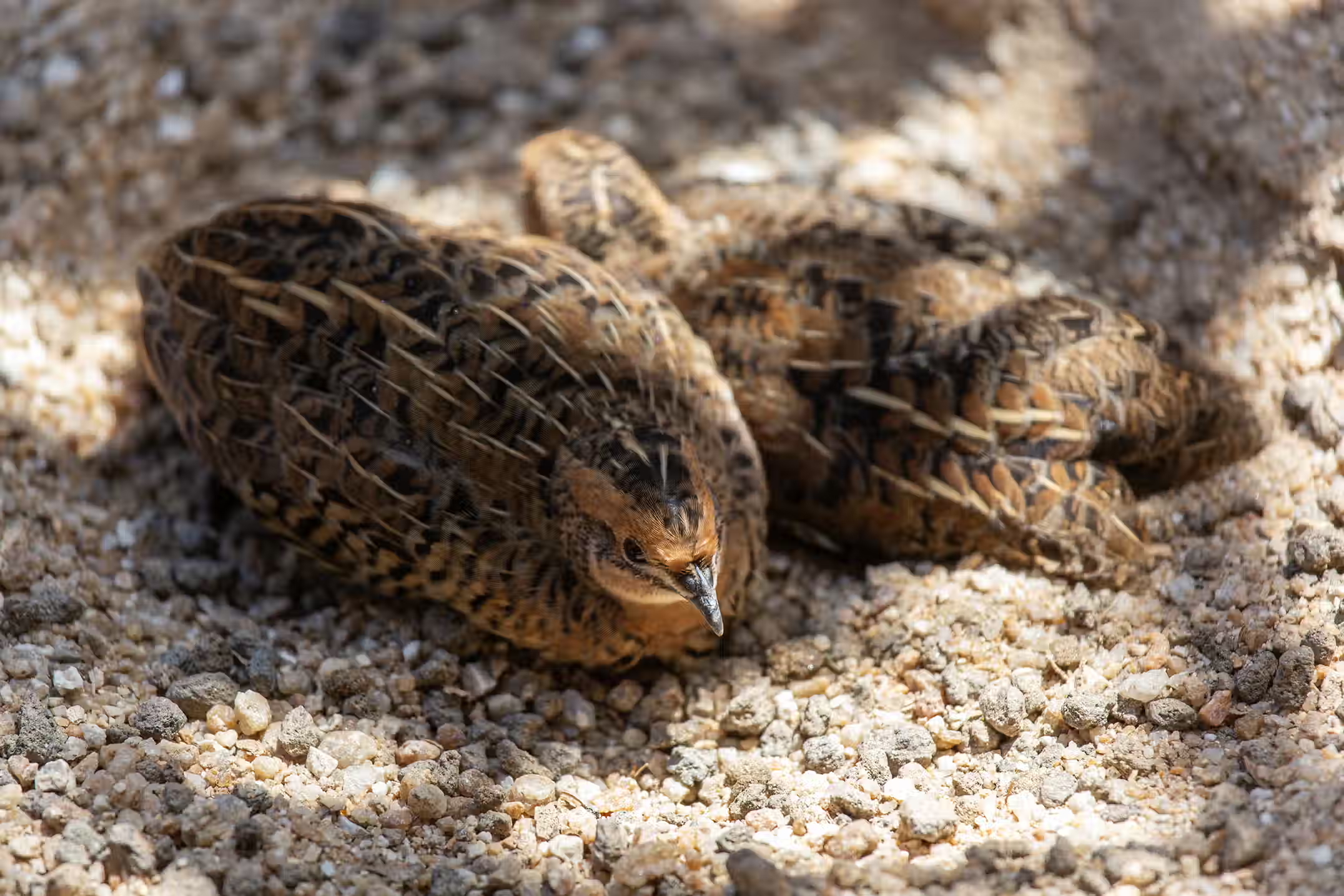
As state governments pretend that watt they are doing is sustainable, they are clearly not, bird populations are in freefall, with the organisation Regional Victorians opposed to duck shooting describing the outcome of the latest EAAWS waterbird survey thus:
“Despite significant flood events in 2025, the abundance of most “game” Duck species remains well below long-term averages. Five species continue to show significant long-term decline. Of particular concern, several species, Black Duck, Mountain Duck and Australasian Shoveler, recorded significant declines in the number of wetland sites they occupied, suggesting contractions in their geographic range. Breeding activity was limited almost entirely to just five non-duck species”.
Our own travels confirm that we see very few ducks amid what remains of waterbird populations. The constant killing of birdlife, not only because of ‘recreation’ but also as a result of state governments issuing ‘harms’ permits to kill Australian birdlife at scale, combined with the continuing series of catastrophic climate events, mean that only one result is possible. That is of course, the ongoing decline of birdlife in Australia.
Public (including Ramsar Sites) and private wetlands in Victoria, South Australia, Tasmania and the Northern Territory; and
Private land (particularly rice paddies) In New South Wales.
Victoria, Tasmania and South Australia.
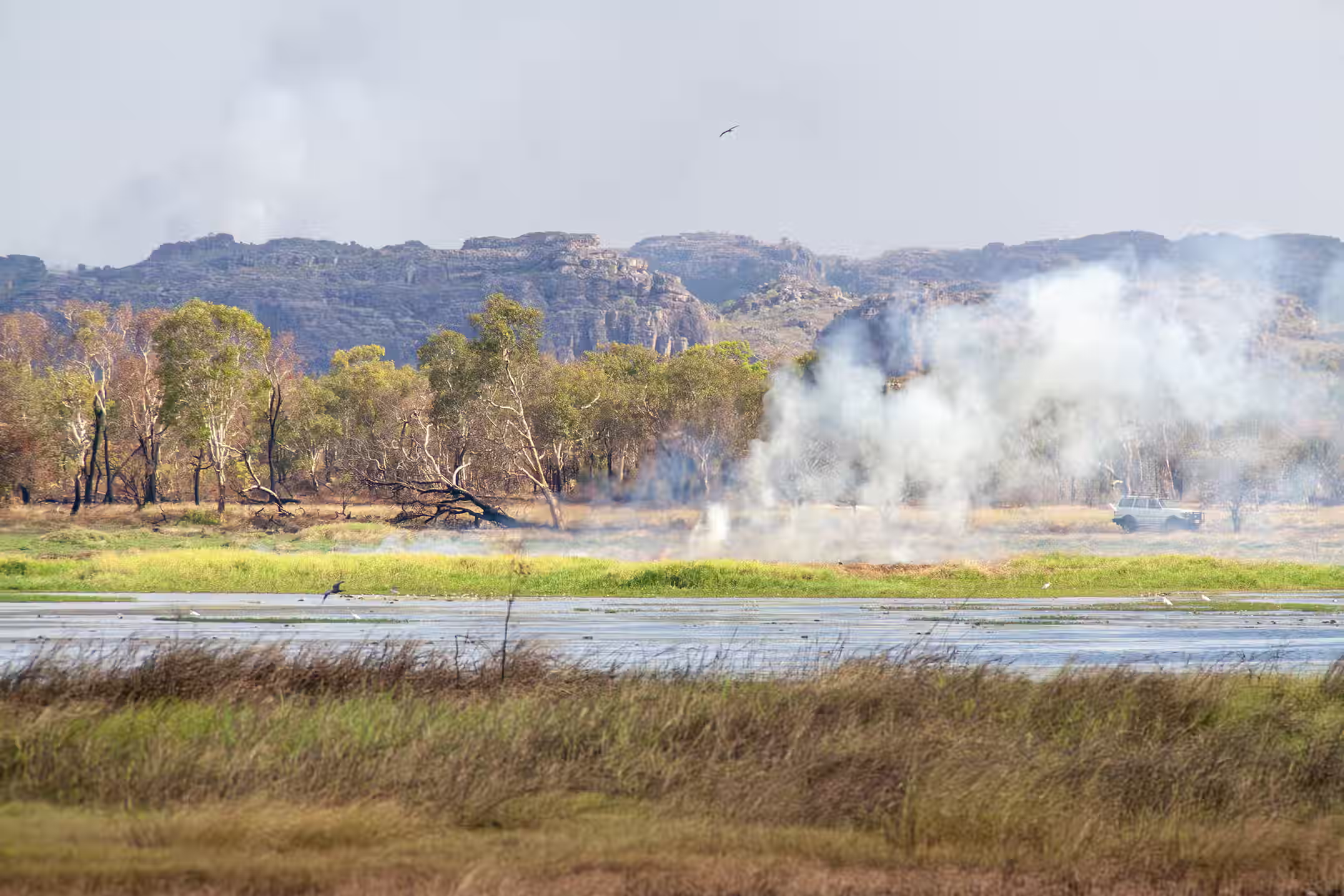
Shockingly the South Australian Government have announced their 2026 season for ducks and quail despite all that has happened, including the catastrophic Algal bloom affecting the Southern Fleurieu Peninsula, Coorong North Lagoon, Yorke Peninsula, Kangaroo Island, Spencer Gulf and Gulf St Vincent causing significant damage to the Coorong. As I write this temperatures in South Australia remain at catastrophic levels with South Australia’s Country Fire Authority issuing the following warning on 23 January 2026:
“Weather conditions are leading to Catastrophic Fire Danger Ratings for the Eastern Eyre Peninsula and Yorke Peninsula districts and Extreme ratings for the West Coast, Lower Eyre Peninsula, Mid North, Mount Lofty Ranges, Kangaroo Island, Murraylands, Upper South East and Lower South East”.
The South Australian Government’s plan for 2026 is as follows.
Duck shooting commences at sunrise on Saturday 21 March 2026 and ends at sunset on Sunday 28 June 2026.
For the 2026 open season, the protected species permitted for duck hunting are:
“On any day of the open season, a person must not take more than eight (8) ducks of the permitted species listed above”. Government of South Australia
NOTE: South Australia has six internationally significant Ramsar wetlands: The Coorong, Lakes Alexandrina and Albert Wetland, Bool Lagoon and Hacks Lagoons, Banrock Station Wetland Complex, Riverland, Coongie Lakes, and Piccaninnie Ponds Karst Wetlands, protecting vital habitats for waterbirds and diverse species along the Murray River and coastal areas, managed under the Ramsar Convention for conservation.
While there are restrictions to where shooting can occur this year, we find at least one, Mud Islands, particularly shocking and where general open season conditions are likely to apply:
"Mud Islands Game Reserve is comprised of 10 small islands in Lake Alexandrina. It forms part of the Coorong and Lakes Alexandrina and Albert Ramsar Wetland and is located around 19 km from south-east of Goolwa. It is only accessible by boat".
When it comes to the treatment of biodiversity Victoria joins South Australia in the globally very bad category. Despite the climate risks and uncertainty and following a Victorian Government inquiry that recommended that duck shooting should be banned, not only did things not improve, they got worse, the state’s environment minister promising shooters:
“We’re also giving hunters certainty about future seasons with the dates for the next three years set out in the Wildlife (Game) Regulations”.
The Victorian Government knows how to hold its fire and is unlikely to announce the details of the scale of and range of species which can be killed, thus not giving the public time to raise concerns about the terrible things that are to occur on Victoria’s wetlands. The situation is becoming increasingly dangerous and the standards of governance are so poor and prejudicial that it is hard to contemplate how the Victorian Government gets away with it.
A leading shooters organisation is stating that:
The 2026 Victorian Duck shooting season will run from 8 a.m. on Wednesday, 18th March 2026, to 30 minutes after sunset on Monday, 8th June 2026. The Victorian Government has now announced its daily bag limits of 9 ducks per dayper shooter.
The Quail shooting season opens on the first Saturday of April and closes on the last day of June. Hunting is permitted from 30 minutes before sunrise until 30 minutes after sunset throughout the season.
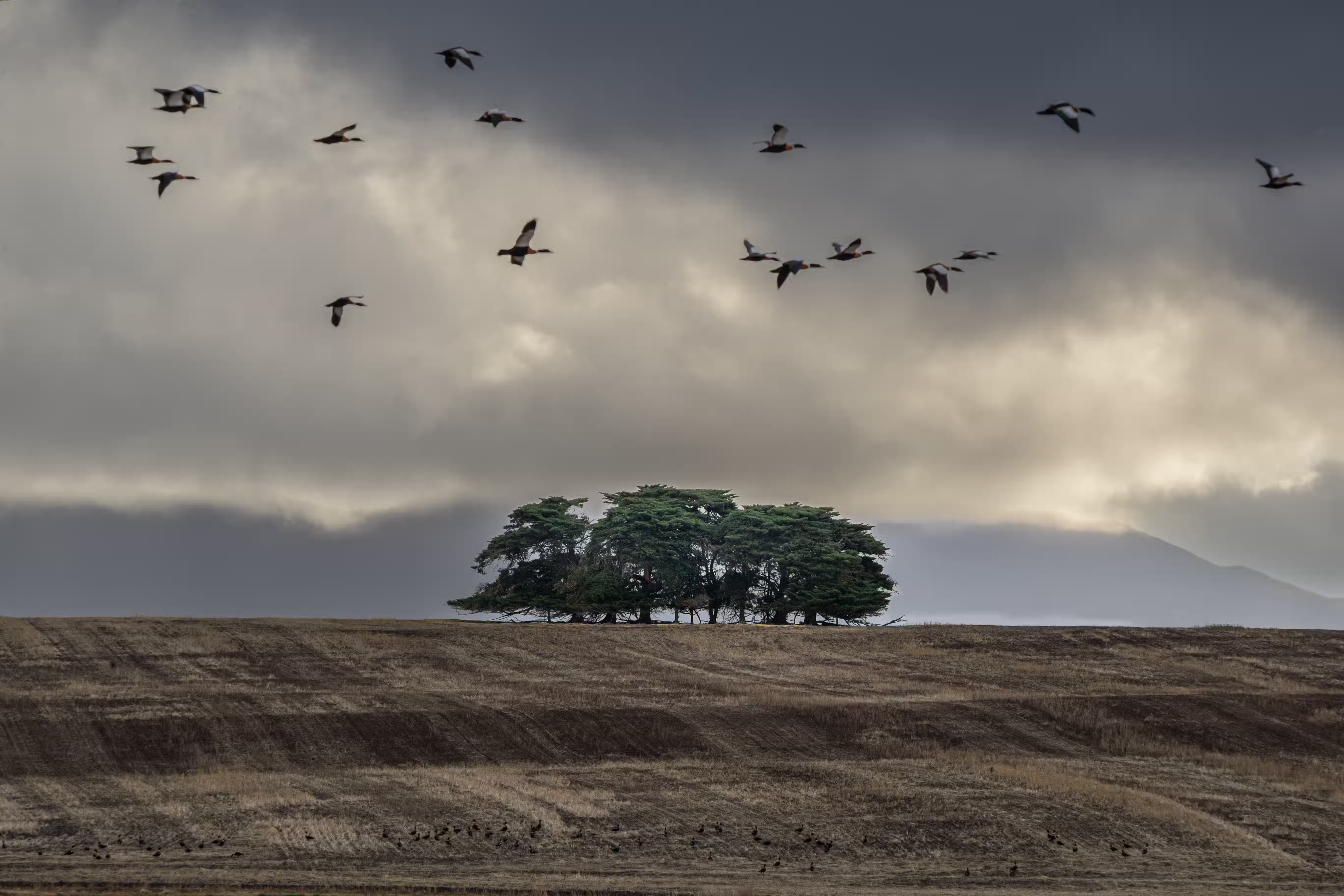
For Tasmania's 2026 seasons, Duck shooting occurs from 7 March to 8 June and Brown Quail shooting from 16 May to 28 June. with seasons opening and closing around long weekends in March and June respectively
Ducks
The Victorian Government announced that the 2025 duck season would open at 8:00am on Wednesday, 19 March 2025 and close 30 minutes after sunset on Sunday, 9 June 2025.
Number killed in 2024: 391,900.
Stubble Quail
Number killed in 2024: 457,399.
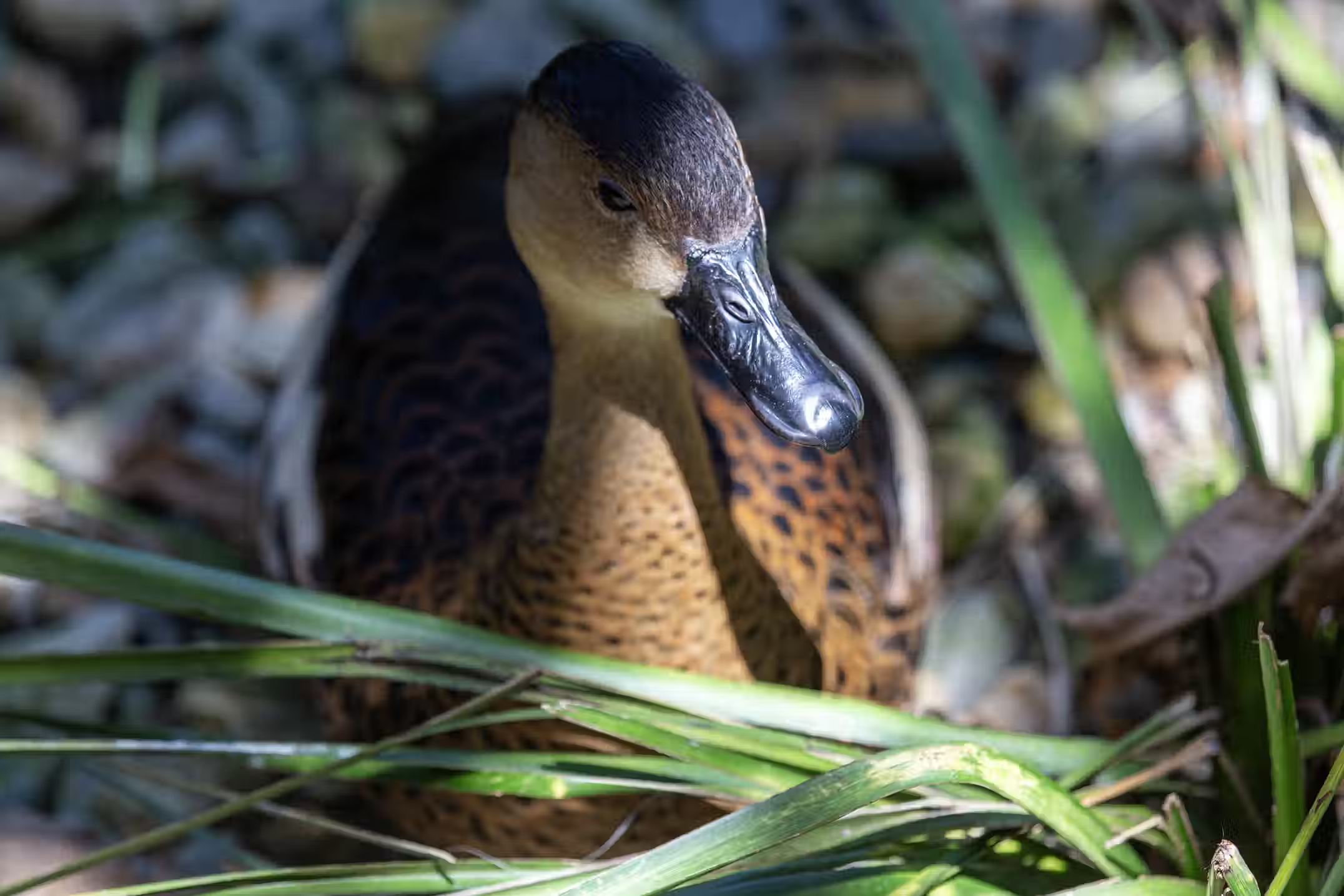
Ducks
Number killed in 2024: An estimated 25,800 ducks were taken during the 2024 open season over approximately 4,500 hunter days.
NOTE: In 2024, 1,405 duck and 240 quail hunters held permits in South Australia. Approximately one third of South Australian duck permits are typically held by interstate hunters. For context, Victoria generally has over 20,000 duck hunters and 25,000 quail hunters holding permits.
Stubble Quail only in 2025
Number killed in 2024: 120,000.
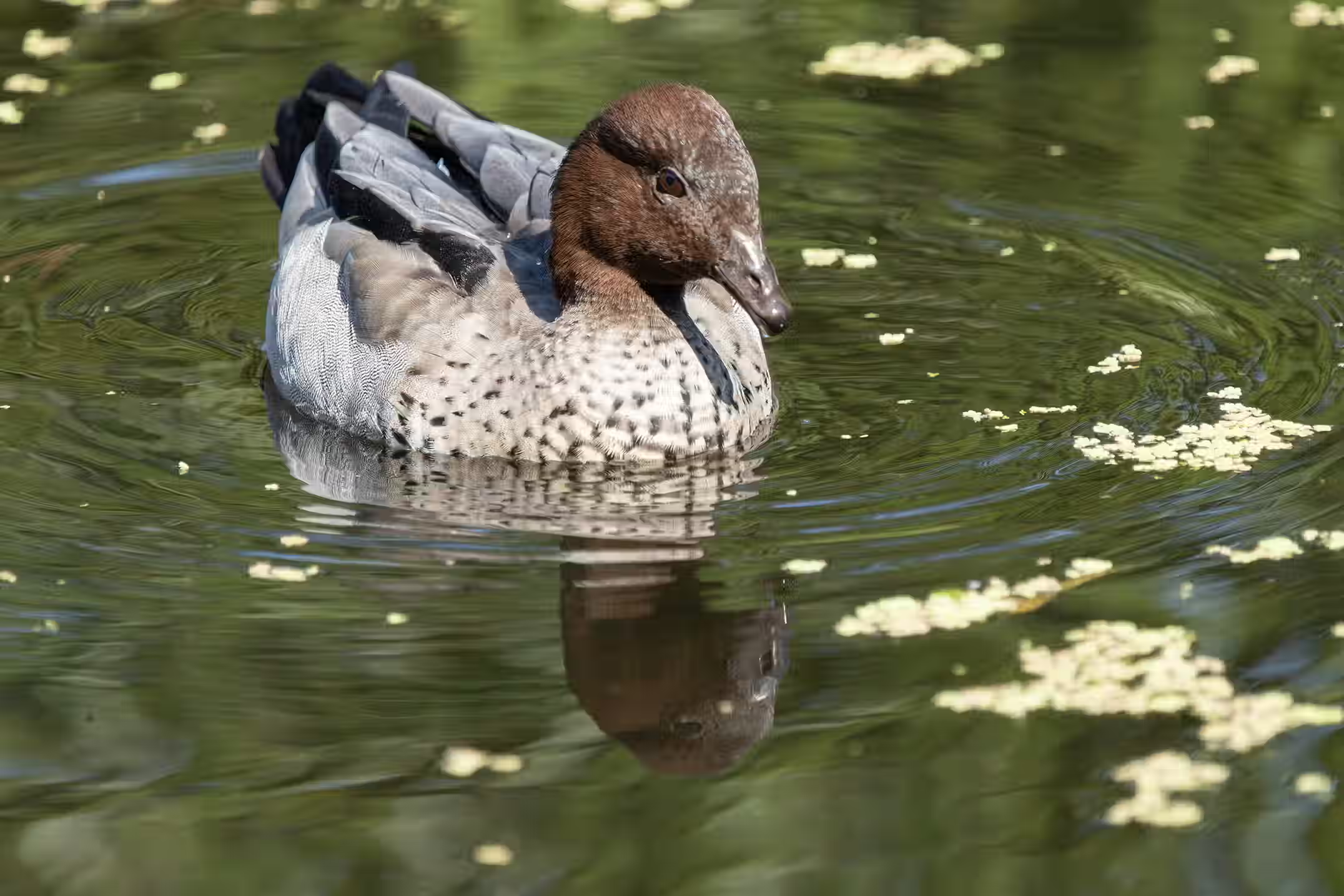
Ducks
Number killed in 2024: 45,000-50,000 estimate.
Brown Quail only 2025
Number killed in 2024: 45,000.
Mutton Birds (Short-tailed Shearwater)
Number killed unknown.
NOTE: Mutton Birds are long distance commuters, migrating annually from Australia to Japan, then via Siberia to the north of Alaska.
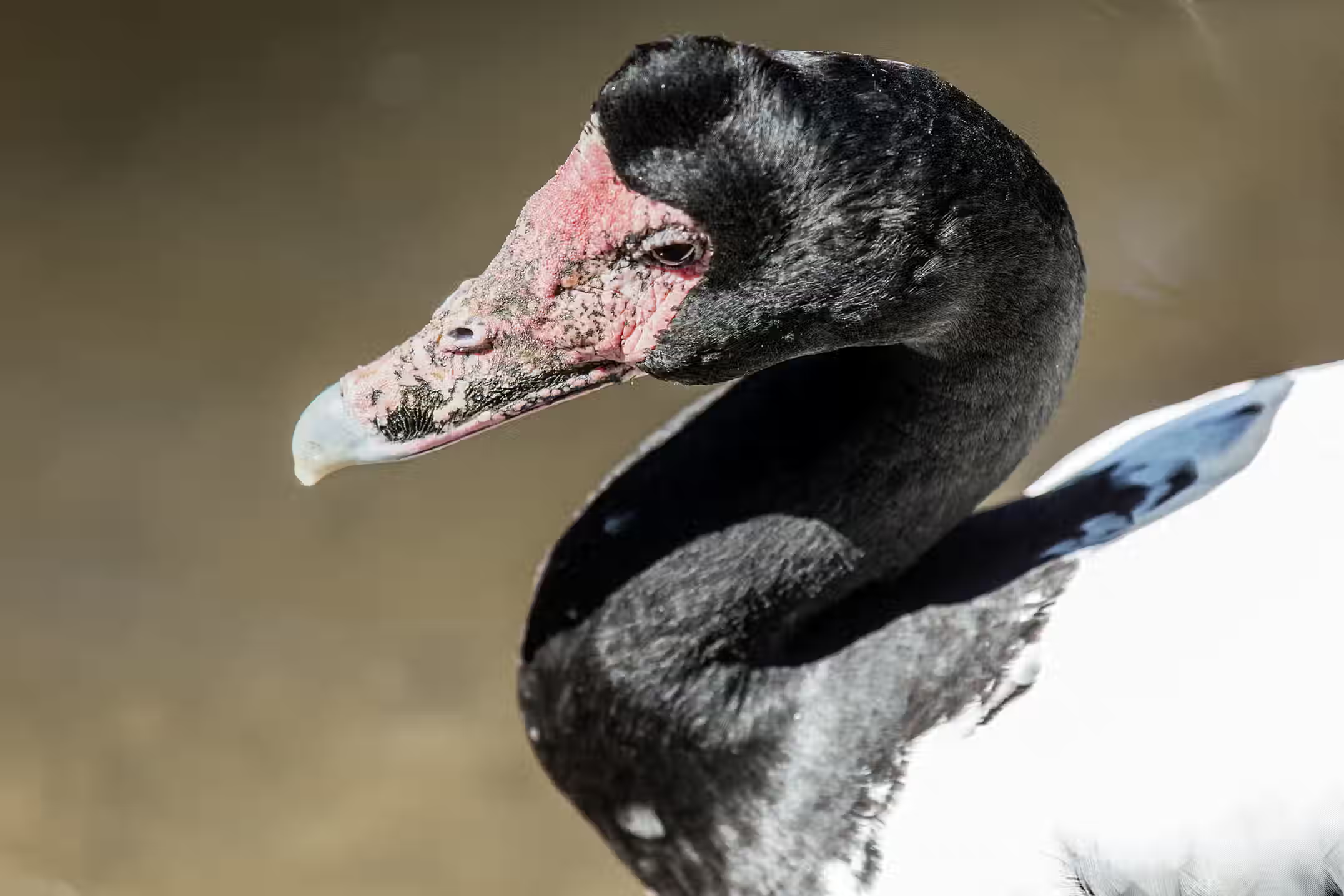
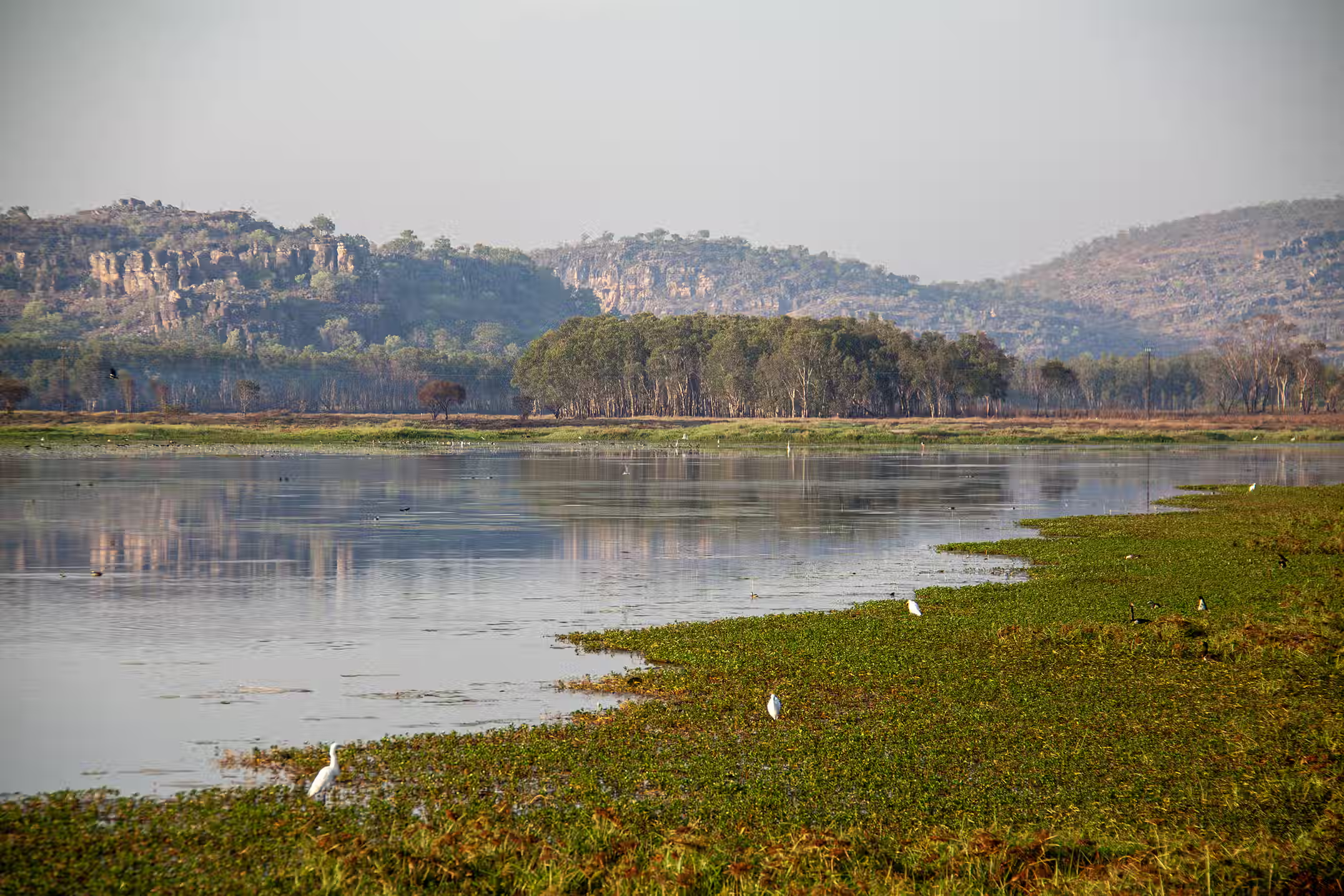
In the NT the ‘goose and waterfowl hunting season’ typically commences on private land in mid-August, and on public land towards the end of 25 September through to early January.
Bird species shot were:
Bar limits:
Number killed annually: 230,000 Estimate based on NT Government data.
TOTAL 4,637,000
NOTE: Recreation is not the only way protected birdlife in Australia (Australian species) are killed on mass. Everything from a tiny Welcome Swallow to an Emu can be killed if you ask for a permit. The numbers given in this story that report the government estimates for the number of birds killed in the states and territories because of ‘recreation’ are as subset of the total wildlife numbers given immediately above, which do not include deaths as a result of climate events, floods, heat and fire, nor land clearing etc which appear to be increasing each year.

More than 250 dead waterbirds, including threatened species, were displayed outside the Victorian Premier’s office on 1 April.
A Victorian Government parliamentary inquiry has concluded recreational native bird hunting in Victoria should end as of 2024.
Yet another major slaughter of Australian birdlife begins in the Autumn of 2025. How many will die?
Ramsar sites in Victoria can be extremely dangerous places to visit given the largely unsupervised shooting activity occurring there.
In 2018 we made extensive trips through South Australia and up into the Northern Territory.