State of regression: What is done, is undone

Life in the air


Your support will assist us to continue our research and content development, the greater our resources, the more we can do.
The more we have an accurate understanding of what is happening to nature, the more we can all do to protect what remains of our living planet.
This is also an opportunity for philanthropists to be part of an ongoing project that tells independent stories about the natural world, stories that will help us to better understand what is happening to species and places on our precious planet Earth.
Note: Creative Cowboy Films does NOT have tax deductible charity status.
Becoming a member of Creative cowboy films The Nature Knowledge Channel is a very real way you can help the precious natural world and support the work we do in creating knowledge about what is happening to it.

The Nature Knowledge Channel is a very real way you can help the precious natural world and support the work we do in creating knowledge about the natural world.
Annual membership of the Creative cowboy films - Nature Knowledge Channel gives you full access to content, stories and films, available on this website. Becoming a member of the Creative cowboy films - Nature Knowledge Channel is a very real way you can help the natural world and support our work in creating a greater understanding about what is happening to it.
A point of difference
Creative cowboy films is independent, is not funded by governments or industry, and is not influenced by their associated interest groups. For reasons of independent research and content development, Creative cowboy films does NOT have tax deductible charity status.
Life in the air
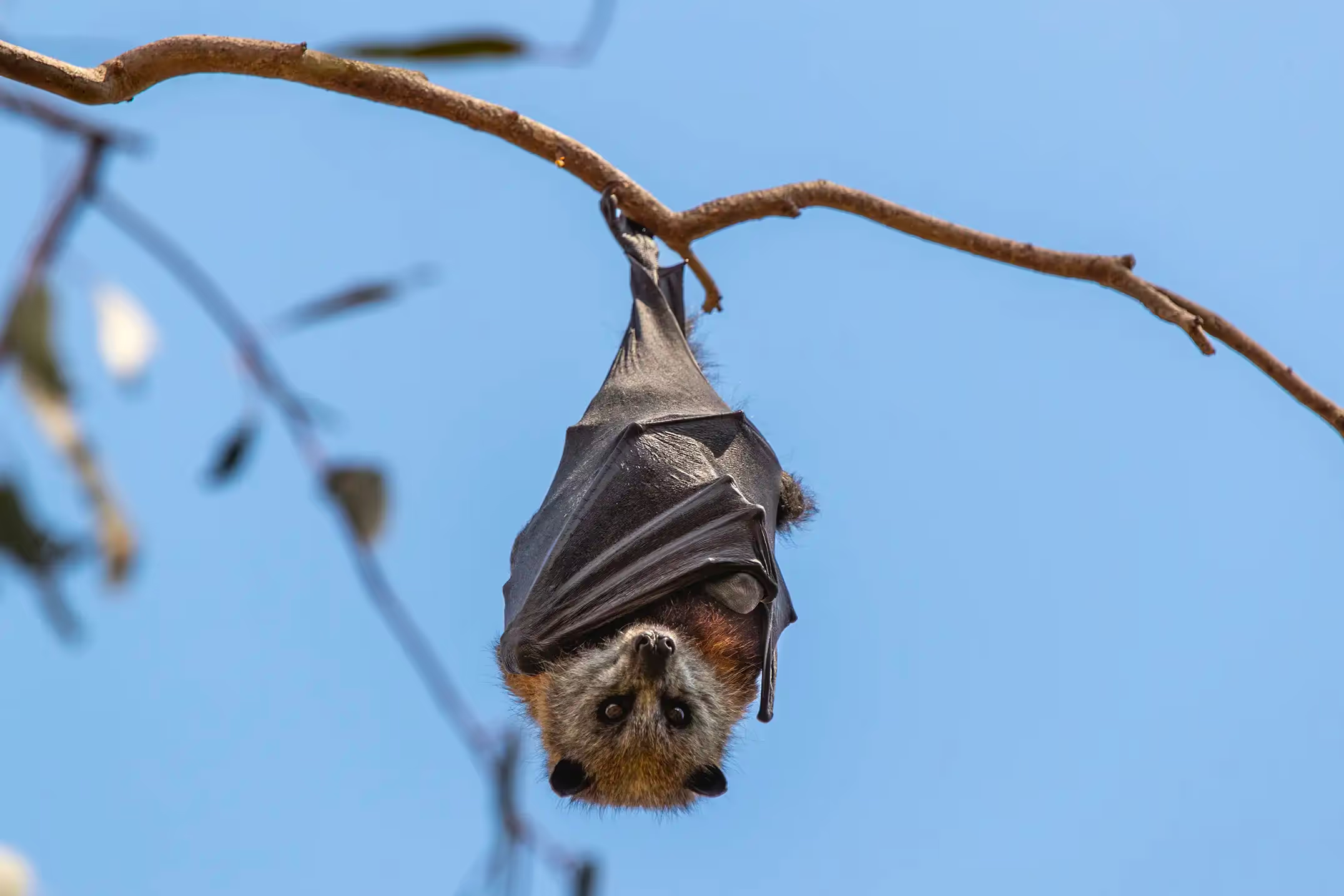
Our first interaction with Flying-foxes in the Pacific region was half a century ago when Andrea and I cycled across Tongatapu to document a colony on the island. In North Queensland and in New Guinea, the spectacular evening sight of large numbers of Flying-foxes leaving their camps to feed in the equally spectacular rainforests is now a fading memory. We should remember that the rainforests need Flying-foxes as the Flying-foxes need the rainforests.
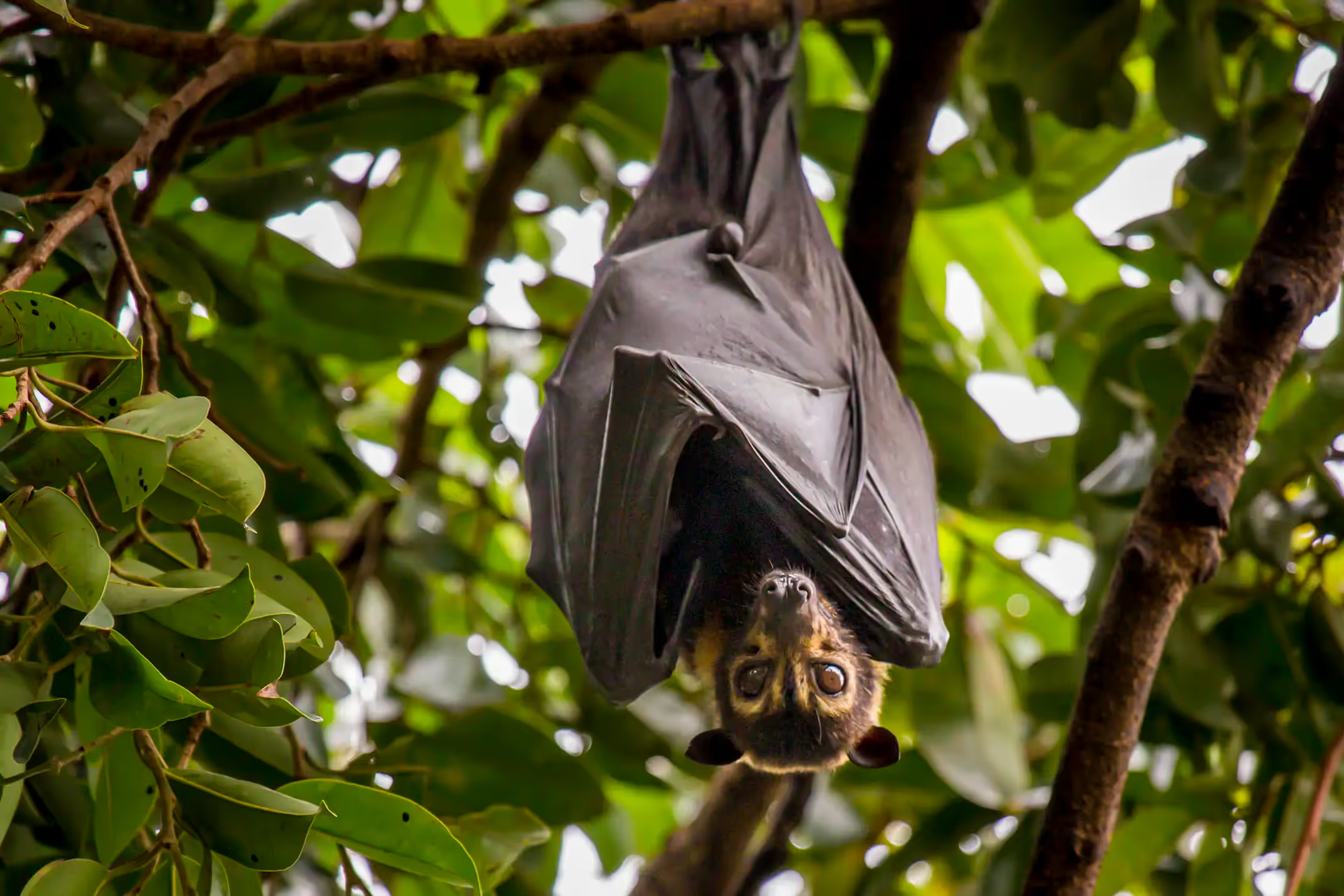
Laws were introduced by the Queensland Government in 2023 to phase-out Damage Mitigation Permits (DMPs) over the following three years. The new law required that lethal control of Flying-foxes in Queensland ceased by 30 June 2026, thus giving the users of these grim lethal permits a three year period to build non-lethal methods of control.
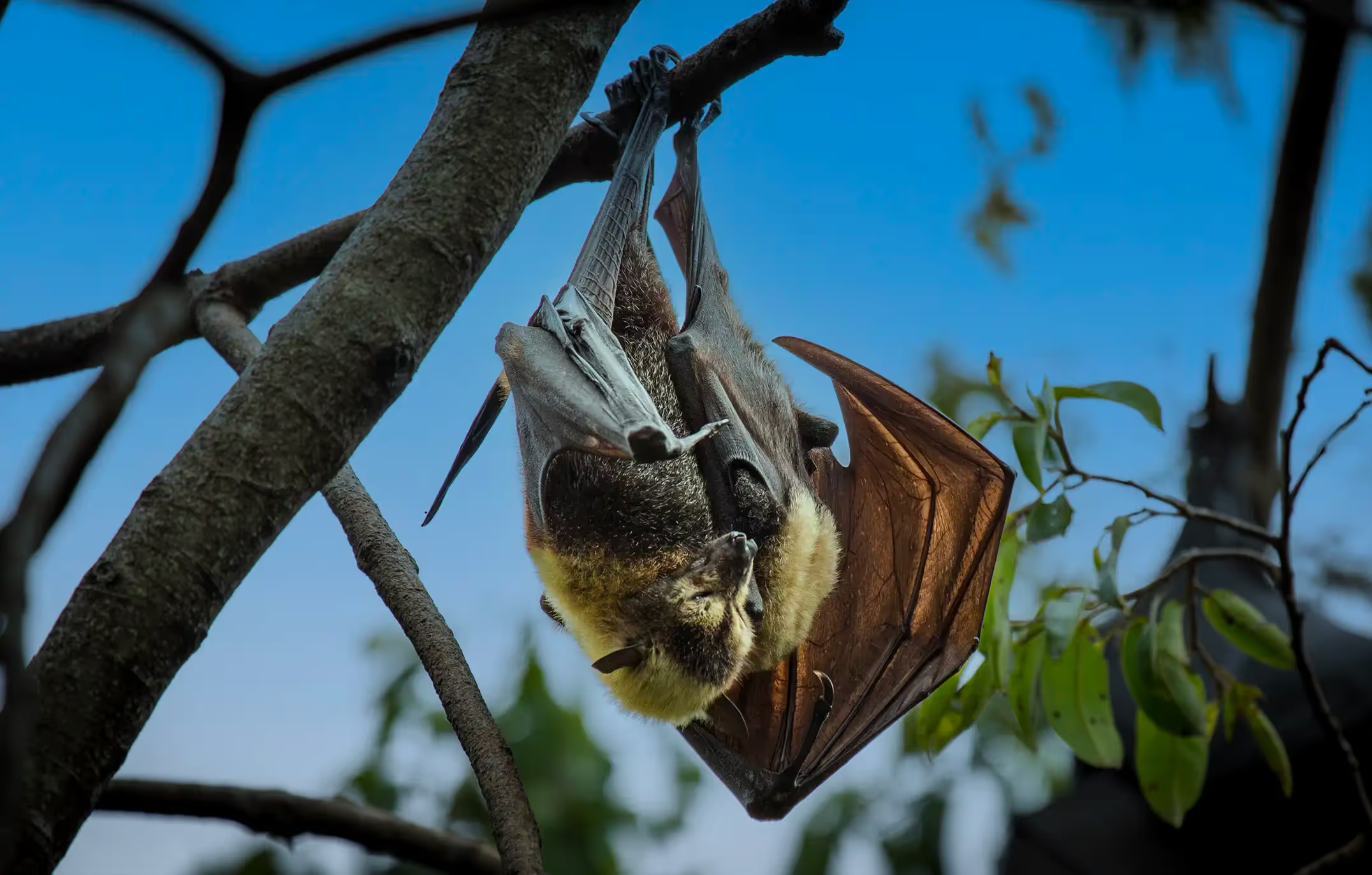
These long overdue changes to Queensland legislation to stop the shooting of Flying-foxes in that state were quietly repealed via a Waste Reduction and Recycling and Other Legislation Amendment Regulation 2025, accessed 23 December 2025 at 6:31.
“The Amendment Regulation repeals the remaining phase-out period of lethal take DMPs so they may continue to be applied for and issued. This allows commercial growers to continue controlled levels of shooting Flying-foxes as a last resort crop protection measure and is consistent with the ecologically sustainable take principles under the Nature Conservation Act 1992 (NC Act). The amendments operate to balance the need to support the commercial fruit growing industry with the need for conservation of Flying-fox species by retaining the current strict conditions on the grant of lethal take DMPs”.
In relation to these changes we learn that:
“Targeted consultation was undertaken with industry as the primary stakeholder group impacted by the DMP phase-out provisions. Consultation with other stakeholder groups did not occur given that conservation views are unlikely to have changed since consultation on the phase-out provisions in 2023”.
All Flying-fox species are in some sort of trouble in Australia and their future looks very grim, climate change (mass die offs) and habitat loss, mass killing, wire (both electrified and barbed), certain types of netting and relocation are just some of the reasons why Flying-fox populations are declining at scale.
“Any unwounded, dependent young found are to be left on their mothers, and either collected by a wildlife carer for rehabilitation, or euthanised by a shot to the head from a safe distance”. Code of Practice for Ecologically sustainable lethal take of Flying-foxes for crop protection, State of Queensland
Among other clauses, clause 5 of the new amendment states (Killing dependent Flying-foxes) This clause omits subsection 167(3) to remove the expiry provision to ensure a holder of a damage mitigation permit for taking a Flying-fox can continue to kill dependant young of an animal that is authorised to be shot under that permit.
“Only a shotgun or rim-fire rifle may be used for euthanasia. Consideration must be given to ensuring pain and suffering of Flying-foxes is minimised as well as ensuring the safety of the operator, any other persons, and any other animal that may be within range of the firearm”. Code of Practice for Ecologically sustainable lethal take of Flying-foxes for crop protection, State of Queensland
All species of Flying Fox are protected Australian species. In the case of Queensland legislation, the Grey-headed Flying-fox is listed as vulnerable and the Spectacled Flying-fox is listed as endangered. The Spectacled Flying-fox was upgraded to endangered in February 2019 under both Commonwealth legislation (Environment Protection and Biodiversity Conservation Act 1999) and in Queensland legislation ‘due to significant population decline and threats from habitat loss and human interactions’. The listing was upgraded after the severe heatwave in late 2018 that killed nearly a third of the already significantly reduced Queensland population of the species. The Grey-headed Flying-fox is also listed as 'vulnerable' nationally.
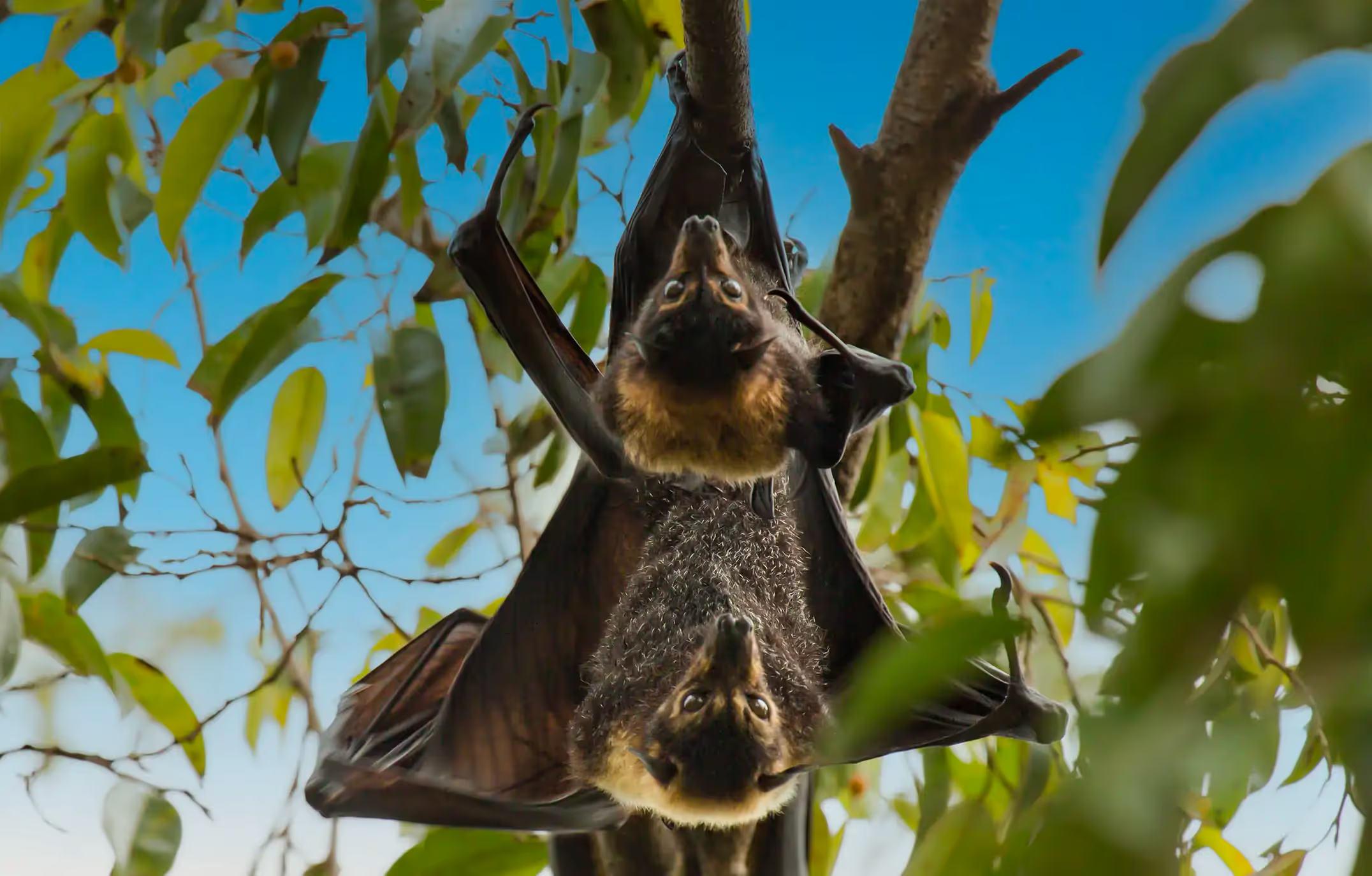
“Sufficient illumination must be used to ensure accurate species identification and target precision”. Code of Practice for Ecologically sustainable lethal take of Flying-foxes for crop protection, State of Queensland
It appears at this time that there is no lethal quota for the Spectacled Flying-fox, however we doubt that this will stop the species being shot.
The Queensland Government states that:
“All Flying-fox species are protected under the Act. Three of the species of flying-fox found in Queensland fall within the scope of the Code of Practice for Ecologically sustainable lethal take of Flying-foxes for crop protection: the Black Flying-fox Pteropus alecto, Grey-headed Flying-fox P. poliocephalus and Little Red Flying-fox P. scapulatus. The Spectacled Flying-fox P. conspicillatus is listed as ‘endangered’ under the Nature Conservation Act 1992 and therefore a damage mitigation permit cannot be granted for the lethal take of this threatened species for the purposes of crop protection. It is also listed as ‘endangered’ under the Commonwealth Environment Protection and Biodiversity Conservation Act 1999 (EPBC Act). The only method of euthanasia approved under this Code is shooting at a safe distance, aimed at the head of the Flying-fox”.
Flying-fox species in Queensland, despite their listing as ‘protected’ Australian species were killed in very large numbers and with extreme cruelty. In 2000-2001 it was estimated that electric grids were responsible for killing one fifth of the Spectacled Flying-foxes’ population. The use of electric grids, just one method, to kill large numbers of Flying-foxes was ‘discouraged’ by the Federal Court in 2001:
“On 17 October 2001, the Federal Court handed down a decision placing an injunction on the use of electric grids for the killing of Spectacled Flying-foxes on a property adjacent to the Wet Tropics World Heritage area. This decision means growers whose properties may be captured within World Heritage provisions of the Environmental Protection and Biodiversity Conservation Act 1999 (EPBC Act) will need to seek approval by the Commonwealth Minister for the Environment and Heritage under the (EPBC Act) to kill Flying-foxes by use of electric grid”. Queensland Government
That however was not the end of the killing, the Queensland Government following the Federal Court ruling, going on to say:
“The State position, however, would not rule out the use of other lethal means of control”.

On Christmas Day 2019 we visited a ‘camp’ of Grey-headed Flying-foxes in Melbourne.
Our first encounter with Flying Foxes in the Pacific, and after a long bike ride across the island, was on Tongatapu, the main island in the Kingdom of Tonga.