Badgers, Brexit and the Great Crested Newt

Life on land


Your support will assist us to continue our research and content development, the greater our resources, the more we can do.
The more we have an accurate understanding of what is happening to nature, the more we can all do to protect what remains of our living planet.
This is also an opportunity for philanthropists to be part of an ongoing project that tells independent stories about the natural world, stories that will help us to better understand what is happening to species and places on our precious planet Earth.
Note: Creative Cowboy Films does NOT have tax deductible charity status.
Becoming a member of Creative cowboy films The Nature Knowledge Channel is a very real way you can help the precious natural world and support the work we do in creating knowledge about what is happening to it.

The Nature Knowledge Channel is a very real way you can help the precious natural world and support the work we do in creating knowledge about the natural world.
Annual membership of the Creative cowboy films - Nature Knowledge Channel gives you full access to content, stories and films, available on this website. Becoming a member of the Creative cowboy films - Nature Knowledge Channel is a very real way you can help the natural world and support our work in creating a greater understanding about what is happening to it.
A point of difference
Creative cowboy films is independent, is not funded by governments or industry, and is not influenced by their associated interest groups. For reasons of independent research and content development, Creative cowboy films does NOT have tax deductible charity status.
Life on land

CONTEXT
The European Badger or as it is also known, the Eurasian Badger, is a highly social animal, living in family groups that inhabit extensive burrow systems known as setts. These setts consist of intricate networks of underground passages and chambers with multiple entrances. Over generations, successive families of Badgers continue to use and expand these burrow systems, constantly adding to and modifying the structure. For comfort, Badgers collect bedding material such as grass, hay, and leaves, which they carry into their sleeping chambers. Occasionally, they drag this bedding outside to air it out, usually in the early morning. Surrounding the sett, there are areas the badgers use for play, and the boundaries of their group’s territory are marked with latrine holes.
Primarily nocturnal, Badgers typically emerge from their setts around dusk. At this time, both young and adult badgers can often be seen engaging in lively and playful behaviour. These bouts of romping and play not only provide enjoyment but also serve to strengthen the social bonds and learning that are so important in group-living animals. Badgers have a varied diet but are especially fond of earthworms, which they consume in large numbers. They also eat small animals, as well as bulbs, fruits, and nuts.
Mating among Badgers usually takes place in the summer, when social interactions within the group are most frequent. However, the gestation of fertilized eggs is delayed, ensuring that the two to four offspring are born the following spring, when conditions are more favourable for their survival. The range of the Eurasian Badger stretches from Europe all the way to Japan and southern China. Other members of the Badger family include the American Badger, the Hog Badger, two species of Stink Badger, and the Chinese Ferret Badger, each with their own distinct characteristics and habitats.
As the Ecologist says, Badgers are having a hard time. Sadly the European Badger is subject to killing programs in other countries including the Republic of Ireland (and Northern Ireland), including hunting in Germany (large numbers are killed), France, the grim ‘vénerie sous terre’, Poland and Finland. Road kill is also a major problem for Badgers in the UK and beyond.
Updared 2 April 2026.
We were in our apartment in Gifu City when the results of the Brexit referendum came through. The response from the Japanese Government was swift and immediate
“The withdrawal of the United Kingdom (UK) from the European Union (EU) constitutes an event that will wield a substantial impact not only on the future of European integration but also on the international community as a whole, which is why the world including Asia is paying close attention to the BREXIT negotiations. This testifies to the expectation that the UK and the EU will continue to lead the world in enlarging and promoting a free and open market economy”.
So what do we worry about now in relation to the consequences of Brexit? The risks are really these, damage to the UK’s economy is obvious, the economic and cultural isolation of young people in the UK, Brexit is a great destroyer of opportunity for this cohort. The environment, action on climate change and the future of the farm sector in the UK as food supply is opened up to international markets, particularly to the USA. These things bring animal welfare issues into stark relief (that is, both animal welfare in the UK and ‘imported’ cruelty from countries with lower welfare standards) and here the future looks bleak. There are many more things, the competitive future of UK industry, education and research, the enormous damage to the NHS in relation to staffing and funding cuts and hence UK health generally, security, state of the Union and ever on the list goes. What you can be absolutely certain of is that it will not only be the animals that suffer because of Brexit.
A couple of weeks later we were in Oxford so we asked people during one of our shopping trips if they had voted for Brexit. Well it was Oxford, but the results of this spontaneous survey were deeply troubling. It was evident that people had little understanding of what they were voting for. At least for some of the individuals we spoke to had just voted to lose their jobs, and that is exactly how it turned out.
During the COVID-19 lockdowns in the UK, a period referred to as the “anthropause,” nature experienced both positive and negative effects. The restrictions on movement and human activity initially brought a temporary relief to the environment. Traffic and air pollution dropped significantly, resulting in cleaner habitats. This reduction in activity also led to a dramatic 80 per cent decrease in wildlife-vehicle collisions, benefiting various species, such as badgers, foxes, pheasants, and hedgehogs. The quieter period also had positive effects on birds, which adapted their songs, and allowed seals to haul out in some counties, including Cornwall, that would normally be disturbed by humans.
Air quality also improved markedly. The reduction in urban noise and pollution provided a healthier environment for wildlife, while also lowering their stress levels. Alongside these changes, public interest in nature surged. Records of wildlife sightings increased and thousands more people signed up for wildlife monitoring schemes.
However there were several negative impacts. As restrictions eased, green spaces and wildlife sites suffered from increased litter, particularly single-use plastic waste from items like PPE. The surge in visitors to parks and canals led to habitat damage, more disturbance to wildlife, and the creation of new, often harmful, footpaths. Scientific research and conservation efforts were disrupted as staff were furloughed, delaying essential management and maintenance work in reserves.
Financial challenges also emerged as conservation organizations struggled with reduced funding due to the closure of visitor centres and the cancellation of fundraising events. These setbacks threatened the long-term progress needed for protecting biodiversity.
While the lockdowns brought some immediate benefits for nature in the UK, such as reduced pollution and increased public engagement, they also introduced new pressures and challenges. The long-term impact on UK biodiversity is complex and uncertain, with early gains from reduced human activity potentially being undermined by increased pollution, habitat damage, and ongoing funding difficulties.
In 2023, the State of Nature Report (the National Biodiversity Network) found that the UK’s wildlife continues to decline. Already recognized as one of the most nature-depleted countries in the world, nearly one in six of over ten thousand assessed species, about 16 per cent, faces the risk of being lost from Great Britain. This percentage is significantly higher for certain groups, with 43 per cent of bird species, 31 per cent of amphibians and reptiles, 28 per cent of fungi and lichen, and 26 per cent of terrestrial mammals threatened. The distributions of more than half (54 per cent) of the UK's flowering plant species have declined.
The State of Nature report, first published in 2013 and subsequently updated in 2016 and 2019, is the most comprehensive nature report covering the UK, including its Crown Dependencies, and Overseas Territories. Compiled in collaboration with over 60 research and conservation organizations, the report relies on the latest data from monitoring schemes and biological recording centers. This data comes from the dedicated efforts of thousands of skilled volunteers who provide a comprehensive benchmark for the state of the UK’s wildlife.
Since 1970, the average abundance of species studied has fallen by 19 per cent. It is important to recognize, however, that the UK’s biodiversity was already depleted even before widespread monitoring began; centuries of habitat loss, unsustainable agricultural practices, development, and persecution had already taken a heavy toll. Now, largely as a result of human activity, the UK retains less than half of its original biodiversity. The evidence presented in the State of Nature report points to intensive land management for farming and the ongoing impacts of climate change as the two primary drivers of nature loss. In marine environments, unsustainable fishing practices and climate change are the major contributing factors.
Beccy Speight, Chief Executive of the RSPB, emphasized the urgency of the situation, stating that “the UK’s wildlife is better studied than in any other country in the world and what the data tell us should make us sit up and listen.” Beccy stressed that progress to protect species and habitats has been insufficient, despite the urgent need to restore nature to address the twin crises of climate change and environmental decline, pointing out that conservation efforts are effective and that the knowledge of how to restore ecosystems and save species already exists and society should move more rapidly toward nature-friendly land and sea use. Without this shift, the decline and degradation of nature and the environment will continue, with severe implications for the way of life in the UK.
Concerning statistics from the report reveal that more than half of plant species have decreased in distribution, while 59 per cent of bryophytes (mosses and liverworts) have suffered declines in distribution. Invertebrates overall have had a 13 per cent reduction in distribution since 1970. Species providing essential ecosystem services, such as pollination and crop pest control, have experienced even more drastic downturns, pollinator species including bees, hoverflies, and moths have declined by an average of 18 per cent, and species that offer pest control, such as the 2-spot Ladybird, have fallen by over a third.
The report also found that only one in seven of the habitats deemed important for wildlife remain in good condition. Just one in fourteen woodlands and a quarter of peatlands were assessed to be in a healthy ecological state. Notably, due to ongoing habitat damage from fishing gear, none of the seafloor areas around the UK were judged to be in good condition. Restoration projects, including peatland and seagrass bed recovery are underway, which should help to slow further declines in biodiversity.
The evidence suggests that nature-friendly farming must be taken up on a much broader scale to halt the continued decline of farmland wildlife, and all such efforts must be integrated with the challenges of responding to the climate and nature crises while continuing to meet the population’s needs for food, energy, and fuel.
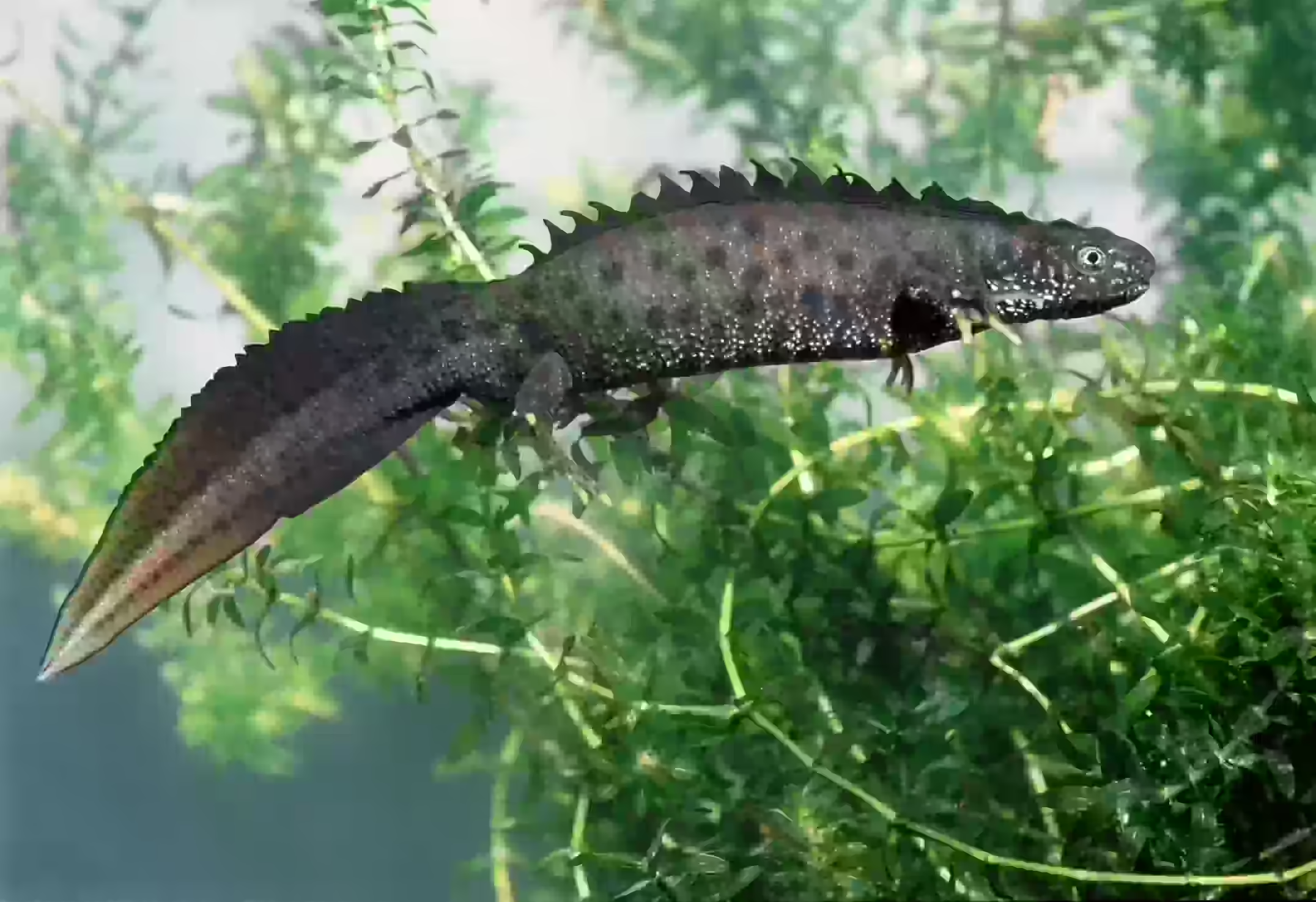
Whenever we hear the words, Great Crested Newt coming from a British politician’s mouth (including from Prime Ministers) we get the sense that the government is in trouble. So what is this all about?
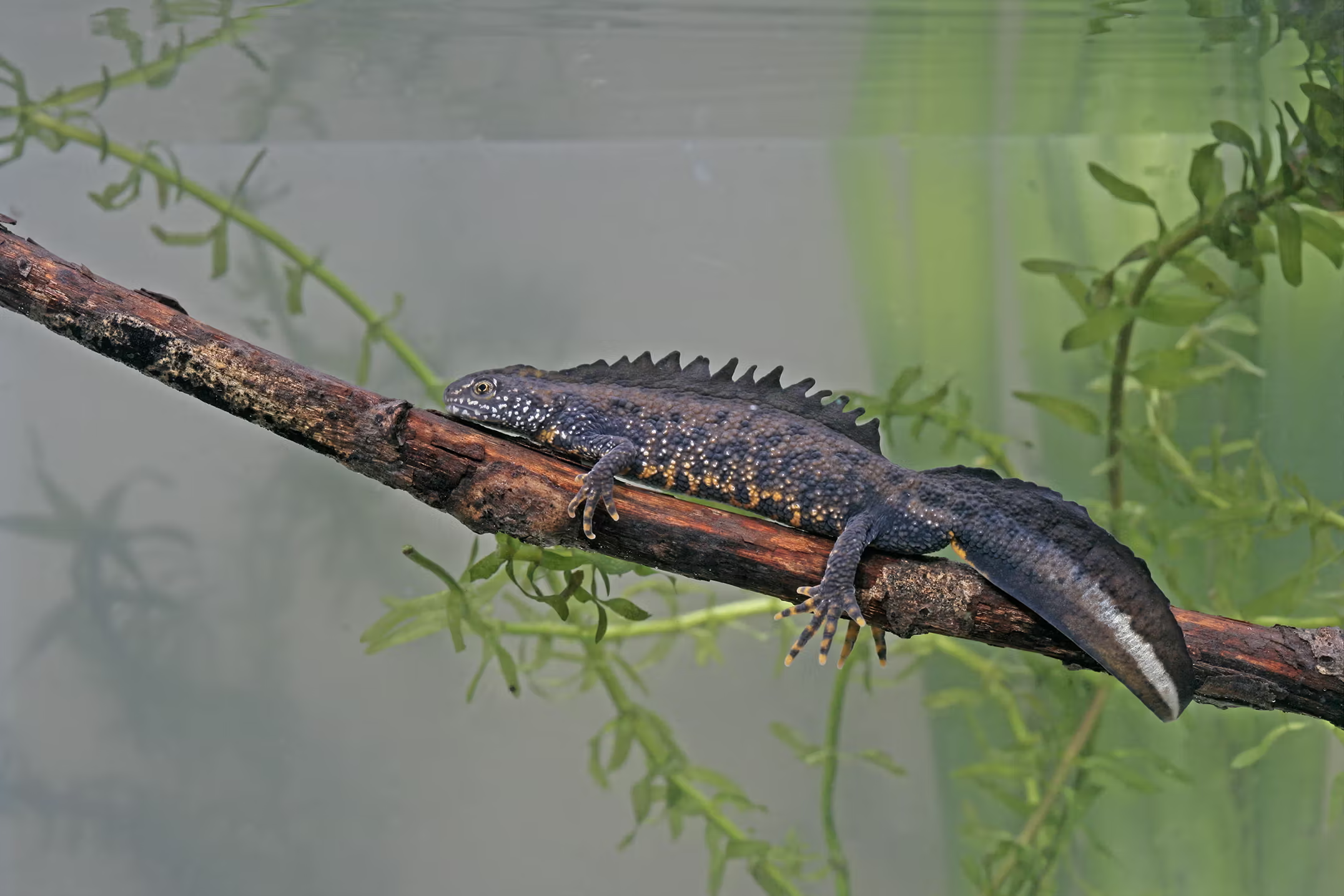
The newt war began with the introduction of the Wildlife & Countryside Act 1981, which granted strict legal protection to the Great Crested Newt (Triturus cristatus) and its habitats. While the act was celebrated by conservationists, it marked the beginning of a series of conflicts with developers whose plans were newly subject to robust regulatory oversight. Any activity that risked harming newts or their breeding ponds became potentially unlawful, laying the groundwork for a protracted struggle over land use.
The escalation of the conflict in the 2000s and 2010s was driven by the implementation and enforcement of even stronger European legislation. The Habitats Directive, adopted by the European Union in 1992 and transposed into UK law in 1994, placed a legal obligation on authorities to maintain or restore protected species, including the Great Crested Newt, to a favourable conservation status. This directive not only reinforced, but in some cases exceeded the protective measures of previous statutes. Local authorities and developers now faced greater scrutiny; planning applications for housing, infrastructure, or commercial projects could be halted or significantly delayed if a population of Great Crested Newts was discovered on or near the site. Surveys, mitigation strategies, and relocation schemes became prerequisites for securing planning consent.
For conservationists, these legal protections represented a rare success in an era of rapid environmental loss. The presence of the newt could genuinely reflect broader ecological richness, as they require clean ponds and high-quality terrestrial habitats. Each newt discovered was a marker not just of legal obligation, but of the wider imperative to maintain biodiversity in an increasingly developed landscape.
In our world of course nothing in nature is safe, recently attempts have been made to weaken protections, most notably through the introduction of “district level licensing,” which allows developers to pay into strategic habitat creation schemes rather than relocating newts individually. While this has eased some tensions, the newt wars continue.
Britain’s rivers and wetlands are currently in a "desperate" and deteriorating state. According to recent assessments, just 14–15 per cent of English rivers have achieved good ecological health, underscoring the scale of the crisis. The Rivers Trust’s 2024 report found that not a single river in England could be classed as having good overall health. This widespread decline is largely caused by persistent pollution issues, including the unlawful discharge of sewage by water companies, which adds dangerous levels of bacteria and nutrients such as nitrates and phosphates to waterways. In addition, agricultural runoff introduces further nutrients like phosphorus and nitrogen, exacerbating the poor ecological conditions—recent "citizen science" checks have revealed that three-quarters of Britain’s rivers are in poor ecological health as a result.
While there have been some notable exceptions, such as the River Thames, which has improved from being "dead" to now supporting fish and marine mammals, these successes remain rare. Wetlands, like rivers, are also suffering; a significant proportion of the UK’s wetlands and priority habitats are in poor health. This contributes to a wider decline in species, despite the ecological importance of wetlands as natural filters for pollutants. Even with efforts to create new wetlands and restore existing ones, pollution and water scarcity continue to undermine these initiatives.
The primary drivers of this ongoing decline in freshwater systems are agricultural runoff, constant untreated sewage releases from aging infrastructure, and the impacts of climate change. Rising water temperatures and reduced river flow, particularly in sensitive habitats such as chalk streams, further reduce rivers’ ability to cope with increasing pollution. Progress has been slow, and improvement efforts remain stalled, today, very few waterways are in good ecological health, making it unlikely that the government’s target of bringing 75 per cent of rivers to good condition by 2027 will be met. Overall, the combination of pollution and climate pressures is leaving Britain’s freshwater systems in an increasingly fragile and threatened state.
“It seemed, as the Mole remarked to the Rat, like someone walking in carpet slippers that were too large for him and down at heal”. The Wind in the Willows, Kenneth Grahame
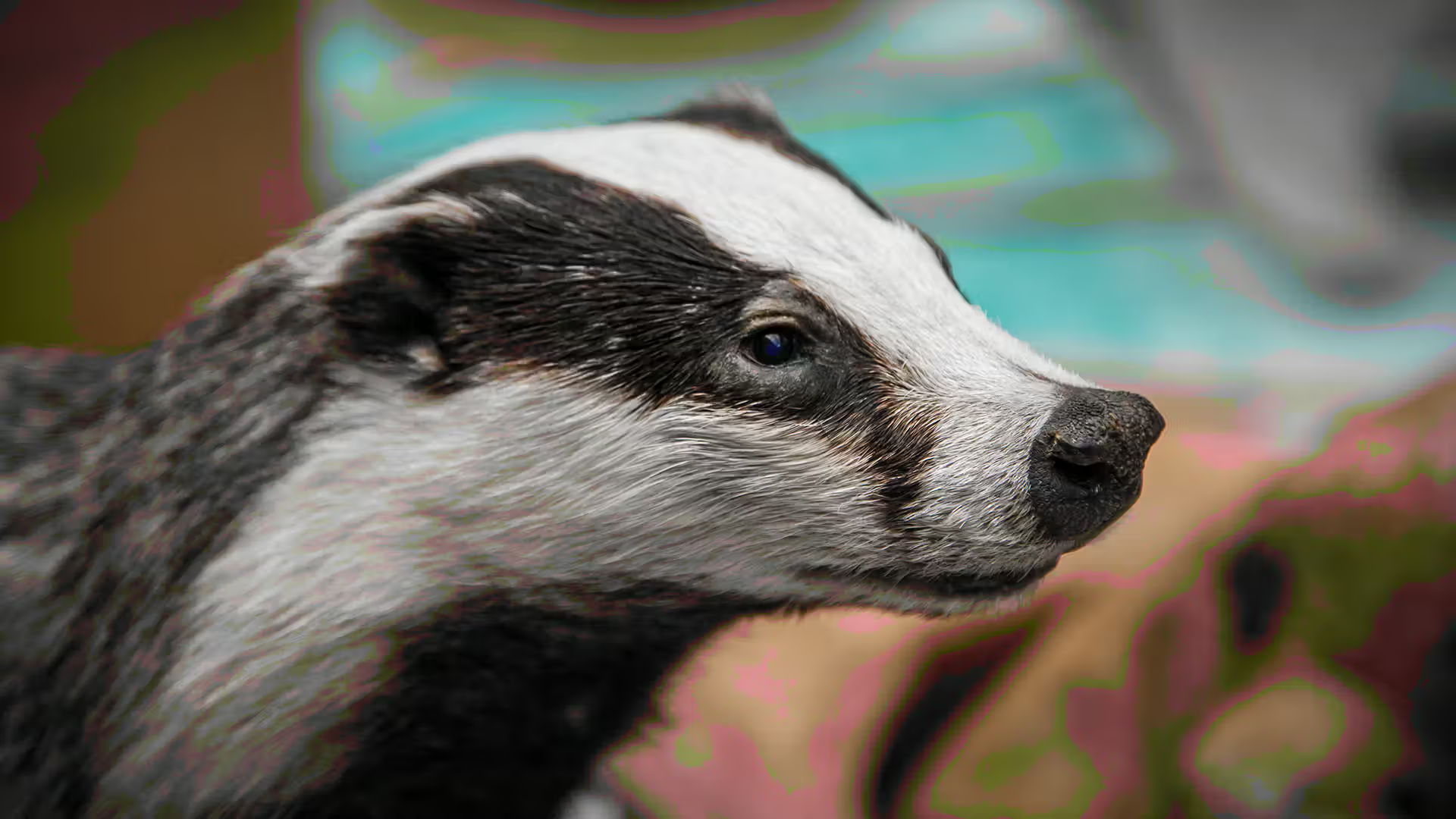
More than 247,000 Badgers have been killed in England since the government began its intensive culling policy in 2013 to control bovine tuberculosis in cattle. The mass killing of Badgers in the UK is a deeply controversial and cruel practice, and there is a growing consensus that it needs to end.
“Government research has found that large-scale Badger culling can lead to an overall reduction in TB rates in cattle. However, rates have been shown to increase again a few years after culling stops. Meanwhile, culls can actually lead to increases in infected cattle around the edges of Badger cull zones, and increased rates of TB in Badgers that escape the cull”. Zoological Society London.
The UK Government says this:
“Bovine tuberculosis (TB) is an infectious, zoonotic (meaning it can infect humans) bacterial disease of cattle and other mammals, with a wildlife host (Badgers) present in large areas of England. The Badger control policy was introduced in England to reduce the population of badgers where TB is endemic. The aim was to reduce the potential for transmission of Mycobacterium bovis, the bacterium that causes TB, between Badgers and cattle, and hence reduce the incidence of TB in cattle. The policy was informed by evidence generated from the Randomised Badger Culling Trial (RBCT) conducted in England between 1998 and 2005 (Donnelly et al., 2007; Jenkins et al., 2010)”.
In its response to the ‘Badger petition’ the UK Government statement includes:
“On 30 August 2024, the government announced the start of work on a comprehensive new strategy to continue to drive down bovine TB rates to save cattle and farmers’ livelihoods and end the Badger cull by the end of this parliament. ….Existing cull processes will be honoured to ensure clarity for farmers involved in these culls whilst new measures can be rolled out. However, the government has decided that it will not be proceeding with the proposals drawn up under the previous government relating to targeted Badger culling. That follows careful consideration of the responses received to the public consultation launched earlier this year”.
Since 2010, the Animal and Plant Health Agency (APHA) has been delivering Badger vaccination projects across parts of England. Initially, these were relatively small-scale operations, apart from the Badger Vaccine Deployment Project. It was not until 2020 that APHA began a larger-scale vaccination effort, notably in Area 32, which is associated with a Low Risk Area (LRA) hotspot for bovine tuberculosis. Since 2021, vaccination operations run by APHA have expanded to include some Badger control areas within both the High Risk Area (HRA) and so-called ‘Edge’ areas. By the end of 2024, APHA had carried out Badger vaccination operations covering at least 1km² in parts of 17 Badger control areas. While this vaccination programme has shown promise, its scale has still been limited compared to the vast reach of culling.
The policy of Badger culling was instigated by the Westminster government in 2013 as part of a strategy to control bovine tuberculosis in England, the effectiveness of the mass killing remains hotly debated. By the end of 2024, nearly a quarter of a million Badgers had been killed under licence, covering roughly a quarter of England’s land area. Most disturbingly, over three-quarters of these Badgers were targeted using ‘controlled shooting,’ a method condemned as inhumane by veterinary authorities and the government’s own advisory body. The overwhelming majority of Badgers killed were likely perfectly healthy, contributing nothing to disease control but resulting in an appalling loss of wildlife.
The government’s latest published monitoring covers culling data up to the end of 2024 for the 72 areas licensed up to and including 2023 and includes a newly licensed area in Cumbria in 2024, which will be reported on after 2026. The system of issuing cull licences has expanded year on year, two licences were first issued in 2012 (although actual culling didn’t begin until 2013), one licence in 2015, seven in 2016, and then eleven licences annually from 2017 until 2020, seven more in 2021, and a further eleven in 2022. While most cull areas are located in the HRA, fifteen straddle the border between HRA and the Edge Area, and eight lie entirely within the Edge Area. Two key areas, 32 and 54, are in the LRA, specifically targeting TB Hotspots under Low Risk Area Badger Disease Control licences.
As of the end of 2024, Badger culling operations continued in 45 of the areas. Licensed culling had concluded in three areas by the start of 2022, in eleven more by the start of 2023, and in an additional thirteen by the start of 2024. However, the vast majority of Badgers killed in these operations were perfectly healthy animals. Despite this, successive Westminster governments have stubbornly continued the culls, risking the eradication of Badgers across large parts of the English countryside, areas these animals have inhabited since the ice age. The loss of so many Badgers threatens not just their species but could also have damaging ripple effects across the broader ecosystem.
In its 2024 election manifesto, the Labour party finally recognised the culls as ‘ineffective’, raising hopes among campaigners and conservationists that the policy would be ended. However, in spite of this public stance, the incoming Labour government continued to issue culling licences in both 2024 and 2025, leading to the deaths of tens of thousands more Badgers. It was not until the end of January 2026 that the so-called ‘intensive’ and ‘supplementary’ cull operations were officially ended, and the government declared it would not issue similar licences in the future. Nevertheless, a cull continues in Cumbria, casting doubt over claims that this cruel policy is finally over and fuelling concerns that it could return under a different name or because political pressure.
While the recent extension of Badger vaccination schemes is a welcome development, the government’s continued focus on badgers as ‘the problem’ perpetuates a harmful narrative not supported by credible scientific evidence. Instead of killing healthy wildlife and threatening a species integral to the UK’s natural heritage, it is time to end Badger culling for good and invest in vaccination and farming practices that protect both livestock and wildlife. The Badger cull is not only a failed experiment in disease control, but a tragic and unnecessary cruelty that must finally be ended.
We thank the Badger Trust for the many years of hard work to stop the slaughter.
"Defra confirms end of Badger culling, shifting to prevention-led bTB strategy. Badger Trust urges stronger protections and cattle-focused solutions.
Badger Trust and Wildlife LINK met with Defra (Department for Environment, Food & Rural Affairs) Minister Dame Angela Eagle and officials on 26 March and welcomed her confirmation that Badger culling has ended (with the Cumbria licence still to conclude), and that it will not be included in the refreshed bovine TB (bTB) strategy. This signals an important shift away from decades of widespread culling toward more effective, prevention-based approaches, including improved cattle testing and a stronger focus on tackling disease within cattle".
A lifetime spent connecting cultures around the world, Brexit was one of the most foolish acts of self-harm we have seen in our lifetimes. In our small way and from our home in Japan, we did all we could to stop it happening. We failed of course but did earn a European award for our efforts. In the forefront of our minds, resulting from this debacle, was the impact of Brexit on the natural world, both in terms of what would happen in the UK itself and to the UK’s international leadership on environment and climate change. If you ever thought that disconnecting from your closest partners was a good idea, here is a topline description of what has happened to the UK.
As of April 2026, the impact of Brexit continue to inflict profound and persistent long-term damage on the United Kingdom’s economy. Current estimates indicate that the UK’s gross domestic product (GDP) has been reduced by approximately 6 to 8 per cent per annum, resulting in an annual economic cost ranging from £100 billion to £200 billion, and potentially even higher. This economic contraction has far outstripped the UK Office for Budget Responsibility’s initial post-referendum forecast, which had projected a 4 percent reduction in GDP. The sustained economic drag attributable to Brexit has now resulted in a long-term impact on national output that is roughly double early estimates, representing a severe constraint on growth, investment, and trade across the country.
Investment levels have also experienced a substantial decline, with a reported reduction of 12 to 18 per cent compared to pre-Brexit trends. Both domestic and foreign investors have taken a more cautious approach, deterred by heightened uncertainties and new regulatory barriers introduced as a consequence of EU withdrawal. This investment drought has been accompanied by a notable drop in productivity of between 3 and 4 percent, hampering the country’s capacity for innovation and future economic development.
Trade with the European Union (exports at around 45 per cent and imports over 50 per cent), the UK’s largest trading partner prior to Brexit, has declined sharply by around 20 percent in both imports and exports. Persistent trade barriers, including intricate customs procedures, regulatory divergence, damage to JIT supply chains and rising costs of doing business, have been particularly damaging to the UK’s most prosperous regions. Sectors, such as agriculture and food production, remain especially vulnerable, with red tape and administrative burdens increasing costs and threatening overall food security. Meanwhile, new tariffs and reduced export quotas have put further pressure on UK manufacturing, with the steel sector standing out as particularly exposed to the risks of diminished access to EU markets.
The consequences for UK consumers have been equally significant. The introduction of higher tariffs and non-tariff barriers has translated into increased prices for imported goods and key services, contributing to inflation and a tangible reduction in household purchasing power. The potential benefits once promised for public services, such as increased funding for the National Health Service, have failed to materialise. Instead, Brexit has imposed a persistent and worsening drag on the national economy, raising calls from across the political spectrum for urgent government intervention to mitigate the ongoing economic harm.
The socio-political landscape has also evolved markedly in the wake of Brexit. Public sentiment favouring renewed membership of the European Union has strengthened considerably, with recent surveys suggesting that a majority of British citizens now support rejoining the bloc, a notable reversal from the 2016 referendum outcome. This shift in public opinion is partly attributable to the visible economic hardships and diminished international leverage experienced since leaving the EU.
Despite withdrawal, the UK remains obligated to fulfill financial commitments to the EU under the terms of the exit agreement. These obligations, which are estimated to total at least £6.4 billion from 2024 onwards, represent a continued fiscal burden at a time when public finances are already stretched.
Policy adaptation has been reactive, with the government now actively seeking closer cooperation with the EU on selected issues of strategic importance, including steel manufacturing and the burgeoning electric vehicle industry. However, along with attempts at new trade deals, these efforts are widely perceived as partial and have yet to offset the broader economic and social damage.
A finding of recent socio-economic research is that while some regional inequalities have narrowed, this has largely been the result of “levelling down,” whereby the overall decline in prosperity has disproportionally affected the UK’s wealthiest regions, thus making the country poorer as a whole. The sense of lost opportunity is further heightened by concerns about adverse impacts on education, research, innovation and care for the environment. The exclusion from major EU-funded research programs has curtailed opportunities for collaboration and scientific advancement.
Environmental and animal welfare standards have also come under pressure, as post-Brexit trade agreements have opened the UK market to imports from countries with less stringent animal welfare regulations, such as the US and Australia. The importation of products from intensive, industrial-scale farming operations, where animal welfare is often a lower priority, represents a significant regression in standards, undermining the environmental and ethical gains previously achieved within the EU framework.
Finally, the cumulative effects of Brexit have strategically weakened the UK, exposing it to a range of new vulnerabilities exacerbated and compounded by the COVID-19 pandemic, ongoing security issues, social division, energy insecurity and instability arising from conflicts in Europe and the Middle East. These developments have also contributed to a visible weakening of the UK’s special relationship with the United States, further complicating efforts to restore economic stability and reassert international influence.
Brexit has precipitated significant and ongoing collateral damage, not only to the UK’s economy, but also to its social fabric and international standing. Without a clear and comprehensive strategy to address these multifaceted challenges, the UK risks enduring further decline in economic performance and global relevance.

In 2012 Andrea and Peter Hylands travelled to Corfu to catch up with the Durrell team.
What I think was so important about Corfu and Gerry’s time there was it triggered in him a lifelong and entirely focused passion about the natural world.