Bounties and incentives to kill protected Australian wildlife in South Australia in 2025

Life on land


Your support will assist us to continue our research and content development, the greater our resources, the more we can do.
The more we have an accurate understanding of what is happening to nature, the more we can all do to protect what remains of our living planet.
This is also an opportunity for philanthropists to be part of an ongoing project that tells independent stories about the natural world, stories that will help us to better understand what is happening to species and places on our precious planet Earth.
Note: Creative Cowboy Films does NOT have tax deductible charity status.
Becoming a member of Creative cowboy films The Nature Knowledge Channel is a very real way you can help the precious natural world and support the work we do in creating knowledge about what is happening to it.

The Nature Knowledge Channel is a very real way you can help the precious natural world and support the work we do in creating knowledge about the natural world.
Annual membership of the Creative cowboy films - Nature Knowledge Channel gives you full access to content, stories and films, available on this website. Becoming a member of the Creative cowboy films - Nature Knowledge Channel is a very real way you can help the natural world and support our work in creating a greater understanding about what is happening to it.
A point of difference
Creative cowboy films is independent, is not funded by governments or industry, and is not influenced by their associated interest groups. For reasons of independent research and content development, Creative cowboy films does NOT have tax deductible charity status.
Life on land
Enough time will have now passed since the end of 2025 for you to have some understanding of the impact of the bounty and other subsidies to kill Kangaroos on Kangaroo harvest and quota numbers. So to continue our conversation from last year, can you pls provide the number of Kangaroos killed for commercial gain (all commercial species) in SA in 2025 and a separate list for Kangaroos killed under permits to destroy wildlife (mitigation permits including bounties and subsidies). Then as far as Kangaroos are concerned, I can complete the picture for South Australia in 2025.
For your reference this is what we said in early November 2025.
“Latest actual for 2025 (January to end October 2025), which includes the impact of the commercial component of the various bounties introduced in the year, is 100,102, that is 12 per cent of the 2025 quota of 805,800. This number does not include the Special Land Management Quota”.
Our original estimate from January 2025 for commercial take in 2025 (pre bounties and subsidies to kill Kangaroos) was that the commercial take of Kangaroos would be 94,500 or 11.7 per cent of quota for that year.
On another note and given the dire impacts of climate change on wildlife populations in Australia, I note that the SAVEM network is active and I note was activated for the Deep Creek National Park fire. As I understand it, for that particular fire (and of course others) wildlife rescuers and rehabilitators not in the SAVEM network have been asked not to rescue Australian wildlife, nor leave food or water in fire impacted areas.
Two questions arise:
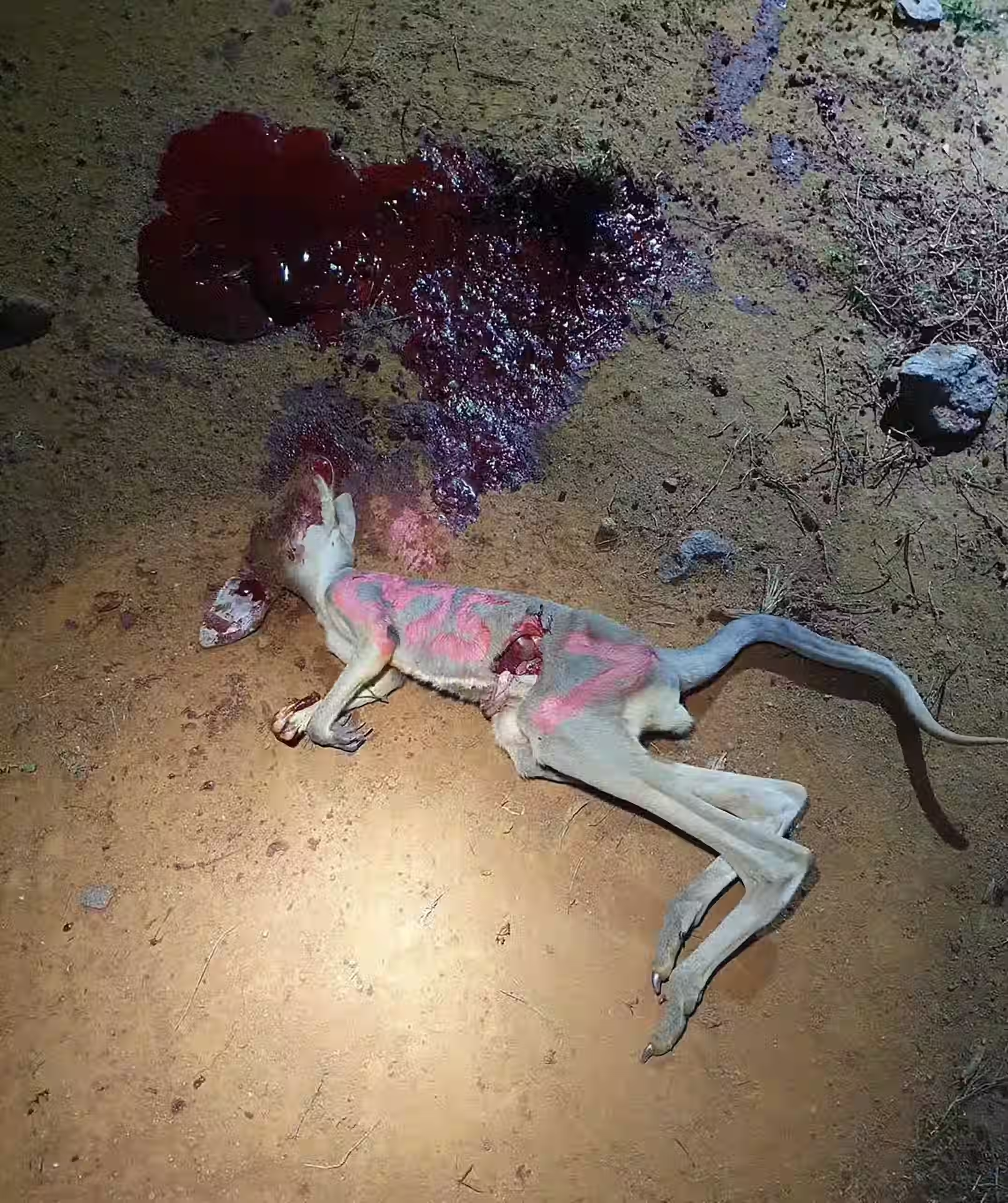
While the correspondence above has not been answered we were able to obtain the detail of what occurred in 2025 as a result of the bounties, what we know suggests the significant amounts spent in 2025 on bounties and incentives achieved very little in terms of killing more Kangaroos than in the case that incentives bounties had not been applied at all and are an indicator of just how few Kangaroos now live in South Australia. From the detail we have it looks as if our original comments on the impact of the bounty were fairly accurate. We will await the Government’s 2025 Kangaroo Harvest Report before further comment. The increase in incentive (see below) announced on 20 February 2026 was a doubling down to keep promoting the myths and yet another pointless waste of tax payers money.
Funds dispersed as daily incentives. $86,300 dispersed as daily incentives from 26/11/2024 to 20/01/2026
Funds dispersed as grants for field processors. $359,938 dispersed as grants from 26/11/2024 to 20/01/2026
Funds dispersed for commercial harvesting permits to field processors. NIL
The Drought Support Program does not disperse funds for application for commercial harvesting permits. However, $381,061 has been dispersed from 26/11/2024 to 20/01/2026 to harvesters as incentives ($5 per kangaroo and daily incentives) for the commercial harvest of Kangaroos. Claims for incentives for January 2026 have not yet been received or processed.
Funds dispersed for Destruction Permits to field processors. NIL
The Drought Support Program does not disperse funds for application for Destruction Permits (such as application fees). Destruction Permits are issued by the Department for Environment and Water. PIRSA has dispersed $13,654 in incentives to Commercial field processors (who already have destruction permits) for the destruction of Kangaroos from 26/11/2024 to 20/01/2026.
Funds dispersed for Destruction Permits to primary producers. NIL
The Drought Support Program does not disperse funds for application for Destruction Permits (such as application fees). Destruction Permits are issued by the Department for Environment and Water. PIRSA has dispersed $7,500 in incentives to Primary Producers (who already have destruction permits) for the destruction of Kangaroos from 26/11/2024 to 20/01/2026.
Details of any claims related to these permits or associated incentives/grants that were denied, including the reason for each denial. Nil
No claims for incentives or grants from 26/11/2024 to 20/01/2026 were denied, but some claims for incentives were refined by field producers during review by PIRSA, to clarify information or details such as dates, number of kangaroos harvested and GST. Some claims for incentives are awaiting more information (as per requirements in the program guidelines) before they can be processed.
The Government of South Australia entered caretaker mode on Saturday, 21 February 2026. This period commenced in anticipation of the upcoming State Election scheduled for Saturday, 21 March 2026.
“Producers can access a Kangaroo removal incentive, which has now been increased from $5 to $7 per animal. This increase aligns payments for landholders with those available to commercial harvesters and recognises the costs involved, including labour, fuel and ammunition. The updated rate will apply from 20 February 2026 and remain in place until program funds are exhausted. Producers will still be required to provide necessary evidence to ensure removals occur on permitted properties and maintain the integrity of the program”. Government of South Australia, 20 February 2026


Given the up and coming Kangaroo Inquiry in South Australia this analysis will be useful to submitters trying to understand what is occurring.
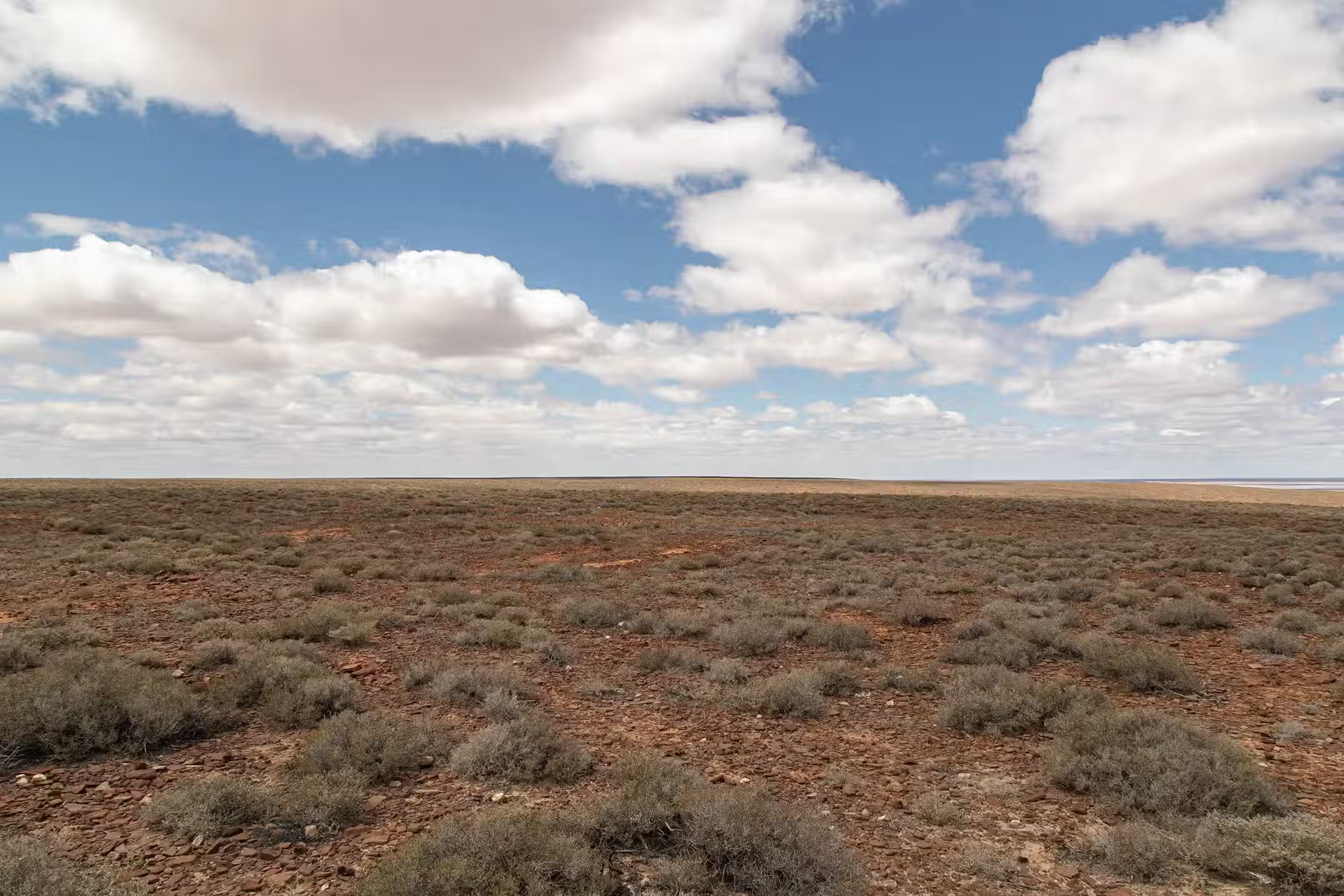
Our experience of South Australian landscapes is one of total absence. The myths of booming populations and mass starvation, are precisely that, myths. The population estimates for 2026 show a 31 per cent decline in the population of Red Kangaroos.
As per our forecast, the actual take was just 17 per cent of the South Australian commercial Kangaroo quota.
The actual commercial take of Kangaroos in South Australia for the first 6 months of 2025 is running slightly higher than originally forecast by the Nature Knowledge Channel but has only reached 8.5 per cent of the full year quota.
The Nature Knowledge Channel holds the data for the commercial exploitation of Kangaroos in South Australia back to the early 1970s.
This analysis is a rebuild of annual Kangaroo population estimates, commercial quotas and actual take from 1980, including the population estimate data removed from the public gaze.