2026: Commercial exploitation of Kangaroos in South Australia

Life on land


Your support will assist us to continue our research and content development, the greater our resources, the more we can do.
The more we have an accurate understanding of what is happening to nature, the more we can all do to protect what remains of our living planet.
This is also an opportunity for philanthropists to be part of an ongoing project that tells independent stories about the natural world, stories that will help us to better understand what is happening to species and places on our precious planet Earth.
Note: Creative Cowboy Films does NOT have tax deductible charity status.
Becoming a member of Creative cowboy films The Nature Knowledge Channel is a very real way you can help the precious natural world and support the work we do in creating knowledge about what is happening to it.

The Nature Knowledge Channel is a very real way you can help the precious natural world and support the work we do in creating knowledge about the natural world.
Annual membership of the Creative cowboy films - Nature Knowledge Channel gives you full access to content, stories and films, available on this website. Becoming a member of the Creative cowboy films - Nature Knowledge Channel is a very real way you can help the natural world and support our work in creating a greater understanding about what is happening to it.
A point of difference
Creative cowboy films is independent, is not funded by governments or industry, and is not influenced by their associated interest groups. For reasons of independent research and content development, Creative cowboy films does NOT have tax deductible charity status.
Life on land
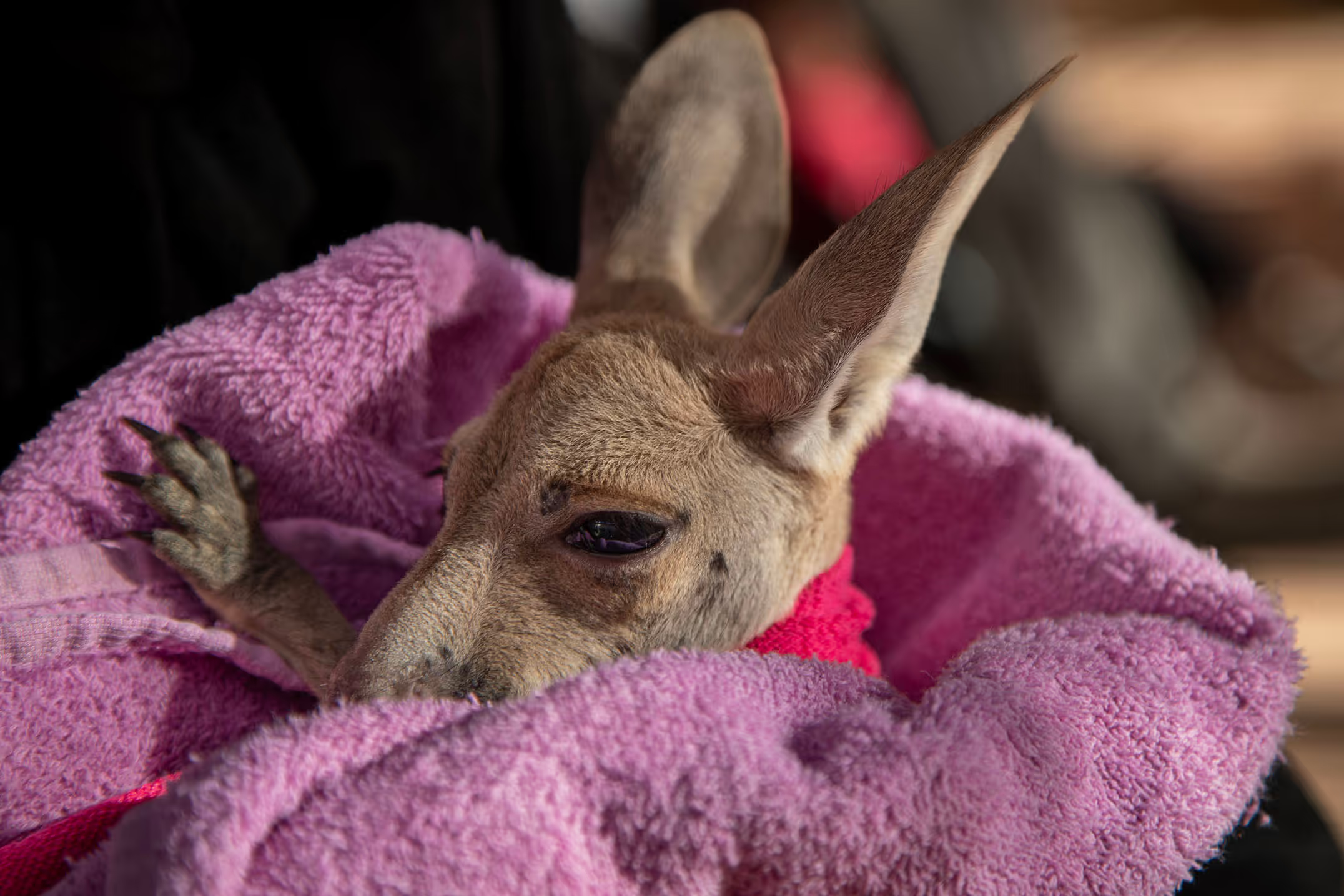
The population estimates and quotas for 2026 were published by the South Australian Government on 7 January 2026.
From data provided by the Government of South Australia (DEW).
The combines commercial quota for 2026 is 600,400, down from 805,500 in the previous year.
The 2026 quota is composed:
If the 2026 quota was achieved in full, we estimate that 160,000 joeys would be killed by decapitation or be bludgeoned to death (and for those who escape, death by starvation).
“As I write this the temperature in many parts of South Australia reached 48 degrees Celsius, the land bakes. One of the recommendations often made by the Government of South Australia is to cut off ‘water points’ (exclusion fencing) so these cannot be accessed by wildlife. Claims of booming populations of Kangaroos in the state are not reflected in the government’s own numbers, as the already inflated population estimates show a decline in population for the Red Kangaroo of 921,382 animals (not including joeys) in the latest 12 month period, that is a 31 per cent decline in the population of Red Kangaroos in the state. And now they want to kill another 373,300 Red Kangaroos this year. Well of course they can’t as that would probably be all of them”. Peter Hylands
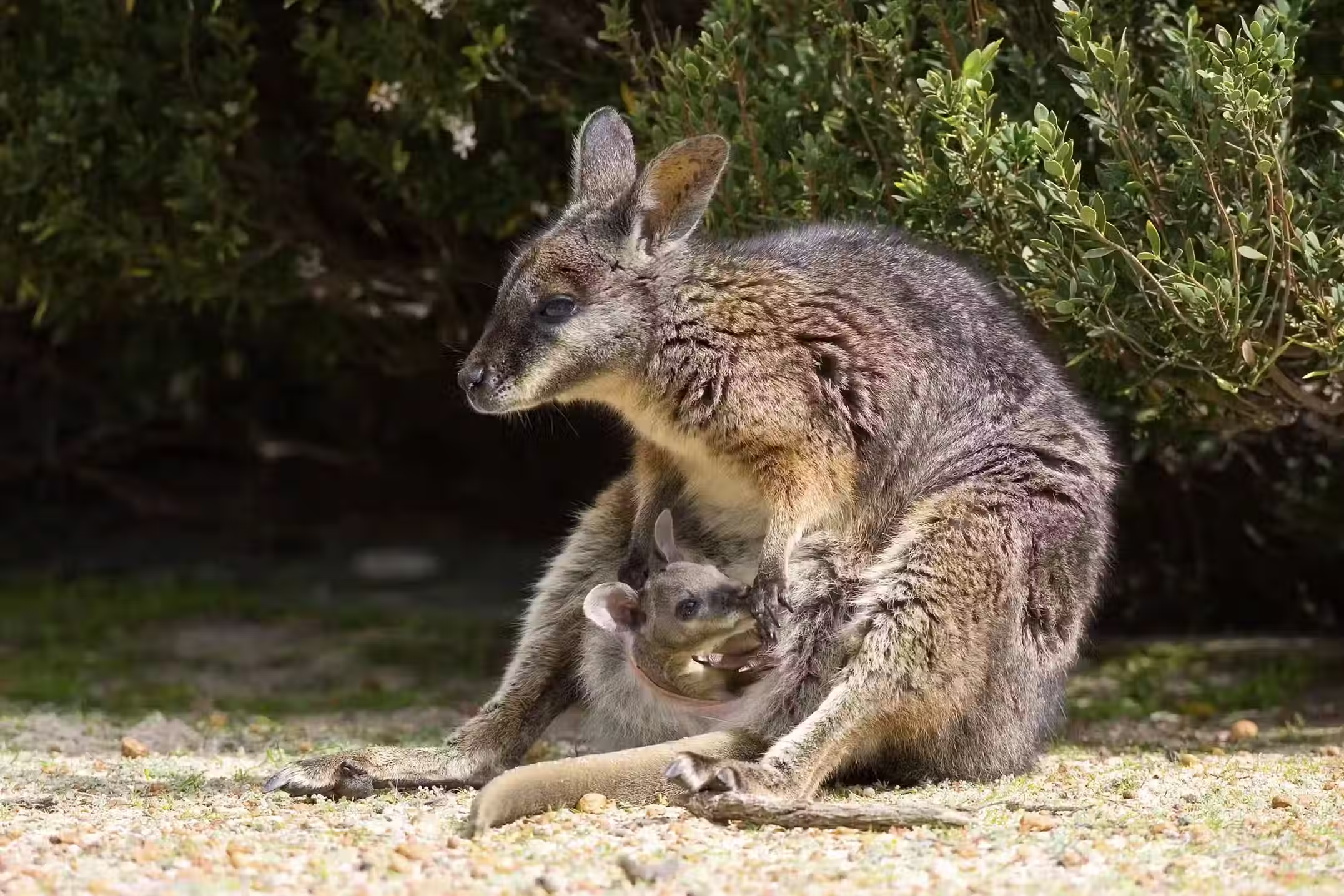
Latest actual for 2024 (Meat Processor data) is 106,503, 17 per cent of that year’s quota of 635,400. Previously we had reported 105,845 from shooters returns. There was no Special Land Management Quota issued for 2024.
Latest actual for 2025 (January to end October 2025), which includes the impact of the commercial component of the various bounties introduced in the year, is 100,102, that is 12 per cent of the 2025 quota of 805,800. This number does not include the Special Land Management Quota. The full year projection (DEW) is 119,892, 15 per cent of the full year quota. Our view is that the full year forecast will be difficult to achieve.
Year in year out, Australian state governments trot out the same nonsense, and year in year out we say this cannot be and is not correct as there is zero evidence that it is correct, and a vast historical archive to say it is not correct. Dress the claims up as science and everyone believes them without a single question being asked.
At great expense, the South Australia Government attempts to continue to enable the commercial exploitation of Kangaroos in the state by allowing shooting zone extensions, moving to commercially exploit Kangaroos on public land, shooting large numbers of female Kangaroos and adding new species to the list of those animals that can be commercially exploited.
Despite all these significant additions to what is possible, the actual commercial kill continues to decline. If you take out the recently added species, the actual kill against quota falls to just 15 per cent. Subtracting the impact of shooting zone extensions reduces this figure even further. A clear indication that population estimates for these species are vastly inflated. To put it in simple terms, they are just plain wrong.
We should note that, as vast areas of land have been cleared, many available water sources have been destroyed. We should also note that Macropod species have vanished across the Australian landscape at scale, including total extinctions and regional extinctions. When I asked the South Australian Government how it could be possible, in a state with a large number of post-colonial extinctions and a very long list of species that are in very deep trouble, that the populations of Kangaroos on the state’s commercial list have ‘exploded’ (not even reflected in their own actual kill figures if they care to look) when all other species have experienced precisely the opposite trend? You won’t be surprised to hear that they could not answer the question. So, Kangaroo boom bust cycle NO, and it’s all humane, that is another very big NO.
While this cruel trade in wildlife should not occur at all, the following species should be removed from the commercial list with immediate effect because of significant damage to actual populations:
Then the recent 2020 additions:
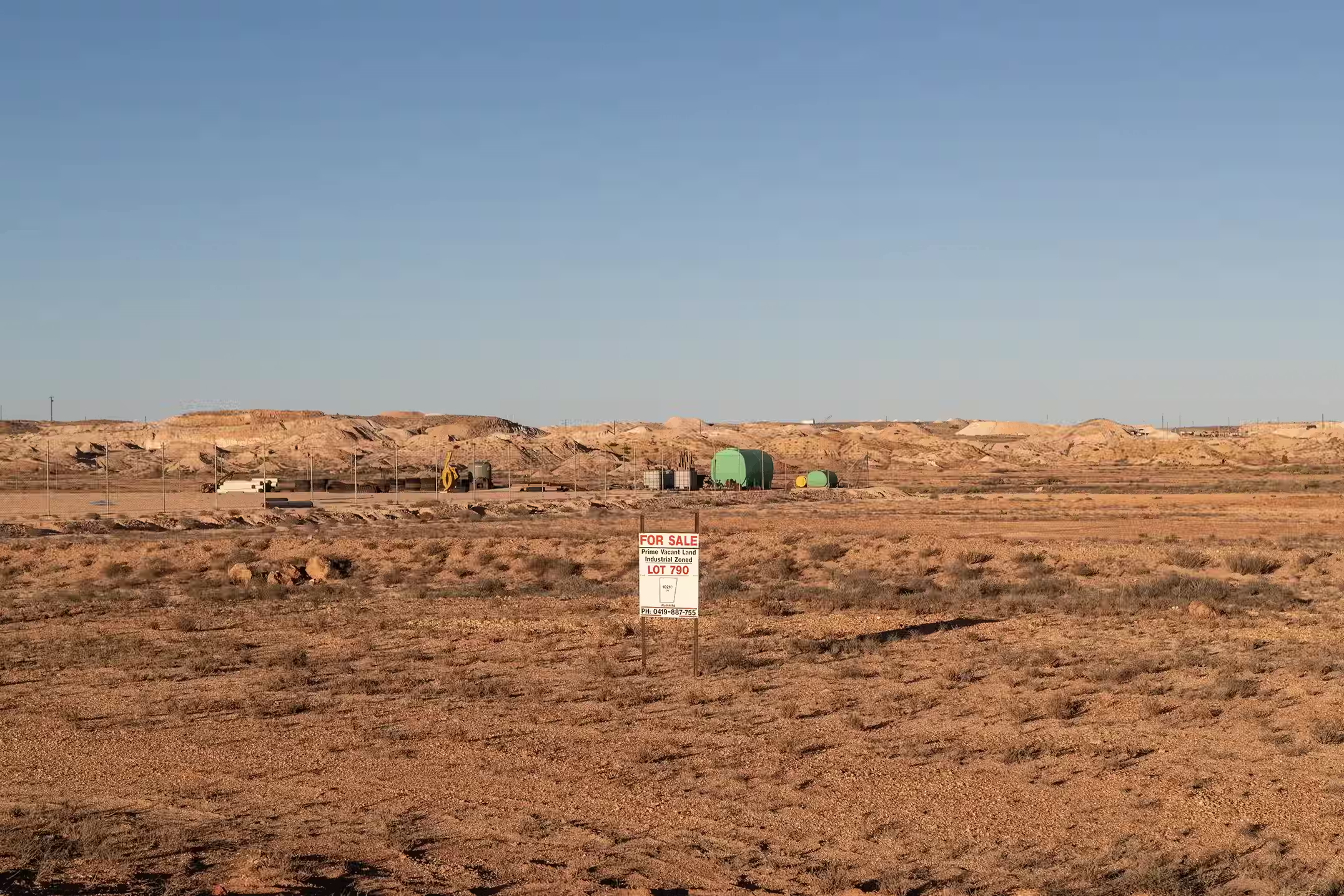
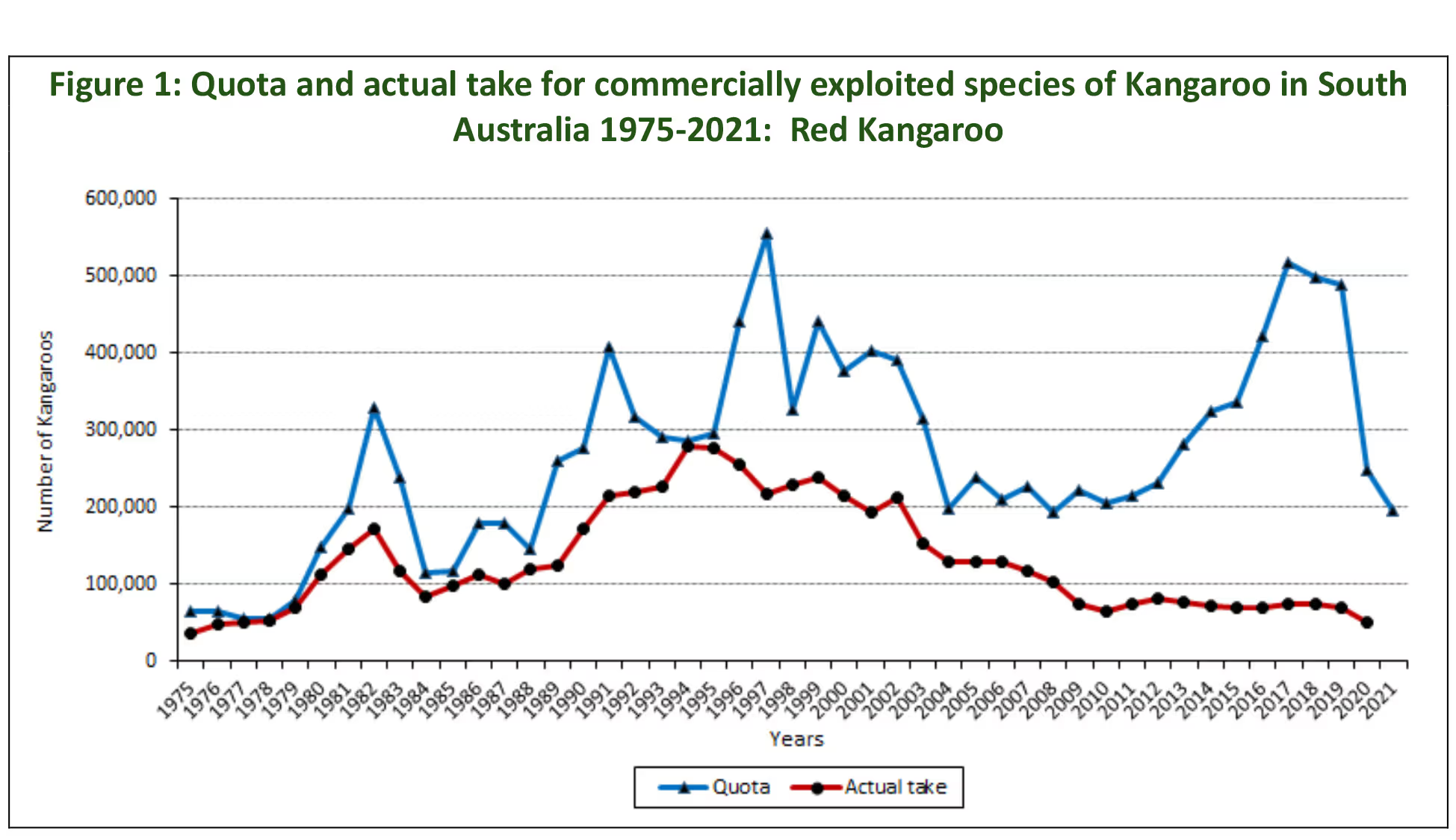
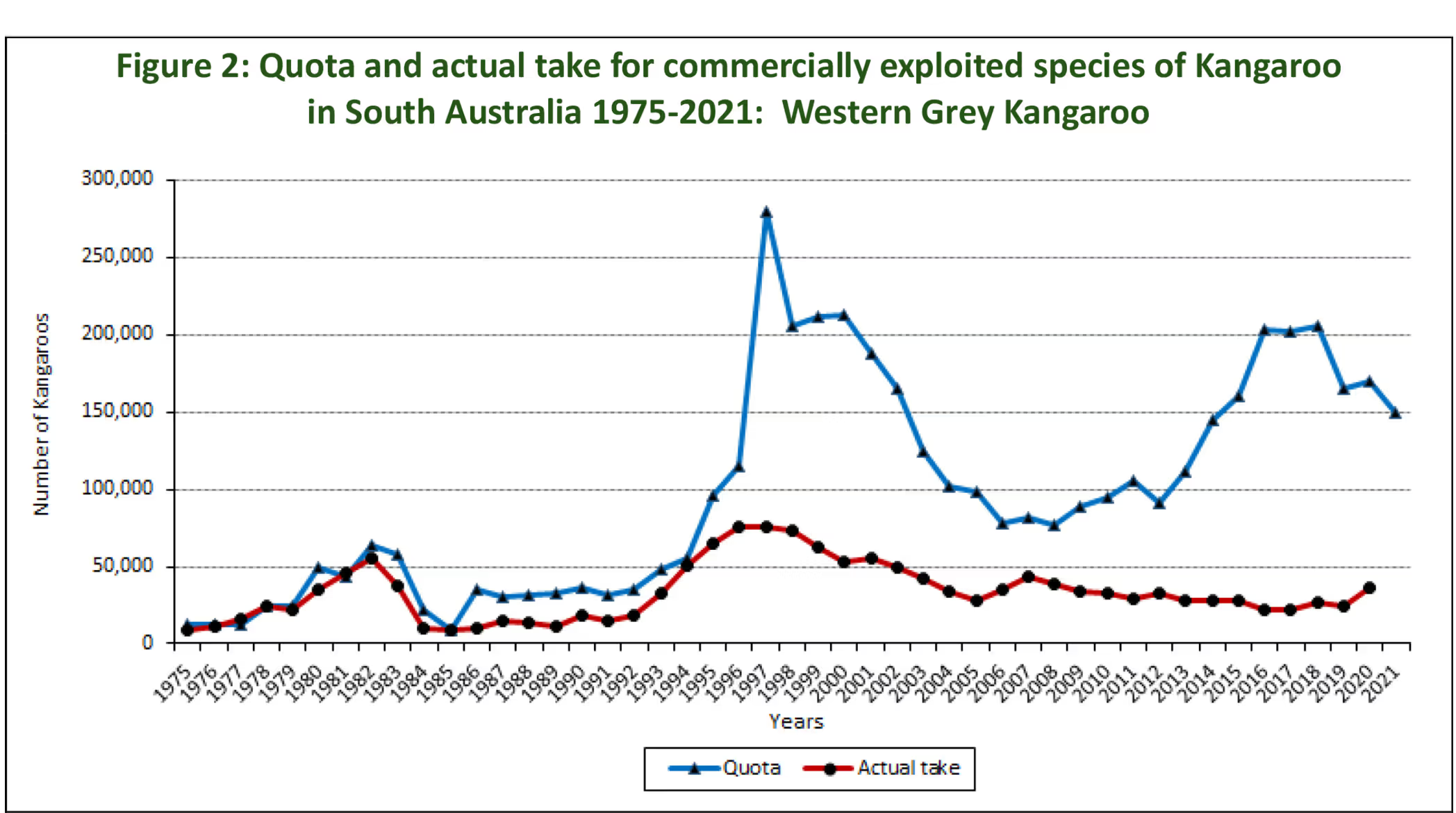
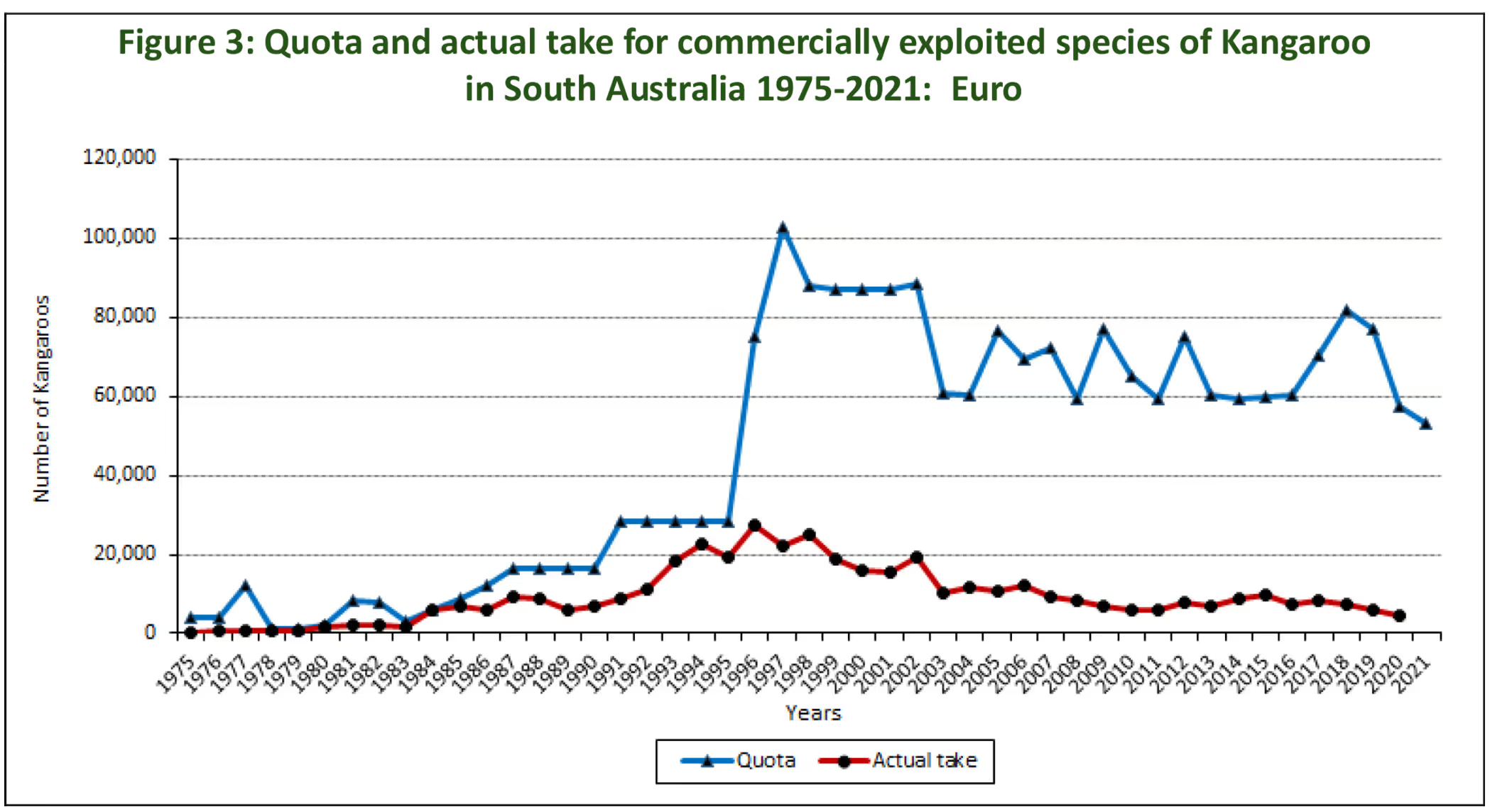
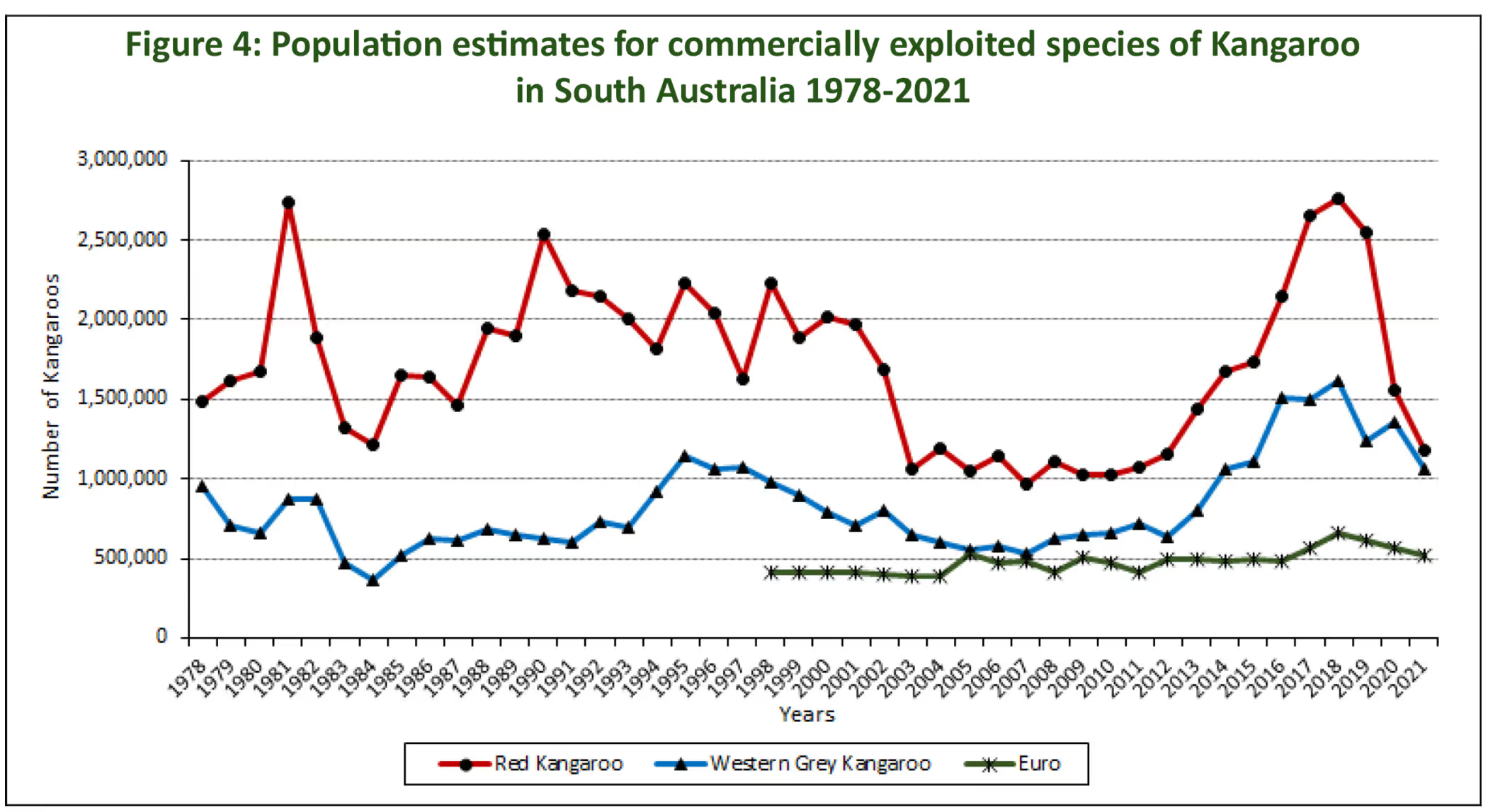
The South Australian Government population estimate for Kangaroos being exploited commercially in the state since 2021 are:
For reference, government population estimates in the 1980s ranged from 2,831,595 (1982) to 972,390 (1985). The wildest fluctuations in populations with completely impossible increases have occurred since 2016, so in the last decade. In the period there were shooting zone extensions and additional species added, but not enough to account for the population increases. All this going on while the ‘industry’ running low on actual take country wide, was desperately trying to develop its grim trade in Victoria. A period where the marketing propaganda describing Kangaroos as pests and worse, took off around the world.
In the period 2021 to 2025 the inflated population estimates in South Australia led to a combined and unsustainable commercial quota in South Australia of 2,876,300 Kangaroos. The actual commercial kill was 498,718 (plus 130,000 unaccounted for dependent young), excluding young unaccounted for in both population estimates and quotas, that was just 17 per cent of quota for the period. In 2025 it currently looks as if the bounty added, at very most, in the range of 15,000 to 20,000 additional Kangaroos that otherwise would not have been killed, not the 50,000 to 100,000 claimed by the state's Agriculture Minister.
Because none of these species can sustain the killing rate, a detailed investigation needs to occur in relation to the future prospects of both the Red Kangaroo and Western Grey Kangaroo in South Australia.
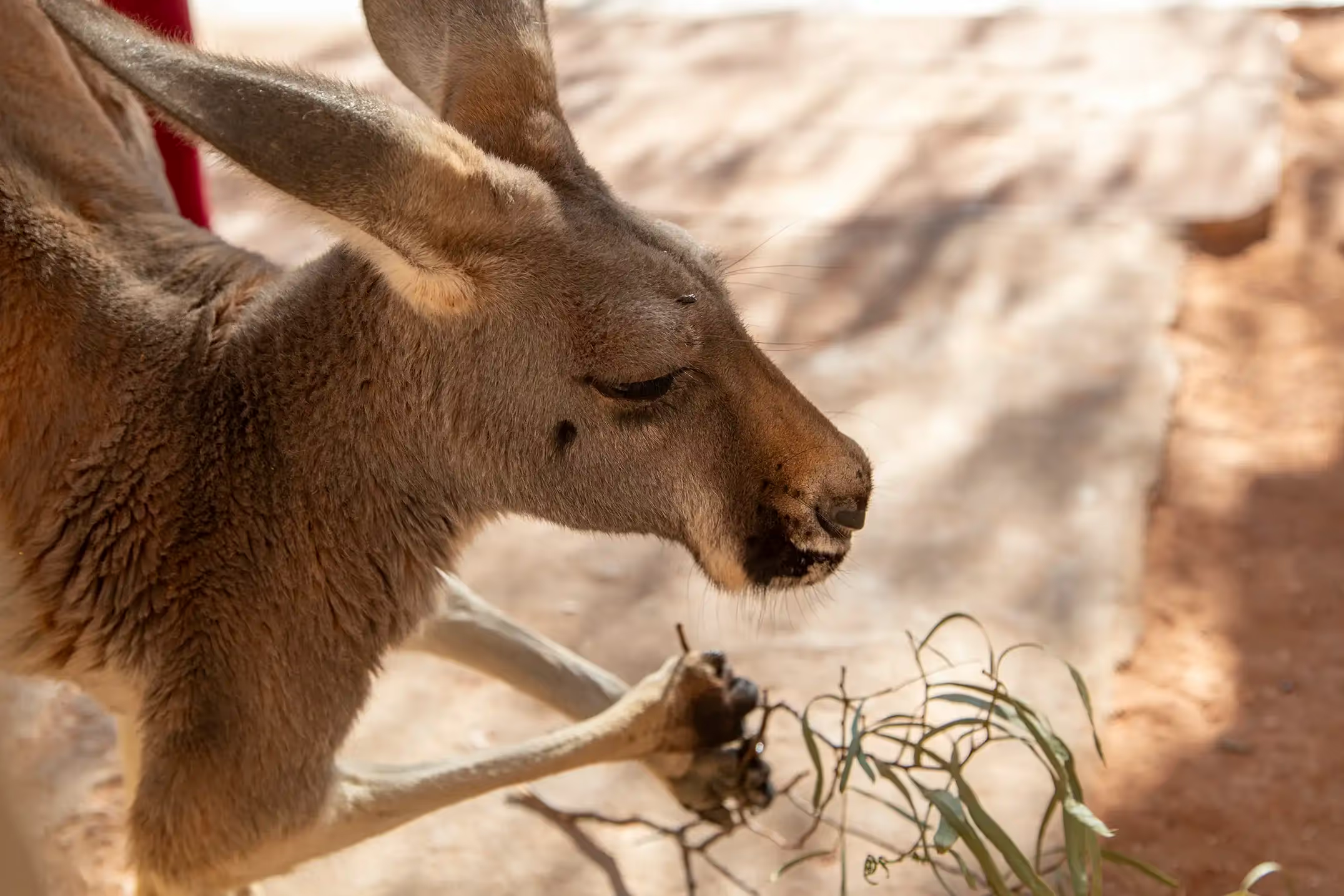
The total Kangaroo population estimate for South Australia in 2024, which sets 2025 quotas, was 4,922,375 (includes the Eastern Grey Kangaroo) giving a quota for 2025 of 805,800, up from 577,000 in the previous year. If the quota was met in 2025, this would mean 230,000 joeys (not included in the data) would also die by decapitation, beaten to death or starvation if they escape.
The data described is from permits issues and ‘harvesting’ returns for the period. The following species are included in the data: Reda Kangaroo, Western Grey Kangaroos, Eastern Grey Kangaroo, Euro, Tammar Wallaby and Red-necked Wallaby (latter NOT on commercial species list in South Australia). These numbers do not include the death of (majority of) joeys.
Number of Kangaroos killed for commercial gain in the period 26 November 2024 to 20 January 2026 was 136,223 (our estimate calendar year 2025, 120,000). For the full period shown, species comprise Red Kangaroo 80,949, Western Grey Kangaroo 38,001, Eastern Grey Kangaroo 11,938 and Euro 5,335. That means just 15 per cent of the commercial quota of 805,800 was achieved in 2025.
Destruction permits issued in the period covering all species except Tammar Wallaby but including the Kangaroo Island Sooty Kangaroo (WG) were for 182,164 animals. Just 8,211 were reported killed. For Tammar Wallabies (Kangaroo Island), for destruction permits issued, the number of Tammars was 16,750 and just 580 were reported killed.
While claiming over abundant populations of Kangaroos, the ABC news media claiming, “The desperation for food is so great, their numbers so large, that Kangaroos are even destroying the native landscape in which they evolved in”, the reality is very different, the hype leading to killing Kangaroo species in parts of South Australia were the data shows that they are functionally EXTINCT.
So of the 1,004,714 animals targeted in the period described, just 145,014 were actually killed (just 14.5 per cent), and that is despite the propaganda, the demand for more and more permits and killing and subsidies and bounties to kill more animals in 2025.
The actuals for the period 1 January to 1 July 2025 as reported by the Government of South Australia are:
TOTAL ACTUAL KILL – 68,381 (8.5 per cent of full year quota).
While the actual kill is very low when compared to quota, the kill is still higher than the Nature Knowledge Channel’s forecast. Given this I asked the Government of South Australia the following questions.
The numbers are interesting, particularly so as the numbers are higher than our forecast for SA and the period.
Was this because?
It will be interesting to know which of these is the main driver of the increase in kill.
In response to these questions the Government of South Australia report the following:
“At this stage, there does appear to be an increase in the number of Kangaroos harvested compared to last year, however, it is hard to know if this trend will continue into the second half of the year.
I can confirm that the data provided to you in my previous email did not include joeys. The higher harvest is most likely driven by a number of factors, including climatic conditions and industry demand. At this stage it is too early to tell if the PIRSA drought program has had an impact on the number of Kangaroos harvested given DEW has only received two months of harvesting data since the program started mid-May. The higher harvest is also not a result of increased commercial harvest on parks, this is a very small percentage of the overall harvest and is not expected to significantly change from last year’s numbers.
Further analysis of the harvest data will be conducted when the 2025 harvest report is developed early next year”.

A letter (July 2025) to Peter Hylands from South Australia’s Minister for Primary Industries and Regional Development / Minister for Forest Industries, contains the following paragraphs.
“The program aims to reduce the impact of Kangaroos on farmers’ pastures and crops, as well as mitigating the poor animal welfare outcomes due to lack of food and water available for Kangaroos. Consecutive good seasons has meant Kangaroo numbers have boomed, and the current drought has left them with little to eat. Kangaroo populations are surveyed each year, and the science to estimate kangaroo population numbers has been extensively peer-reviewed. Currently, it is estimated there are 5 million to 6 million Kangaroos in South Australia, with only approximately 100,000 harvested per year. The additional measures are estimated to remove between 50,000 to 100,000 additional Kangaroos”. Hon Claire Scriven MLC
Prior to the bounty being announced, the Nature Knowledge Channel’s forecast for actual kill against quota in 2025 at 94,500 was just 11.7 per cent, revised upwards to 106,500. When the bounty was announced we said the bounty might increase this number given high levels of access to pretty well everywhere Kangaroos exist. Given what has happened since the bounty was introduced and what we know about the numbers to date, our estimate in terms of the additional number of Kangaroos killed as a result of the bounty, and other incentives to kill more of these animals, will be an additional 7,455 Kangaroos (plus any joeys caught in the killing), so nowhere near the 50,000 to 100,000 additional animals claimed by Claire Scriven. In total, $900,000 of the state government's $73 million drought-support package was made available to support the killing of South Australia’s Kangaroos in ‘drought-impacted regions’. If all the money allocated was expended in bounties and other incentives, the government are effectively paying a bounty / subsidy for every Kangaroo killed in South Australia from mid-May 2025, when the bounty was introduced, to year end, so the entire budget may well be expended.
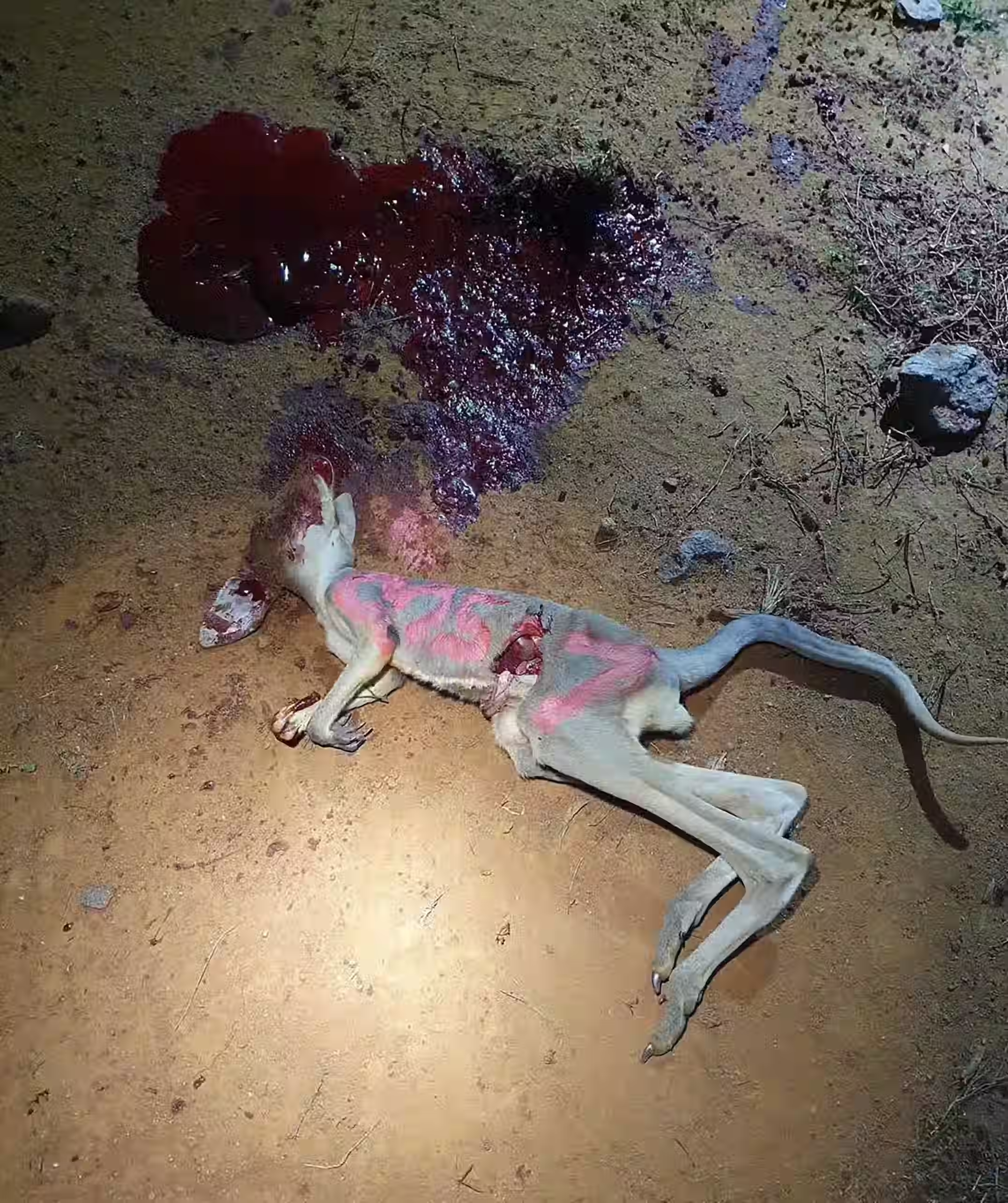
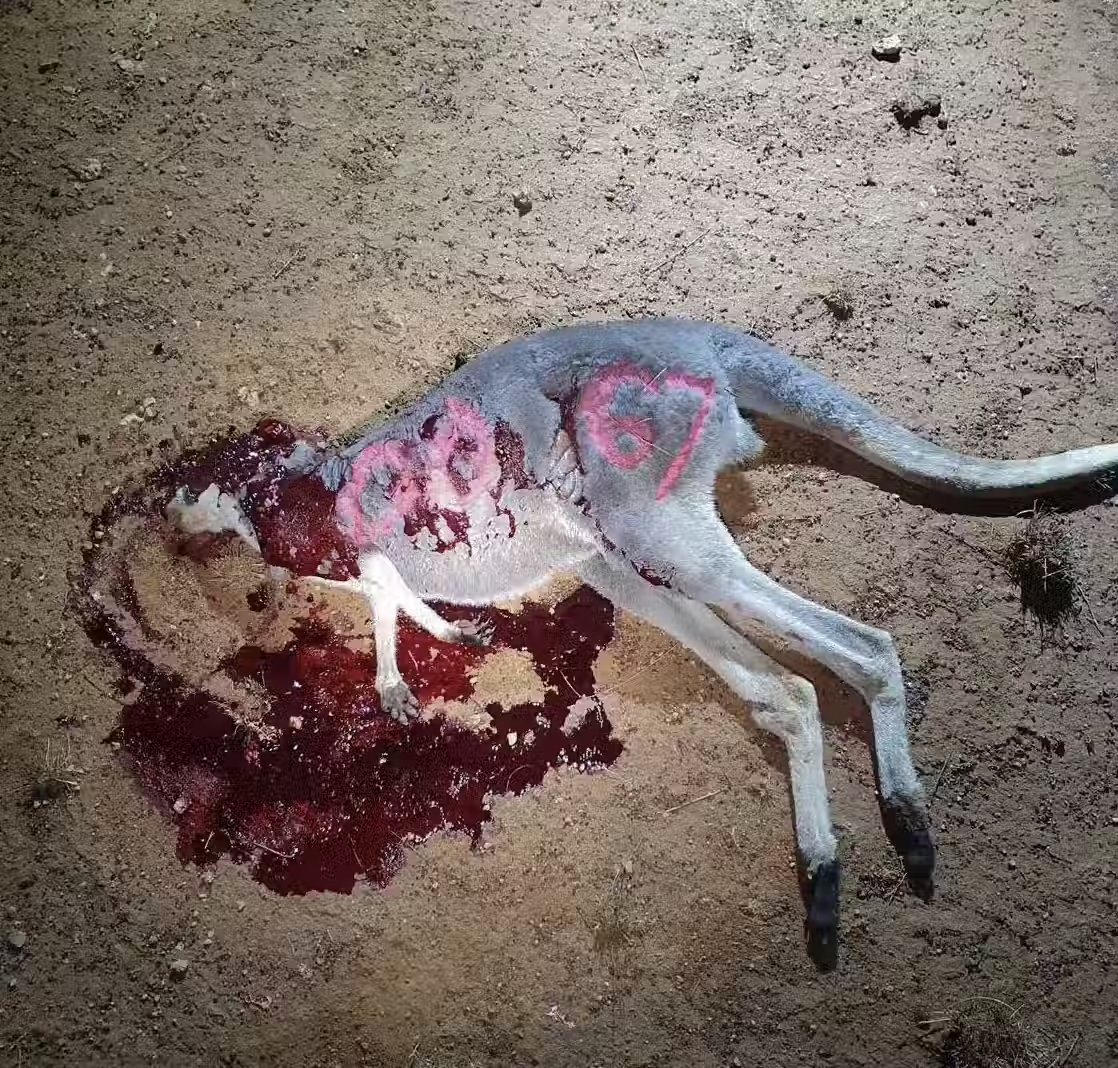
This begged the question, now answered above, are joeys now to be counted as part of the commercial kill as this has never occurred before as they are considered not to be viable for processing? The images of joeys killed as part of the Drought Support Package and supplied by PIRSA suggest that at least some joeys may be being processed.
We should remember this. In South Australia there is no achievable ceiling to the killing because populations are overstated and as a result, quotas are so high, and this results in the lowest actual kill against quota in percentage terms in Australia at just 17 per cent in both 2023 and 2024. In addition to this, Kangaroos can now be killed in almost every place in South Australia where they exist. So there are no achievable and regulated upper limits to the killing to deter shooters or farmers from obliterating Kangaroo populations. They are already killing everything they want to kill. We should also note that year on year the claims of a booming population increase, populations increasing from 3,912,711 in 2023/4 to 4,922,375 in 2024/5, were biologically impossible. That means IMPOSSIBLE.
This in turn means that the bounty will act as a proxy subsidy to enable an unsustainable industry, based on dubious claims and an even more dubious ‘science’, to continue until there are very few, if any, Kangaroos in South Australia. Just look at the state’s track record when it comes to wiping out native species.
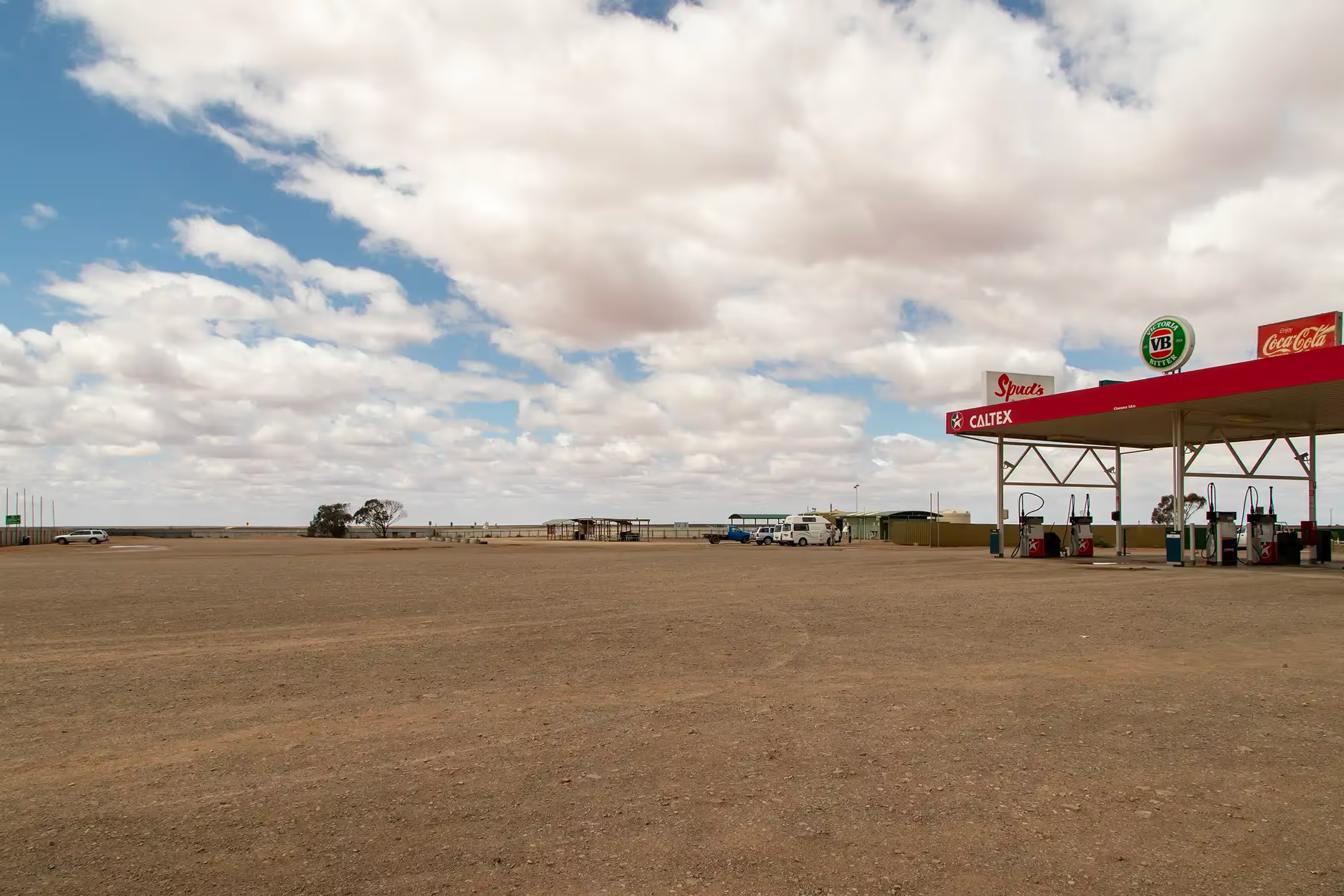
Apparently Kangaroo populations in South Australia are so high, after, I quote the South Australian Government, ‘successive good seasons’ and that ‘ the subsequent drought conditions mean high numbers of Kangaroos can cause severe damage to crops, pasture’, and wait for it, ‘native vegetation’.
Our experience of the South Australian landscapes is one of total absence. The myths of booming populations and mass starvation, are precisely that, myths. Remember that prior to the announcement of the initial bounty earlier in the year, the Nature Knowledge Channel’s forecast for actual kill against a quota based on the usual inflated population estimates (biologically impossible) was that actual kill would be just 11.7 per cent of the 2025 quota. The reason for this, the Kangaroos do not exist in the numbers being claimed.
Plan upon plan to exterminate Macropods from South Australia, the latest iteration of which, popped up at the end of October 2025, will support primary producers, again I quote the South Australian Government, ‘ to remove Western Grey Kangaroos, Red Kangaroos, Eastern Grey Kangaroos, Euros and Tammar Wallabies’.
While the now incomplete, South Australian Government Inquiry into Kangaroo and Wallaby populations in South Australia, was in progress, the government have hastened to ensure, across a whole range of mechanisms, that as many Kangaroos and Wallabies are removed from South Australia’s already empty landscapes, prior to the handing down of any findings from that inquiry.
So the latest addition to the 2025 bounty program:
“A total of $350,000 is available for this initiative to provide incentives for primary producers, to remove starving Kangaroos. These incentives are the subject of these guidelines…. under this incentive, PIRSA is paying primary producers”.
We should remember that when I contacted the ABC regarding its claims about the very high populations of Kangaroos in South Australia and the Arid Landscape Board which had contributed to the news item, claiming large populations of Kangaroos were starving, there was no reply. The ABC journalist, Luke Radford, stating:
“The desperation for food is so great, their numbers so large, that Kangaroos are even destroying the native landscape in which they evolved in”.
Not the kind of person who gives up, I followed up the ABC, and more than once, no reply. So I rang the Arid Landscape Board, no reply from them either to my emails, saying we would like to send a film crew over to South Australia to film the vast numbers of Kangaroos and the damage they were doing. I was told that there was nothing to see as the Kangaroos had now dispersed, where to was not clear.
So the latest round of funding of an additional $350,000, adds to the already available $900,000 announced during the inquiry period provided for ‘existing and new field harvesters to assist with operating costs’.
Perhaps it is time for the Federal Government to have its own inquiry into what is occurring here, after all, apart from the extreme cruelty and the loss of species that are so uniquely Australian and which have existed in harmony with other Australian species in those landscapes for millions of years, these are public funds that are being expended.
We keenly await the actual kill figures for 2025. That will reveal what has actually occurred here.
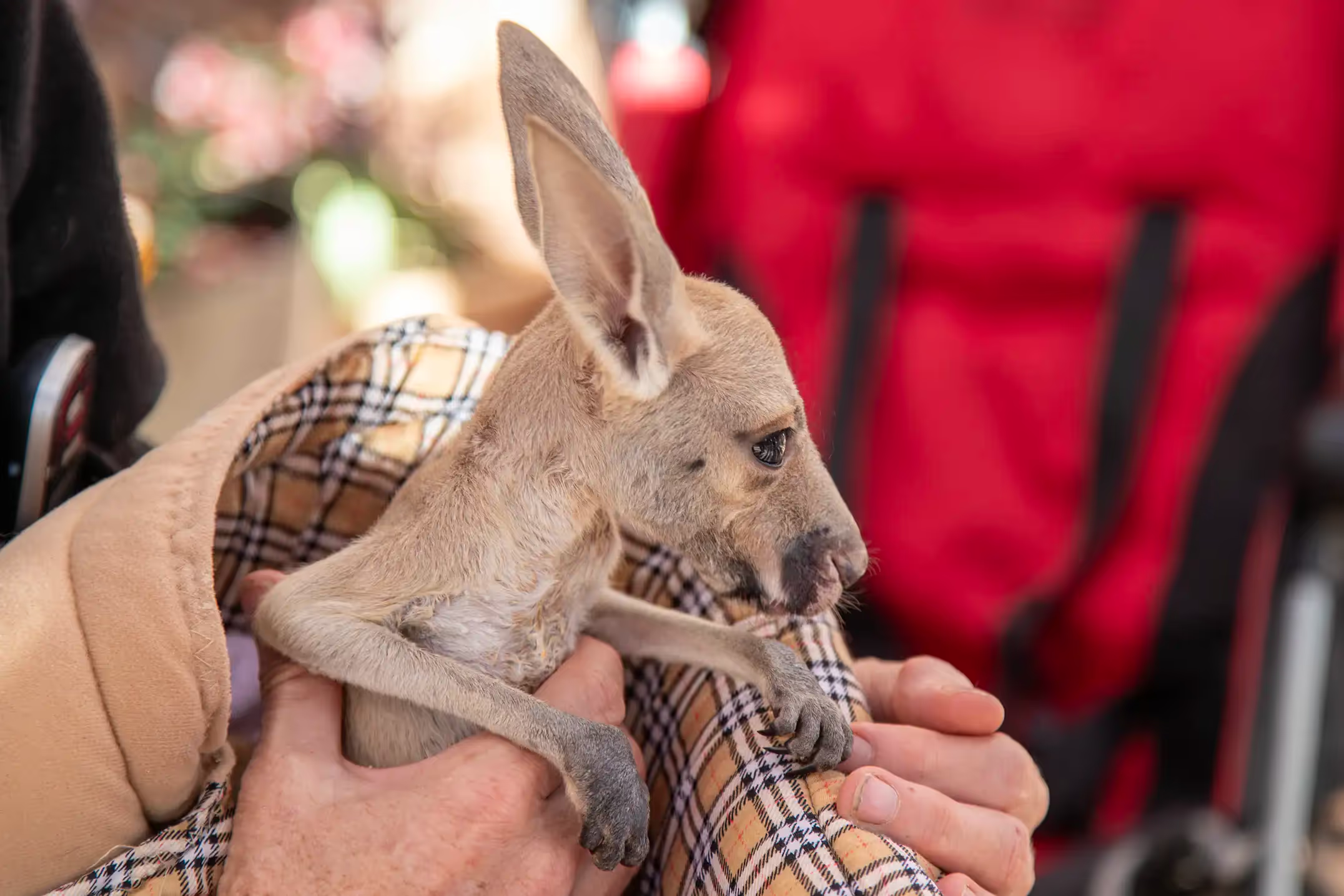
Given the vast scale algal bloom impacting South Australia’ s coastline, and doing so for months, it is beyond comprehension that South Australian Government public servants are tied up in a complex and pointless Kangaroo bounty scheme to kill the remaining and rapidly declining populations. Here we answer two questions.
So what are they going after? – Which species of Kangaroos can be shot under a Permit to Destroy Wildlife? Permits will be issued for the following species:
And all this during a period when the South Australian Government’s own Inquiry into Kangaroo and Wallaby populations in the state drags on without conclusion.
Disgraceful.
In South Australia in 2024 a total of 105,845 Kangaroos were shot for commercial gain (excluding joeys). That was just 17 per cent of quota which was set at 635,400. The quota, a number which included the five species of Macropod currently killed for commercial gain in the state.
The share of females killed for commercial gain was as follows:
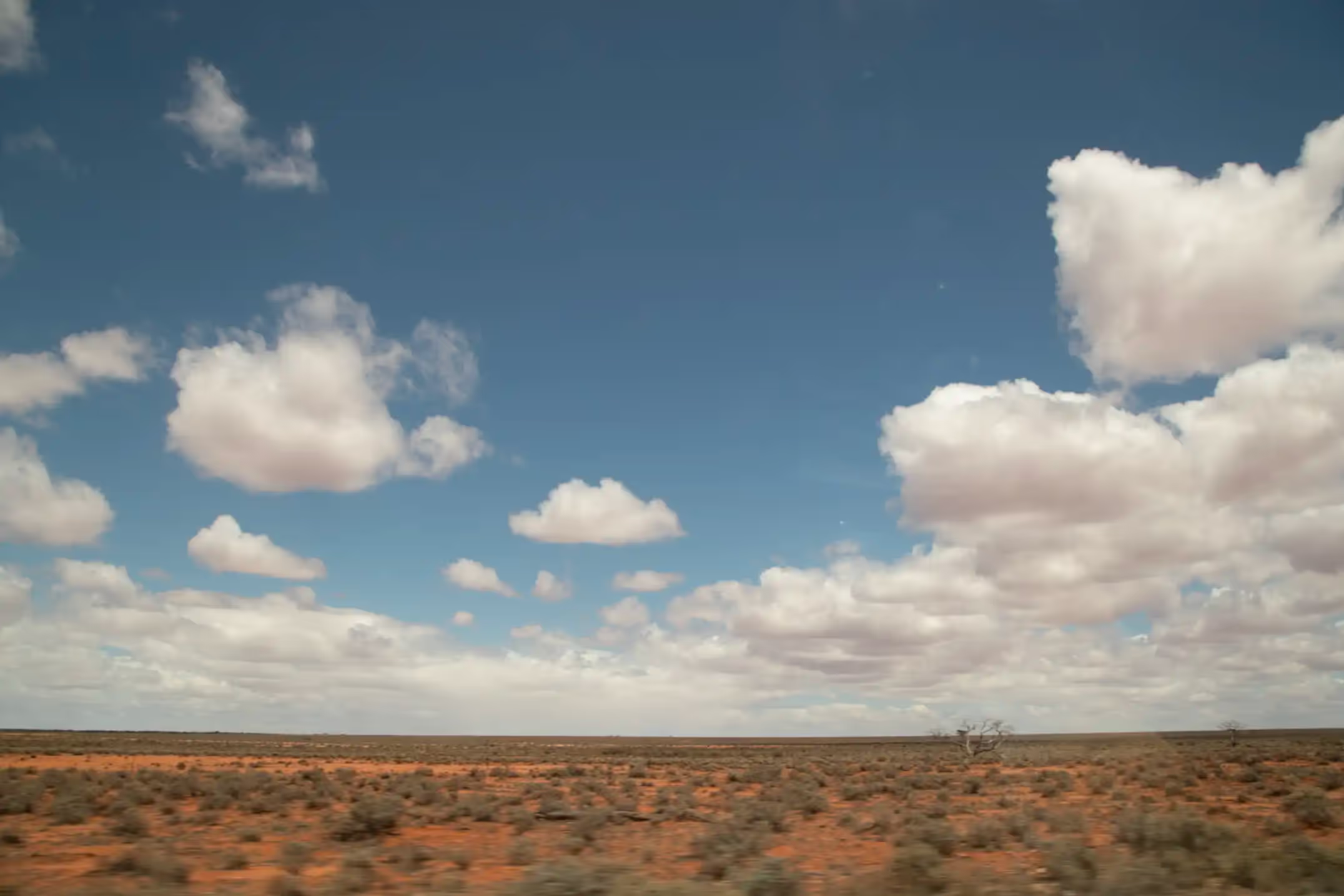
As a share of the commercial kill, this is what happened in 2023, fairly typical of the recent period.
Of the total of 100,594 animals killed in South Australia, Red Kangaroos were 58 per cent of the commercial kill. The quota for 2023 for all species in South Australia was 576,300 animals, just 17.4 per cent of the quota was met.
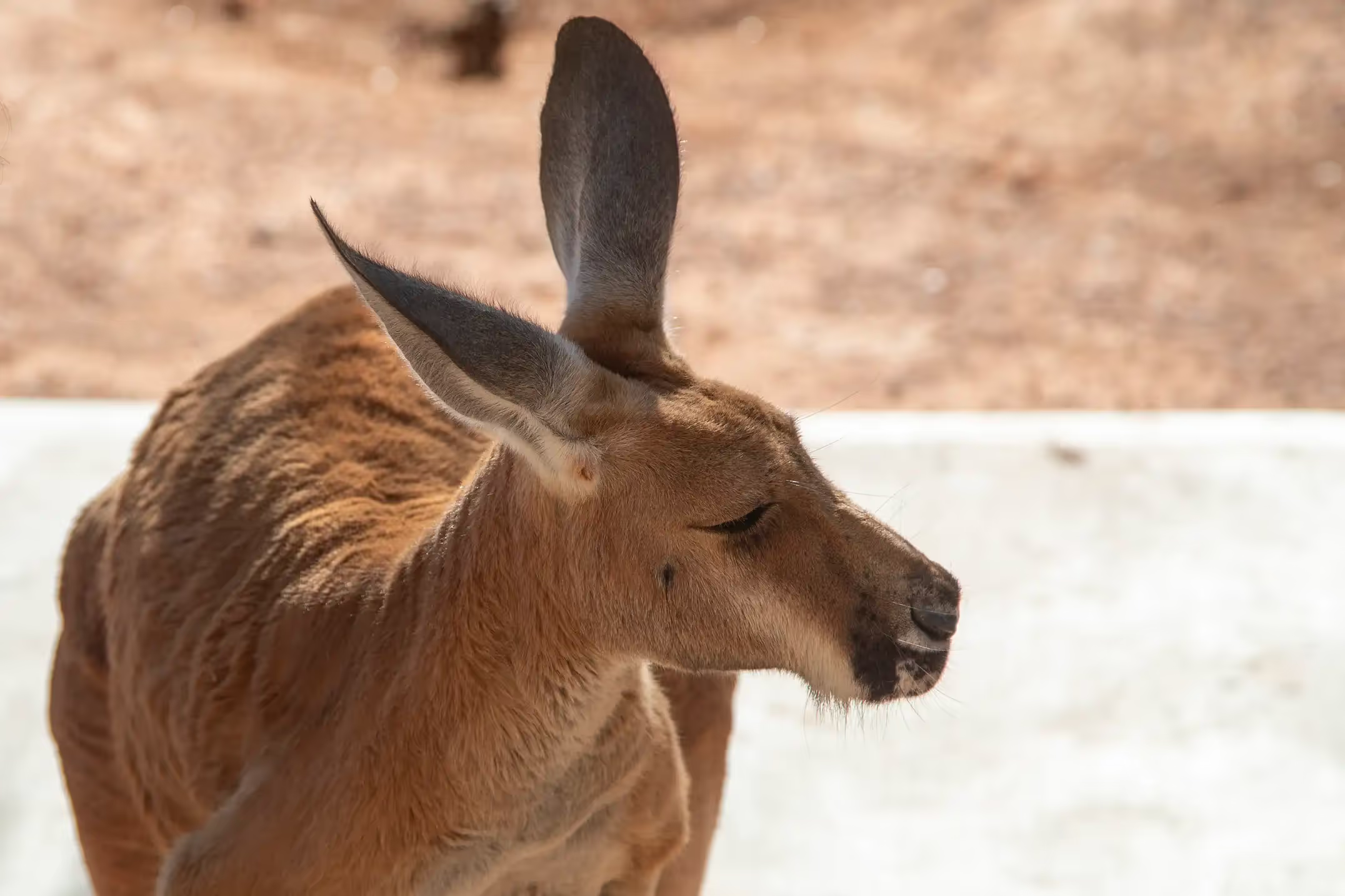
The 1990s were a period of very large scale killing of Red Kangaroos in South Australia for commercial gain and reflected the growth of commercial exploitation for financial gain. Essentially Kangaroos are something for nothing, unless that is, you happen to be a government underwriting the activity in its many dimensions.
1,584 permits were issued to kill 109,497 Kangaroos in South Australia in 2024, the outcome of which is unknown.
Comprised:
As a reference point as to trends, in 2022, 1,123 permits were issued to kill Kangaroos for purposes other than exploitation. The total number of Kangaroos on these permits was 61,489. This consisted of 5,862 Red Kangaroos; 46,161 Western Grey Kangaroos; 2,766 Euros; 1,030 Eastern Grey Kangaroos and 5,670 Tammar Wallabies.
This activity is particularly shameful and means there are no safe places for Kangaroos or Wallabies in South Australia.
Non-commercial killing was undertaken in 9 parks where the following were killed:
A total of 2,140 Kangaroos were killed using destruction permits, of this number 50 per cent or 1,077 Kangaroos were killed in the Gawler Ranges National Park.
Killing for commercial gain was undertaken in 5 parks where the following were killed:
In 2024, a total of 1,989 Kangaroos were killed for commercial gain in nature parks, that is 889 more than in the previous year.
We assume joeys are additional and not accounted for?
“Highlighting concerns that even with quotas, commercial harvesting is "not making a dent" in the exploding Kangaroo populations in some areas in South Australia”.
Be suspicious if you see these words used in material about Kangaroos: Overabundance, booming, abundance, exploding, erupting, eruptions, irruption, waste, compost (yes compost), pest, plagues, over-grazing, all starving, kinder to kill them, dangerous, control, manage, management, controlling, harvest, harvesting, destroying infrastructure, dressed-in-the-field, humane (perhaps the weaseliest word of all), sustainable, hygienic, nibbling, grazing pressure, it is all about sustainability, conservation culls, ecological grazing (when they shoot the Kangaroos and put cattle in these places), biodiversity conservation, chomping, disease, diseased, descending, invading. All of it carefully created especially for you.
"Upping the ante, here is a term that cropped up recently in an ‘academic’ paper on Kangaroos – Hyperabundant, overabundant was clearly not enough".
August 2021 - The war on Australia’s natural world is set to continue until the very end.
And lots of money is being spent to accelerate the killing and exploitation. Probably as counter to the fallout from the NSW Kangaroo inquiry we get even more nonsense and propaganda from other states. And we even get some more weasel words.
From Tasmania - we seek to get the balance right in supporting farmers, foresters and land managers in managing the impact of browsing wildlife on agricultural and forestry sectors while ensuring sustainability of wildlife species is maintained.
And from South Australia - Kangaroo over-abundance and over-grazing presents a threat to the condition and resilience of South Australia’s landscapes, to Aboriginal cultural values, to the sustainability of the livestock grazing industry, and to conservation values.

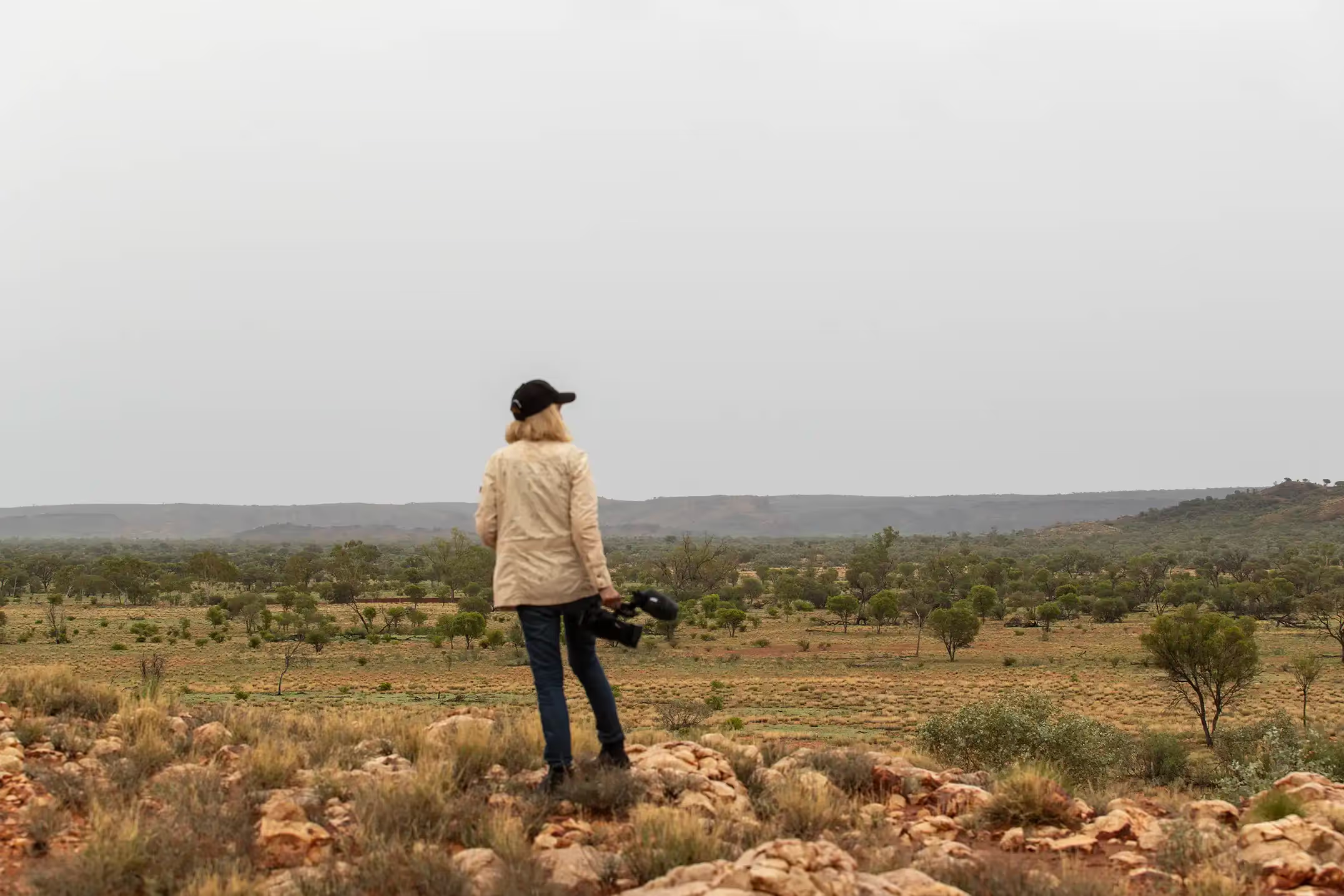

The population estimate for Kangaroos in New South Wales has fallen to 9,586,809 from 13,910,688, resulting in a decline in commercial quota for 2026 of 733,927 Kangaroos.
The Queensland Government’s population estimate for the 3 commercially exploited species in Queensland's 5 commercial shooting zones is 19,308,148 giving a commercial quota in 2026 of 2,850,900 with a DMP quota of 386,164.
An increase in the population estimate for Grey Kangaroos in Victoria, leading to a 2026 quota of 207,800, a decrease of the commercial quota when compared to 2025 of 22,150 (the commercial component now being 95,450).
This analysis is a rebuild of annual Kangaroo population estimates, commercial quotas and actual take from 1980, including the population estimate data removed from the public gaze.
While we wait for the 2026 population estimates and commercial quotas (from 2025 surveys) here is the history of exploitation of Kangaroos in Western Australia.
As of 10 January 2026 all state governments, except Western Australia, had provided their data. Here is the summary so far giving a population decline of 5,799,589.