Poisonous intentions: The use of Pindone carrots in Dunkeld, Victoria

Life on land


Your support will assist us to continue our research and content development, the greater our resources, the more we can do.
The more we have an accurate understanding of what is happening to nature, the more we can all do to protect what remains of our living planet.
This is also an opportunity for philanthropists to be part of an ongoing project that tells independent stories about the natural world, stories that will help us to better understand what is happening to species and places on our precious planet Earth.
Note: Creative Cowboy Films does NOT have tax deductible charity status.
Becoming a member of Creative cowboy films The Nature Knowledge Channel is a very real way you can help the precious natural world and support the work we do in creating knowledge about what is happening to it.

The Nature Knowledge Channel is a very real way you can help the precious natural world and support the work we do in creating knowledge about the natural world.
Annual membership of the Creative cowboy films - Nature Knowledge Channel gives you full access to content, stories and films, available on this website. Becoming a member of the Creative cowboy films - Nature Knowledge Channel is a very real way you can help the natural world and support our work in creating a greater understanding about what is happening to it.
A point of difference
Creative cowboy films is independent, is not funded by governments or industry, and is not influenced by their associated interest groups. For reasons of independent research and content development, Creative cowboy films does NOT have tax deductible charity status.
Life on land
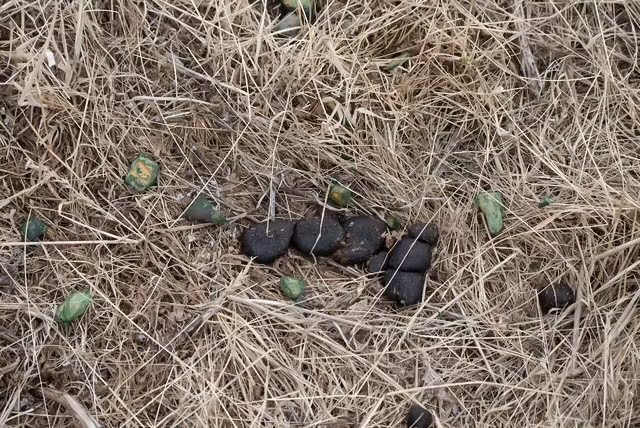
It is deeply shocking that Pindone carrots can be laid along a public roadside adjoining a school and in precisely the same place as commercial Kangaroo shooters operate.
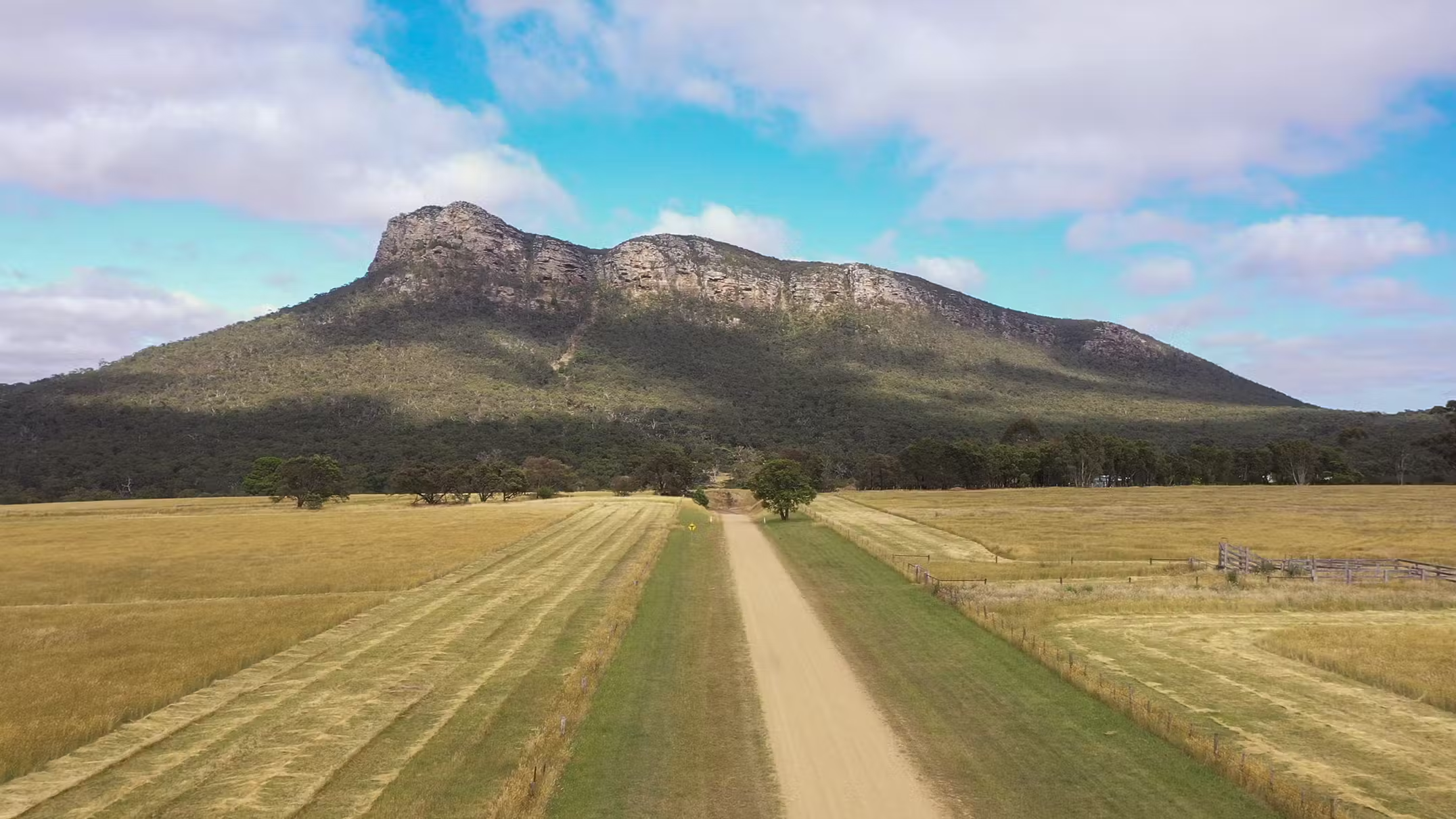
Since answering a phone call from Dunkeld from the top of Hermannsburg Mountain in Central Australia in 2019 we have visited the western Victorian town on numerous occasions and Andrea and I have witnessed the destruction of protected wildlife at scale. The destruction has been so bad that what remains is a sad and sorry reflection of what was once there. And they still keep going.
Our framework for addressing environmental crime in Australia is as follows:
These rules apply to 90 per cent plus of all incidents reported to or investigated by the Nature Knowledge Channel.
The distribution of Pindone carrots along public roads in Dunkeld, close by a tourist trail, adjoining a school, close by an international yoga retreat and adjoining a national park and in a place where there are still remnant Kangaroo populations and where commercial Kangaroo shooters are highly active killing Kangaroos for human consumption and pet food, is a classic example of what goes on (and on and on and on). It never stops.
This act of the indiscriminate distributing of a poison and poison bait from a vehicle and at scale in a public place, places in which both humans and pets are at risk of being poisoned by pindone, is hard to understand. Potential victims include school children who handle or ingest the carrots, humans or pets consuming Kangaroo meat and dogs being taken for a walk by their owners, none are safe.
A year or so earlier and on a separate research project the Nature Knowledge Channel came across two men scattering poisoned Pindone oats by hand in the same location (but not as widespread and at a lesser scale). This was reported to authorities, particularly because of the potential impact on birdlife, include Emus and the marsupials that lived there, including Kangaroos, which were being poisoned by the oats and to the general public visiting the site. The distribution of these oats in what was a public place, was stopped, and we thought that might be the end of it. How wrong we were.
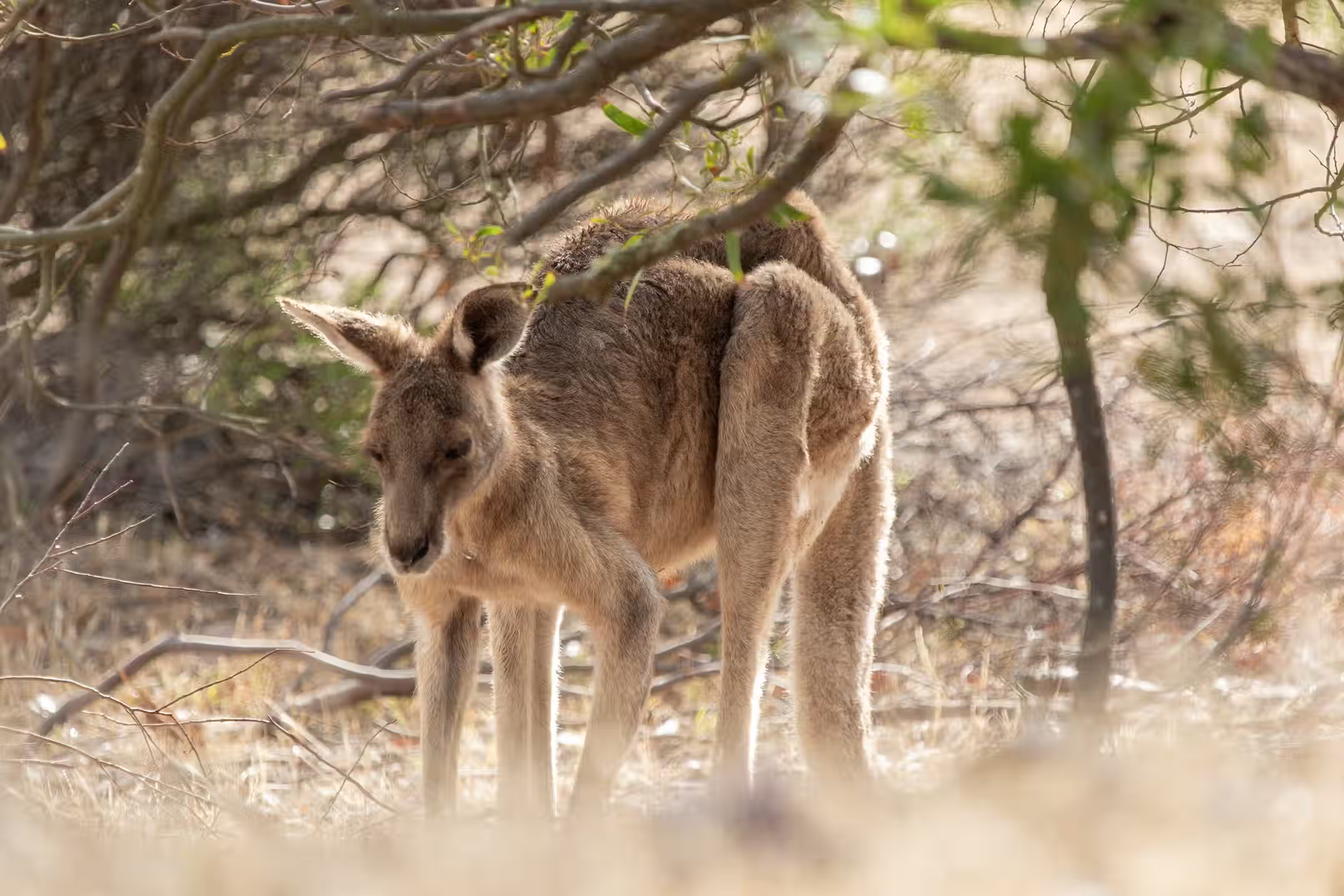
The Pindone poisoned carrots appear to have been distributed on 23 February 2026, or perhaps on the previous night, that is on 22 February.
In the case of the latest Dunkeld Pindone poison incident, the individuals distributing the poisoned carrots were not wearing protective clothing and what appear to be unlabelled bags of Pindone carrots were sitting openly on the back tray of their ute while a drum like spreader which looks homemade was spreading the poison. One of the individuals is a commercial Kangaroo shooter who shoots in close proximity to where the poison is being laid and it appears that the vehicle used to transport the butchered carcasses of Kangaroos entering the food supply chain is the same vehicle used to distribute the poison.
9.17am on 27 February the Southern Grampians Shire Council writes (extract)
“I wish to confirm that, acting in good faith, no further baiting activities will continue on public land in Dunkeld until further notification has been issued. Council acknowledges the importance of ensuring that all required communication, consultation, and information sharing is undertaken in a transparent and comprehensive manner prior to any operational works proceeding. Please note that this pause applies only to public land and does not affect activities undertaken on private land…. We take concerns about wildlife and environmental management seriously and remain committed to acting responsibly, transparently, and in full compliance with all statutory requirements. However, we acknowledge that some work practices can be improved”.
Then on 5pm on the same day (27 February) the following notice appears on the Dunkeld Community Facebook page (extract):
"Council advises residents of Glenthompson and Dunkeld, rabbit baiting has been undertaken in public areas within the townships. Council has a legislated responsibility to control noxious weeds and established pest animals including rabbits on the public land it manages…. These responsibilities form part of a broader biosecurity approach in Victoria aimed at minimising the environmental and economic impact of invasive species. Council has undertaken baiting in public township areas within Dunkeld and Glenthompson with baiting locations clearly identified and poison signage indicating whether Pindone poison oats or carrots have been used. Residents are advised to keep pets on leads and livestock away from signed areas while baits are present".
The authorities say that laying Pindone poisoned carrots in public areas in Victoria is strictly regulated to ensure public safety and minimise risks to non-target species. Because Pindone is a restricted chemical product, its use requires adherence to specific legal, training, and notification requirements, and is typically restricted to licensed professionals or authorized personnel on public land.
The required permissions and regulations for laying Pindone poisoned carrots in public areas in Victoria include the following.
Qualified Operator Requirement: While Pindone oats can sometimes be purchased by the general public, Pindone mixed with carrots, is freshly prepared or purchased frozen, and should only be handled by persons with appropriate chemical user qualifications or by licensed pest control operators.
Commercial Operator Licence (COL): If the person laying the bait is acting as a service for a fee or reward and they must hold a Commercial Operator Licence issued by the Department of Jobs, Precincts and Regions (DJPR).
Permit to use pesticides: The use of pesticides in public areas often requires authorization from the Department of Energy, Environment and Climate Action (DEECA) or the local council managing the land.
Authority to Control Wildlife: If the action might impact native fauna, an Authority to Control Wildlife may be required from DELWP.
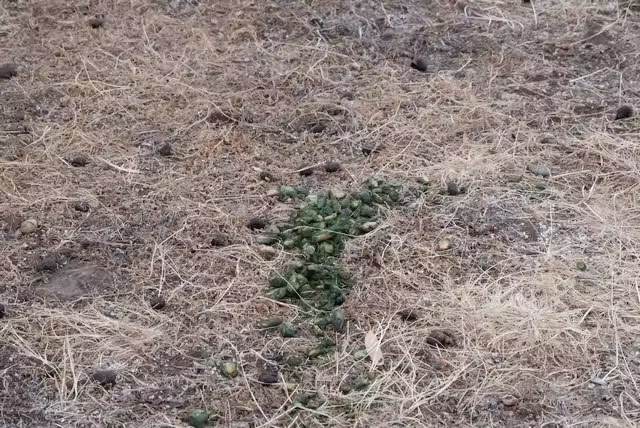
Risk Assessment: Before laying bait on council-managed land, a risk assessment must be conducted by a qualified expert or contractor.
Signage and Notification: Signs must be displayed at all entrances to the public area, notifying the public of the dates of the baiting program and the poison used (Pindone). These signs must remain in place for at least four weeks.
Proximity to Residents: Letters notifying residents in close proximity to the baiting site are often required.
Public Access Restrictions: Baits are often laid in areas that can be closed to the public, or behind temporary fencing.
Carcass Collection: Poisoned areas must be checked, and rabbit carcasses collected and properly disposed of to prevent secondary poisoning of non-target animals.
Application rules include:
The advice from the South Australian Government, which itself has a poor record in relation to caring for its wildlife populations and biodiversity, and where Pindone poison use appears more common is:
“Do NOT distribute bait material (both untreated and pindone carrots) in situations where pets, livestock or wildlife will have access. Move livestock from the area to be baited and keep pets inside or locked up on the nights of feeding”.
“Pindone is an anticoagulant, similar in its mode of action to some rat and mice baits. For safety reasons, Pindone carrots are not designed to work as a single dosage so multiple doses are required for it to provide effective rabbit control. Pindone prevents the uptake of vitamin K1. However the animal will have reserves of blood clotting agents and vitamin K1 stored in its body therefore repeated baitings are required”. Government of South Australia
Pindone carrots are at their most damaging to wildlife when there is little alternative food source so the recommendation is that the poisoned carrots should be laid from January to mid-March when no green feed is available.
The impact on protected Australian wildlife, in the case of Dunkeld and Pindone carrots or oats, include Wallabies, Kangaroos, Emus and Possums (Raptors are an example of second generation victims, in particular Wedge-tailed Eagles living in the National Park) is as follows:
Animals present with bleeding noses, blood oozing from openings and blood in the abdominal region, often animals are identified when it is too late to treat them, if left unattended, they will die a long and painful death.
“Critically endangered Eastern Barred Bandicoots have been reintroduced to the Dunkeld area in southwest Victoria as part of a collaborative conservation trial to establish mainland populations”.
Peter Hylands spoke to the New South Wales Government (New South Wales Government Land Services) on 3 March 2026 regarding the government’s policies relating to the use of Pindone poison carrots and oats. Carrots seem to be the vector of choice.
The New South Wales Government has been using Pindone to poison rabbits ‘for some time’ and it is used in more urbanised areas with strict control. 1080 is not something we use, particularly in the highland areas (Southern Highlands).
We discussed the methods used to minimise harms to protected Australian species in the light of what is occurring in Victoria. The New South Wales Government says it has very strict controls for Pindone use on private land which is predominately what we are focussing on in the Southern Highlands region. Our program involves direct engagement with local land holders and the government administers the Pindone carrot baits, but before that we develop a very comprehensive risk assessment which looks at the potential risks of non-target poisoning which involves mandatory monitoring that needs to be in place for all the properties involved in the poisoning program.
Monitoring involves free feeding which is a really important tool to look at what other non-target animals might be accessing that feed at that time. So free feeding is the placement of carrots, which do not have the poisonous Pindone coating, in the same place that the poisoning is planned to occur. The government advises that free feeding programs should be over a long as possible period as this helps with identifying non-target animals and also encourages the rabbits to feed in the place the poison will be used. What happens is that with constant free feeding the number of animals will increase which means a more effective program. So monitoring, which is critical, including spotlight monitoring at night, free feeding, assessment of bait sites to understand which species are taking the carrots, looking for scats is also a good indicator of which species are present. We also set up cameras on some of our bait trails, that is commonly done.
These are mandatory controls within New South Wales risk assessment protocols that our ACOs (Authorised Control Officers) who provide a formal document that landholders who are part of the baiting program must adhere to.
We are aware that the public does access Pindone from local suppliers like Bunnings but our programs go above and beyond and the New South Wales Government Land Services mix the Pindone concentrate with the carrots, which gives us better control over how the land holder, the end user, uses the poison safely in relation to non-target species.
If non-target animals are present at the baiting site there are several things we can do to manage access to the baiting site, particularly if there are Macropods present, and that is a really important step in the free feeding and monitoring phase. These include the use of exclusion fencing or using corrugated iron sheets that are slightly raised above the ground that exclude access to Macropods.
Poison baiting is conducted in different ways, these are, furrow baiting which is cutting a trail where the carrots are placed (10cms wide and 2cms deep) the purpose of which is to target the behaviour of rabbits when feeding. Scatter, broadcast baiting is used when treating a broader area, a 5 meter broad area, generally used on smaller scale properties (over a 1,000 sq meters and smaller than a couple of hectares). We cannot provide poisons to properties that are a 1,000 sq meters or smaller. Individual property assessment have to be done before applying the bait. The choice of method really comes down to monitoring which animals are present on site to determine the best approach to bait that property.
There are some council reserves which are baited but these are, in terms of methodology, treated in the same way as private land. We manage the risk assessment process in exactly the same way, regardless of who own or manages the land.

As fires in Victoria rage, how many native animals are being rescued from public lands? This is the timeline of the Grampians Gariwerd fires.
January 2022, we are filming Australian wildlife at the edge of a National Park in the West of Victoria.
This is what we know about recent Kangaroo meat exports to the country of export by volume and value as a result of questions on notice, Australian Senate.
The suffering of Kangaroos, in terms of scale, the methods of harm, are acknowledged internationally for their extreme cruelty.