The day of the devil: The death of Miles the Emu

Life on land


Your support will assist us to continue our research and content development, the greater our resources, the more we can do.
The more we have an accurate understanding of what is happening to nature, the more we can all do to protect what remains of our living planet.
This is also an opportunity for philanthropists to be part of an ongoing project that tells independent stories about the natural world, stories that will help us to better understand what is happening to species and places on our precious planet Earth.
Note: Creative Cowboy Films does NOT have tax deductible charity status.
Becoming a member of Creative cowboy films The Nature Knowledge Channel is a very real way you can help the precious natural world and support the work we do in creating knowledge about what is happening to it.

The Nature Knowledge Channel is a very real way you can help the precious natural world and support the work we do in creating knowledge about the natural world.
Annual membership of the Creative cowboy films - Nature Knowledge Channel gives you full access to content, stories and films, available on this website. Becoming a member of the Creative cowboy films - Nature Knowledge Channel is a very real way you can help the natural world and support our work in creating a greater understanding about what is happening to it.
A point of difference
Creative cowboy films is independent, is not funded by governments or industry, and is not influenced by their associated interest groups. For reasons of independent research and content development, Creative cowboy films does NOT have tax deductible charity status.
Life on land
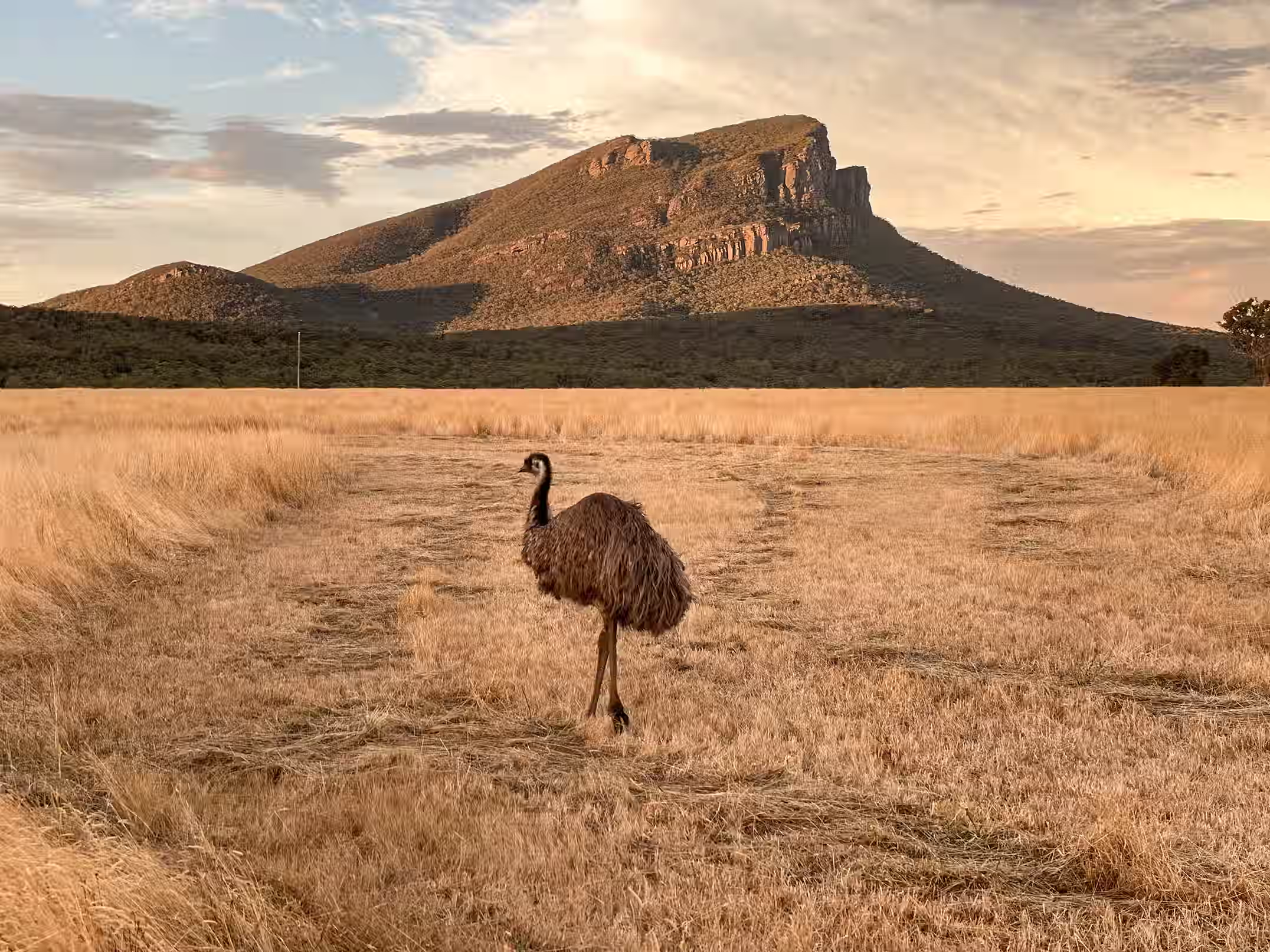
This story is dedicated to Miles, to Jane, and to Frank. Our hearts are with you.
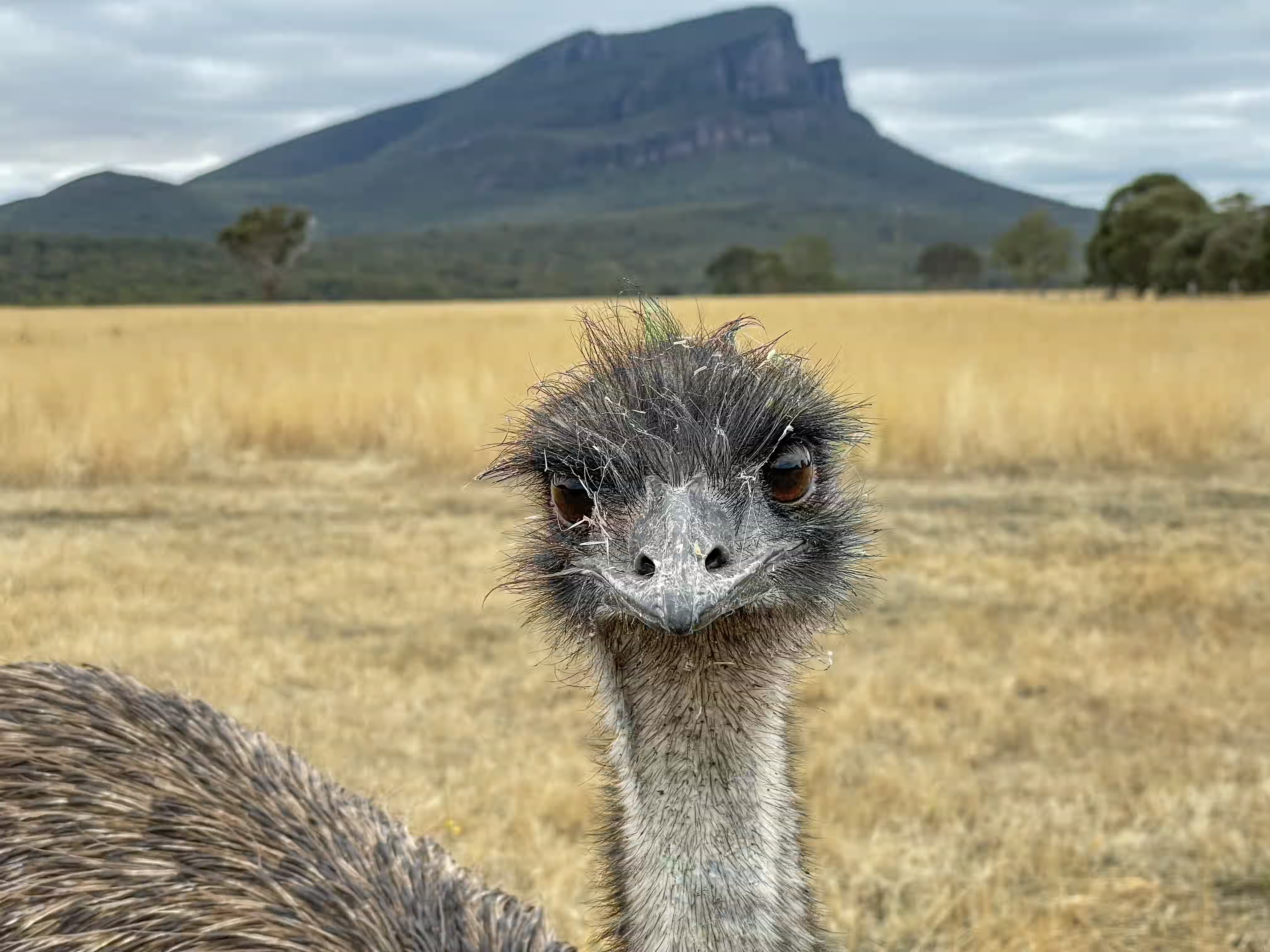
Miles was rescued when very young as she was found with another young Emu, both without the protection of an adult Emu (males) and rescued and cared for in a wildlife shelter in the region. Following rehabilitation and release from the wildlife shelter, Miles made her own way to Dunkeld where she made her home at the edge of the Gariwerd National Park. Since that time the world has watched as Miles has grown into the lovely and gentle animal that so many of us from around the world came to love.
There are gunshots, these start at around 10.00 pm as we are walking back down Cemetery Road. We are in pitch black darkness.
As the Kangaroo shooting commenced, other wildlife panic and animals rush to escape, colliding with fences and other obstacles in their plight. Miles located us and rushed towards us, clearing the ancient and low fence (very poor quality) that surrounds the paddock – there is no farming and there are no cattle or sheep on this property – (just long grass).
Miles sheltered between Andrea and I as we walked back along Cemetery Road, Miles was extremely distressed as we tried to comfort her.
All our lives were put in danger that night. We were told we should not be there, would be subject to a $16,000 fine and told it was too dangerous for us to be there, yet this very place is promoted as a tourist location and is close by (within 5 metres) the walking track being promoted by its then Victorian Environment Minister, who had just visited the new walking track. The fact that this was a tourism precinct adjacent to the national park was also denied.
"So people who live in a place, run businesses in a place. Have customers and guests staying at a place they own and have developed, have no rights to be there (nor have their guests), and in the process are criminalised when they are a very long way from criminals, leading gentle and productive lives".
“By mid-January 2025, the fire storms subdued, all up in just two regions in the west of Victoria, mostly National Park, so a refuge for already hard pressed Australian species, that is 224,700 hectares of biodiversity damaged or destroyed along with a very large number of Australian animals. And that included just on 80 per cent of the Gariwerd National Park”. Peter Hylands
The Victorian Government likes to pretend to the public that its campaign of mass wildlife killing is sustainable and humane. Neither is true. To pretend that, in the case of Kangaroos, just 10 per cent of the population is killed each year, itself untrue, while the public believes this to be what actually happens. In the case of Dunkeld the shooters keep coming and have shot nearly all of the Kangaroos in the places we stay and that is what we see across the state. The Australian animals (all protected species) we have known so well and whose images appear in Nature Knowledge Channel’s stories and analyses, are now dead. Shot or bashed to death, in the cruellest of ways.
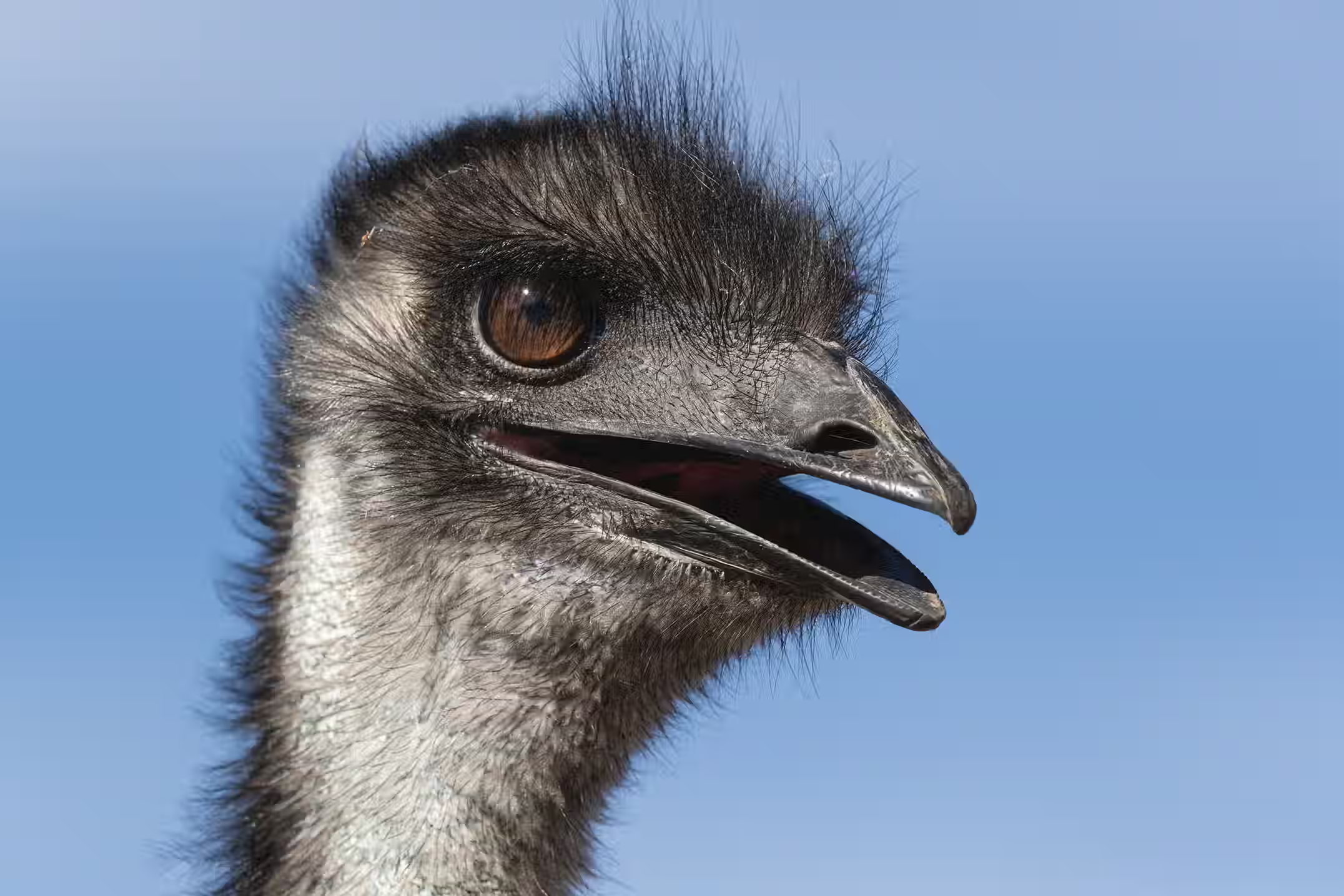
In the case of Emus (a protected Australian species and last remaining Emu species), which are now scarce in Victoria and exist in fragment landscapes distant from each other.
Since 2009, the Victorian Government has issued Authority to Control Wildlife Permits (ATCWs) to kill 14,867 Emus. Miles was killed at a time when fires were raging across Victoria and large numbers of native Australian animals would have been killed in the fires, or unaided as the Victorian Government blocked rescues, died in the days following. While all this is going on a major Duck and Quail season is about to commence, killing a vast number of protected Australian birds and the commercial exploitation of Kangaroos continues unabated.
In the Late Quaternary period the Emu had several and smaller relatives living on various islands off the coast of mainland Australia. These included Emus on Kangaroo Island (Dromaius baudinianus), King Island (Dromaius ater) and Tasmania (Dromaius novaehollandiae diemenensis), all of which are now extinct following European settlement. The smallest was the King Island Emu. The Tasmanian subspecies of the remaining mainland Emu species became extinct in the mid 1860s.
The French explorer Nicolas Baudin arrived at King Island in Australia’s Bass Strait in 1802. Baudin’s expedition was the first to document the dwarf King Island Emu, which was roughly, at one metre, just half the height of its mainland cousin. Baudin did capture a number of King Island Emus, intending to take the birds back to France, most died on the journey despite the elaborate attempts to get them back safely, but in 1806 two birds, a male and a female did make it to Paris. When Baudin arrived on the island there were just thirteen European inhabitants, more came and by 1810 all of the Emu’s habitat had been destroyed and the birds were extinct with the exception of the two birds now living in Paris. These last two birds died in 1822, so that was the end of yet another Australian species.
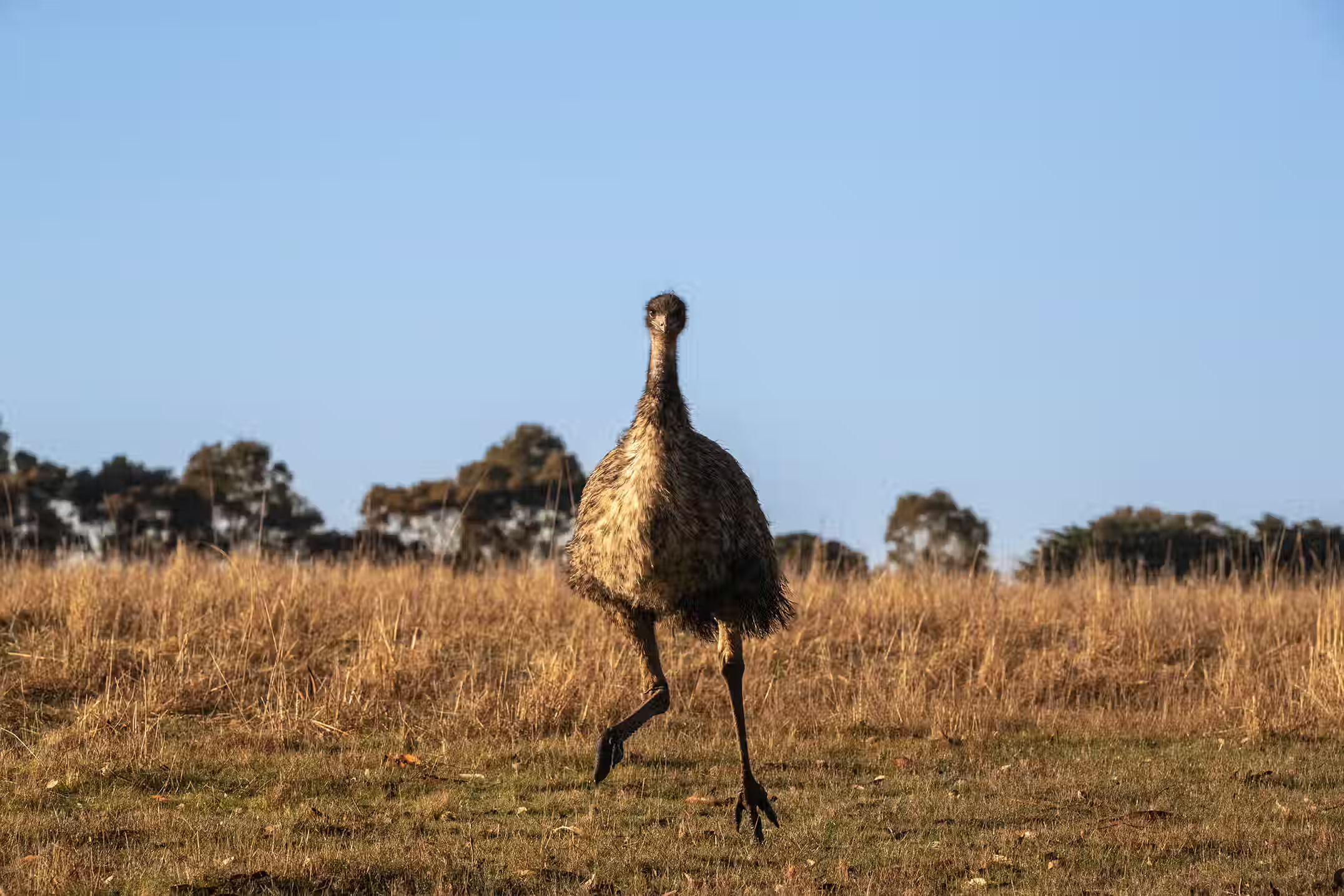

This story is about friendships with Emus and anecdotes from old friends regarding this remarkable bird.
As fires in Victoria rage, how many native animals are being rescued from public lands? This is the timeline of the Grampians Gariwerd fires.
On 16 February 2025, following the devastating Gariwerd Park fires, the commercial Kangaroo shooters returned to Dunkeld.