Victoria: State of emergency

Life on land


Your support will assist us to continue our research and content development, the greater our resources, the more we can do.
The more we have an accurate understanding of what is happening to nature, the more we can all do to protect what remains of our living planet.
This is also an opportunity for philanthropists to be part of an ongoing project that tells independent stories about the natural world, stories that will help us to better understand what is happening to species and places on our precious planet Earth.
Note: Creative Cowboy Films does NOT have tax deductible charity status.
Becoming a member of Creative cowboy films The Nature Knowledge Channel is a very real way you can help the precious natural world and support the work we do in creating knowledge about what is happening to it.

The Nature Knowledge Channel is a very real way you can help the precious natural world and support the work we do in creating knowledge about the natural world.
Annual membership of the Creative cowboy films - Nature Knowledge Channel gives you full access to content, stories and films, available on this website. Becoming a member of the Creative cowboy films - Nature Knowledge Channel is a very real way you can help the natural world and support our work in creating a greater understanding about what is happening to it.
A point of difference
Creative cowboy films is independent, is not funded by governments or industry, and is not influenced by their associated interest groups. For reasons of independent research and content development, Creative cowboy films does NOT have tax deductible charity status.
Life on land
Updated 19 and 20 January 2026.
Since the fires in Victoria in the summer of 2018 when the Victorian Government began blocking highly trained and highly skilled wildlife rescuers from rescuing wildlife, injured or not, from fires and floods post event, more fires of far greater scale and intensity were to follow.
During the 2018-2019 wildfires in Victorian Government environment department, DELWP as it was then, were trying to stop the rescue of young Koalas claiming they were overabundant, directed that Koalas should be sent to the Healesville Sanctuary Wildlife Hospital. Ross, the Director of the sanctuary, told Peter Hylands that they received just two Koalas that fire season, one was rehabilitated.
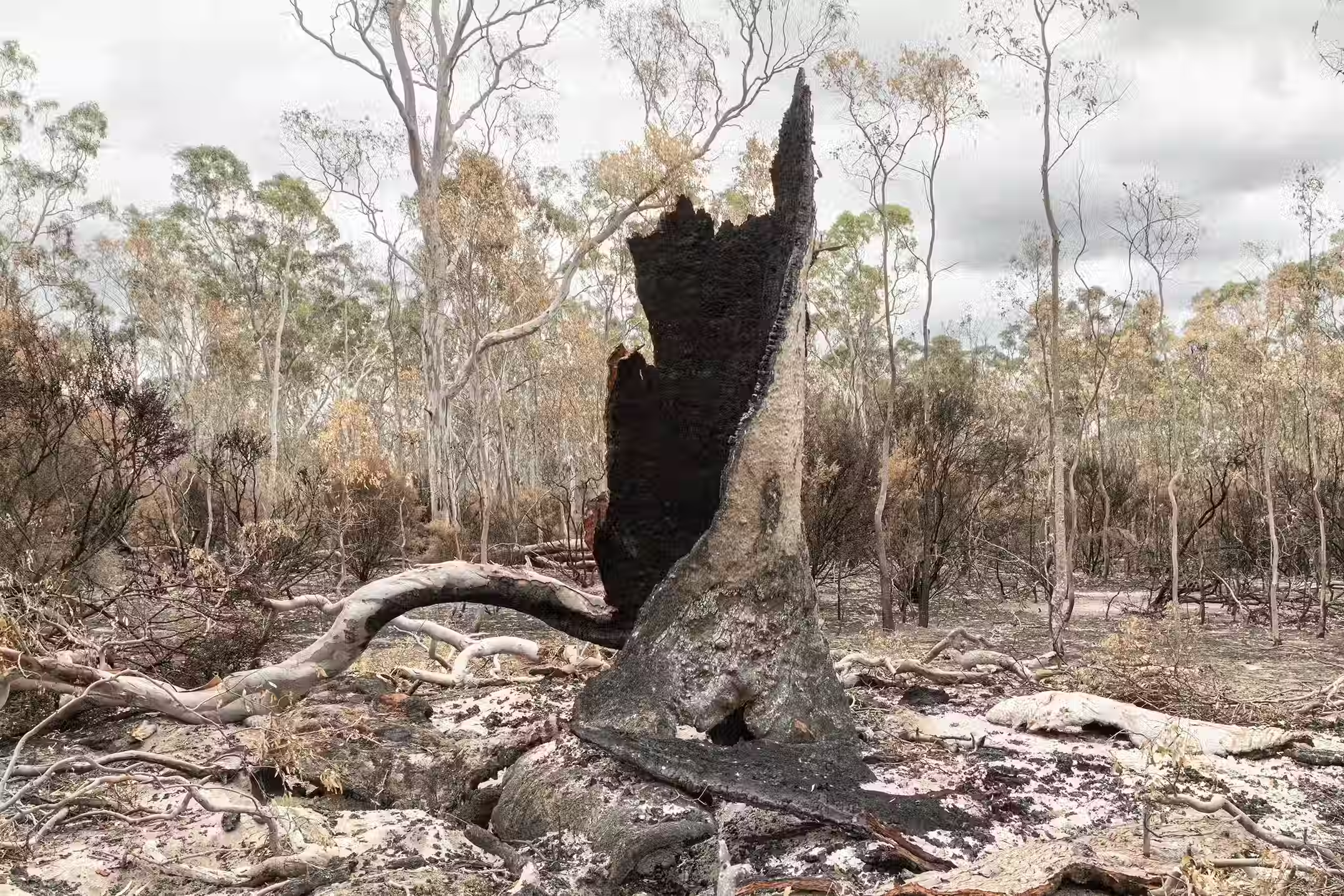
The fires that followed included the catastrophic fires of the summer of 2019 / 20 which destroyed around 1,511,000 hectares, the majority of which was forest and included a number of National Parks and other public lands, much in the east of the state. These fires also impacted more than 7,000 hectares of the Budj Bim National Park (World Heritage Area) in Victoria. The same fires caused further catastrophic damage, particularly in New South Wales and the ACT. The fires in Victoria impacting an estimated 3,500 Australian species (excluding invertebrates et al) covering plants (around 3000 species), land based vertebrates (500 species) and fish (20 species). There was just 270 ‘official wildlife rescues from the firegrounds on public land (the majority of the area burnt) while the world donate millions of dollars for wildlife recuse and rehabilitation. Tens of millions of native animals would have died in these fires or in the weeks following the fires, most without hope of rescue.
Following the 2019 / 20 summer fires the Victorian National Parks Association reported that ‘there had been no reductions or substantive changes to existing logging plans since the bushfires, in fact, there have been two additional logging schedules approved in the past 12 months.
We skip forward to the 2024 / 25 and the Gariwerd, Little Desert and Budj Bim fires in Western Victoria. By February 2025 and in the Gariwerd and Little Desert National parks fire had consumed around 225,000 hectares.
“DEECA considers the types, scale and impact of emergency events on the environment and Grey Kangaroo populations before making decisions on changes to the Kangaroo Harvest Program quota. DEECA assessed the fire footprint which includes areas of the Grampians and Barwon South West ‘harvest’ zones, to date around 3 per cent of the total area of this these ‘harvest’ zones has been impacted by the fire. No changes to the Kangaroo Harvest Program quota are being made at this time”. Victorian Government
The Budj Bim fire which followed in March 2025 consumed 2,200 hectares of the park and included the extraordinary Victorian Government Koala killing expedition where some 1,300 Koalas (including pouched joeys) were shot from tree tops by shooters in a helicopter.
The Nature Knowledge Channel visit all these fires grounds in Eastern Australia, totalling many weeks of observation and research.
“Aerial operations finished on Friday 25 April 2025, but ground crews are continuing to undertake wildlife welfare surveillance patrols of fire affected areas to provide support to wildlife. Since early March, 2,219 Koalas have been assessed by both ground and aerial teams, with 48 per cent (1065) identified as suffering severe injuries and burns from the bushfire and required humane euthanasia to relieve unnecessarily suffering”. Victorian Government
Now to January 2026, so far in Victoria bushfires in numerous places have consumed over 400,000 hectares of public and private lands with significant fires occurring in places which have at least some remaining wildlife. Again we are receiving reports that experienced wildlife rescuers are being blocked from rescuing wildlife from places impacted by fire, even when these places had been opened to the public and even when private land owners had requested help regarding injured wildlife.
What is occurring looks something like this, the Victorian Government Department, DEECA (was DELWP), controls the firegrounds including in the period following the fires. Until 2018 the trained wildlife rescuers were part of the team working in areas destroyed by fire. The only wildlife rescuers who are now going into the fire grounds following the fire are described as field assessment teams and are deployed by DEECA. At the time of writing we know Zoos Victoria has very few burns victims and it appears none in its wildlife hospital in Melbourne’s west, so that translates to very few rescues.
In the Harcourt fires (January 2026) there are reports of distressed property owners on returning to their homes and having contacted experienced local wildlife rescuers to rescue injured wildlife, being told that the rescuers cannot attend as the Victorian Government is blocking these rescues.
As of 19 January 2026, Vets for Compassion have been allowed in to some parts of the area impact by fire to search for injured wildlife. Wildlife rescuers from the region have told me that they are still not allowed in to this previously burnt areas. As of 19 January 2026 wildlife carers in Central Victoria (Harcourt fires) are reporting few, if any fire impacted wildlife coming intocare. This appears to be the case more widely.
As of 20 January, Mount Alexander Wildlife Watch report that for the Harcourt fire:
“The Ravenswood Fogartys Gap Road fire has been declared under control and there are still ongoing fire response operations underway, Wildlife rescue responders may enter private property for the purpose of managing and supporting wildlife welfare under the following circumstances; at the request of the landholder and at the direction of the landholder. The landholder and the responder retains responsibility for risks associated with safety while on the property.
Mound Alexander Regional Park remains closed and will continue to be closed for the foreseeable future. There is no public access to the park at this time and DEECA is responsible for coordinating and managing wildlife impacted by fire responses. Forest Fire Management Victoria will continue to undertake this work within the park”.
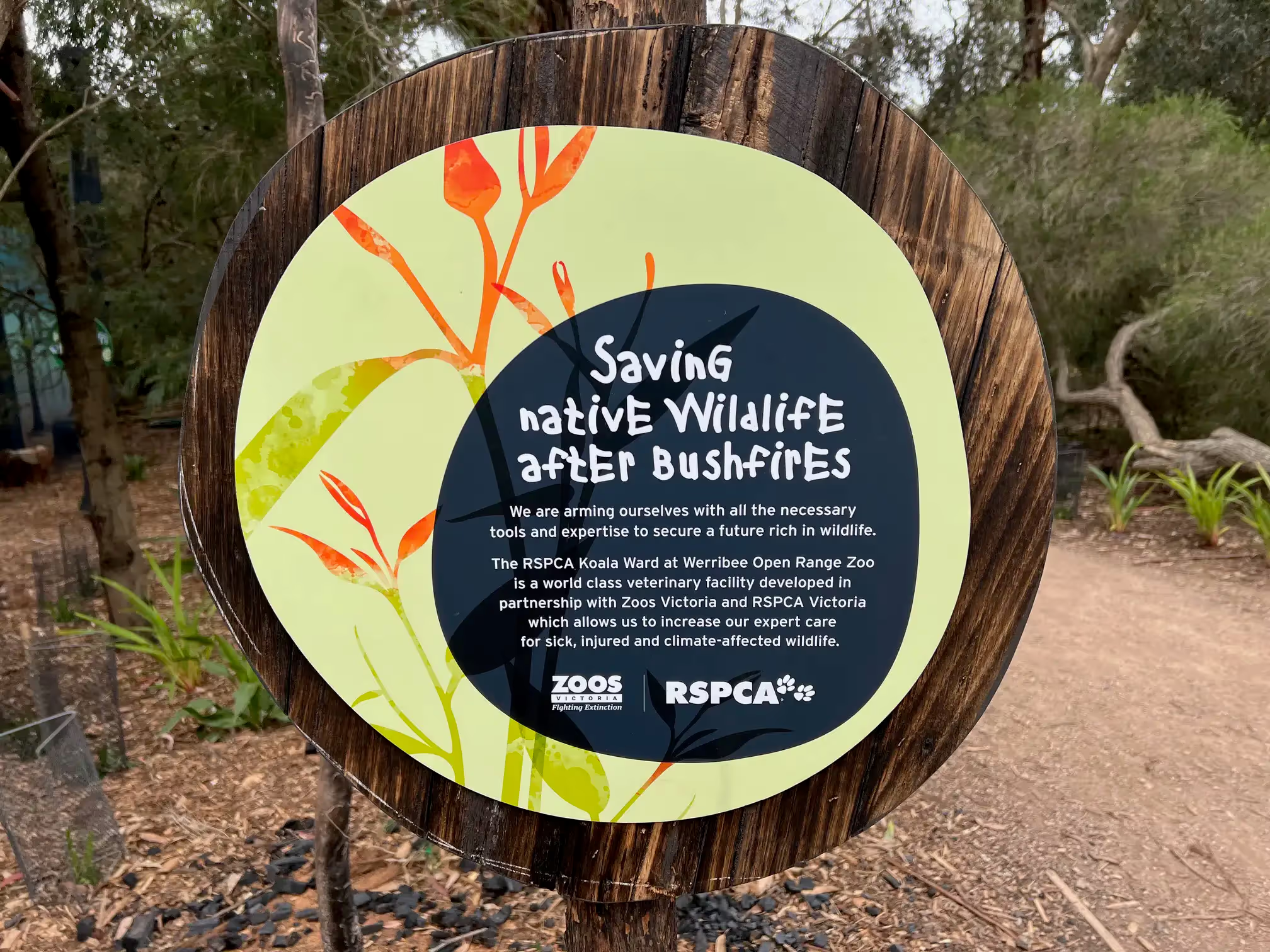
The Nature Knowledge Channel has written to the RSPCA and Zoos Victoria requesting a list of native animals they have rescued or assisted in the vet and hospital facilities. Here is the background (2020) that describes the construction of the new Koala hospital in Melbourne’s west, funded largely be donations for wildlife rescue and rehabilitation.
"Australia's devastating summer bushfires ravaged native species such as Koalas. The $1.84 million Koala Hospital will be built at Werribee Open Range Zoo, with a staggering $1.3 million coming from generous donations made to RSPCA Victoria during last summer’s devastating bushfires. The remaining costs will be funded through Zoos Victoria. Bushfire donations will pay for the new $1.84 million (or as reported elsewhere $2.55 million) Koala Hospital after thousands of the animals were killed in last summer's blazes. The facility will be based at Werribee Open Range Zoo in Melbourne's outer west”.
The RSPCA have responded, including information from Zoos Victoria and as of 19 January 2026 this is the situation:
“It’s critical any response to emergency situations like this is coordinated to ensure people are kept safe and resources are deployed effectively to protect and help affected wildlife. The Department of Energy, Environment and Climate Action (DEECA) is the lead agency responsible for managing wildlife impacted by fire in accordance with the Victorian Response Plan for wildlife impacted by fire and any questions on current operations should be directed to them.
RSPCA Victoria Inspectors are awaiting deployment to assist Agriculture Victoria’s field officers as they assess the welfare of thousands of livestock affected by the fires and providing humane euthanasia where required in areas that are safe to access.
Zoos Victoria’s Australian Wildlife Health Centre at Healesville Sanctuary has been receiving cases from the fires around Alexandra and Yarck. Cases treated to date include birds and possums, one echidna, and one macropod. Wildlife injured by bushfires are typically critical, requiring high levels of pain management under veterinary supervision, in a specialised hospital facility, which Zoos Victoria is best placed to provide.
Melbourne Zoo, Werribee Open Range Zoo’s RSPCA Koala Ward and Kyabram Fauna Park have not yet received inpatients from these fires. Please note that Werribee Open Range Zoo’s RSPCA Koala Ward has been designed with the specific requirements of koalas in mind but is fully capable of treating and rehabilitating all wildlife requiring treatment, not just koalas.
DEECA wildlife assessment teams will assess the situation and determine whether further support and resources are required through the Wildlife Emergency Support Network (WESN).
A triage unit comprising Zoos Victoria vets and vet nurses is awaiting deployment to the field as soon as it is safe to do so as directed by DEECA as the lead agency. RSPCA Victoria’s Mobile Animal Care Unit (MAC) has also been prepared for use and has been offered to the relevant authorities for deployment to support the on-site assessment and treatment of animals by qualified veterinary staff when and where it is safe to do so”.
Zoos Victoria have also given us an update of how many animals have arrived at zoo facilities. Zoos Victoria says this:
Wildlife impacted by fire is best assessed in the field through a triage unit; only those needing intensive care come back to our hospitals. In many locations, the fire grounds are still not safe for field triage units yet.
Werribee Open Range Zoo, Melbourne Zoo and Kyabram Fauna Park have not yet received any cases from these bushfires. For any questions related to WESN, please refer to DEECA.
To date, the Australian Wildlife Health Centre at Healesville Sanctuary has received the following cases, listed below. These are usually brought to us by skilled wildlife carers and compassionate members of the public.
These are the animals being treated at Healesville Sanctuary from as of 20 January:
Locations from which animals were rescued were Caveat, Highlands, Koriella, Alexandra, Maintongoon, Yarck and Taylor Bay.
As a general comment from Peter Hylands, there are very skilled people available, from the zoo vets, to local vets, to rescuers and carers, there are also facilities which include the wildlife hospitals (with significant investment in facilities) and the hard working and dedicated wildlife shelters. One might then ask, recognising that the wildlife caught in fires can be injured beyond hope of rehabilitation but that is not all of them, just how it is that so few animals get through to the people and facilities that can rehabilitate them and do so in a timely fashion. It would appear that the problem here is the management of the so called WESN, set up by the Victorian Government in the face of significant criticism, is failing.
Photographer of international renown, Paul Hilton, had intended to document the aftermath of the fires and ‘our relationship with Australia's native forests’. Instead of being welcomed to do this important work he was ordered to leave.
“It was basically a press blackout, I later said I've never come up against resistance like this in a democratic society, I don't know why the situation down there is so hostile”.
Paul goes on to say:
“The following day in Yea I was stopped by the police. I was told there had been multiple complaints about me. The officer pulled me over aggressively, demanded my licence and stood with his hand on his gun. I felt like a criminal for documenting the consequences of a natural disaster. Once again I was warned not to take photos or video and urged to leave the area”.
Victoria has slightly less than one million registered guns and then there are the unregistered and hence illegal guns. High levels of gun ownership in Australia occurs in the cities, so not just a country thing.
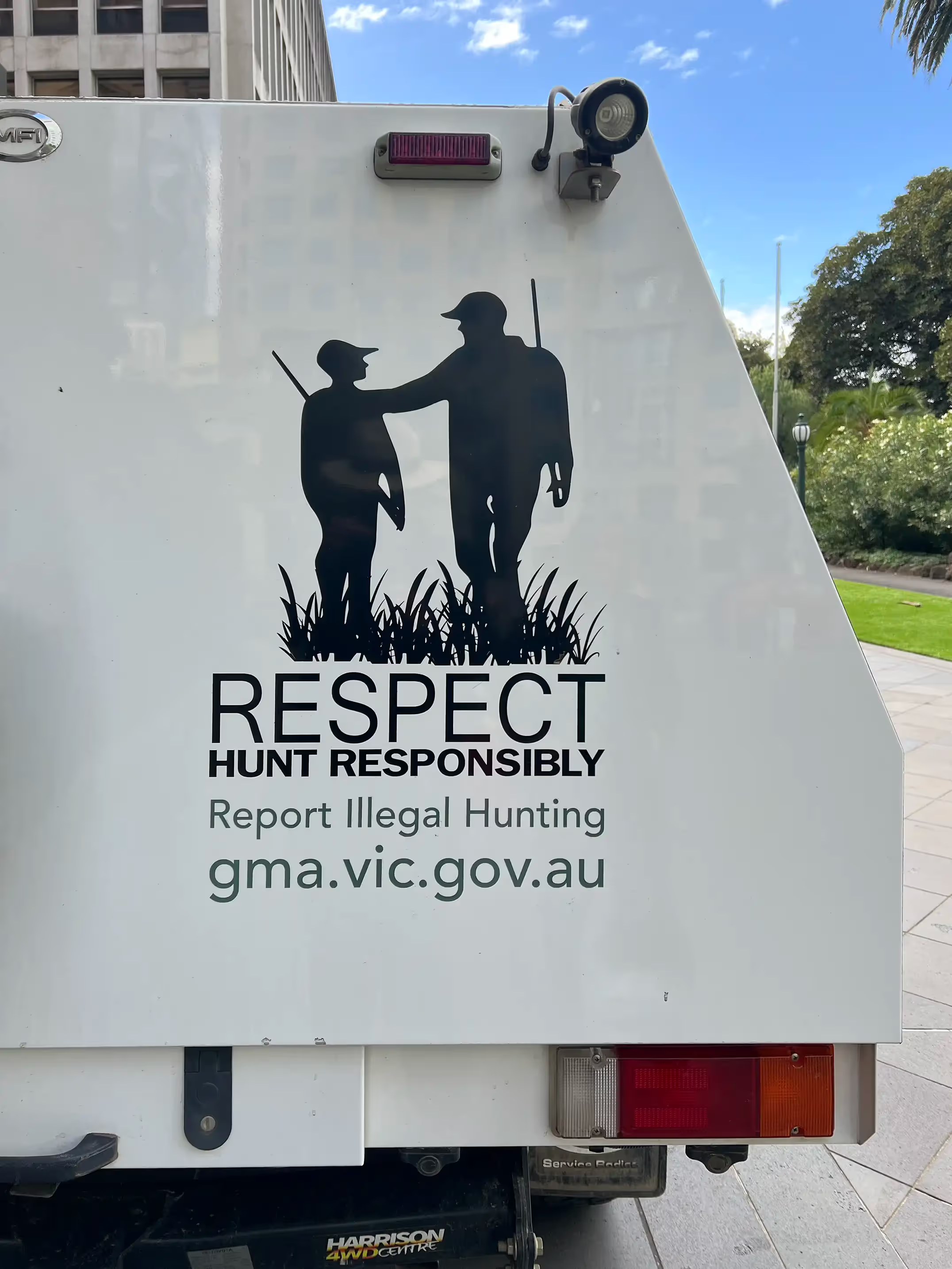
We should understand that the Victorian Government is heavily involved in promoting a gun culture in the state, including encouraging the idea that children as young as 12 should be out there shooting native wildlife. In total the Victorian Government, through a range of policies and promotions is responsible for enabling the killing of more than one million protected Australian wildlife across around 100 protected native species. This flies directly in the face of the Australian Government’s efforts to reduce gun crime by reducing the numbers of guns in the hands of the public and in the face of Australia’s new Nature Laws, developed in part at least to assist what remains of Australia’s battered biodiversity.
To get some sense of scale, as a very rough calculation around 32 per cent of Victoria is public land, that is 7.3 million hectares (more if the marine estate is included). It appears that hunting on public land is occurring on around 18 per cent of Victoria’s land mass and 55 per cent of the public estate. From changes occurring regarding the commercial exploitation of protected wildlife on public land in Victoria in 2025 and other (for shooters) favourable changes to regulations, this is very likely going to increase, perhaps significantly. We will have to see. It should also be noted that hunting also occurs on private land, the scale increasing in 2014 and growing since, and this activity is now significant. It is likely that somewhere around 40 to 50 per cent of Victoria’s landmass is potentially a home to hunting activities involving both protected Australian species and animals from somewhere else, including deer species. These are conservative assessments.
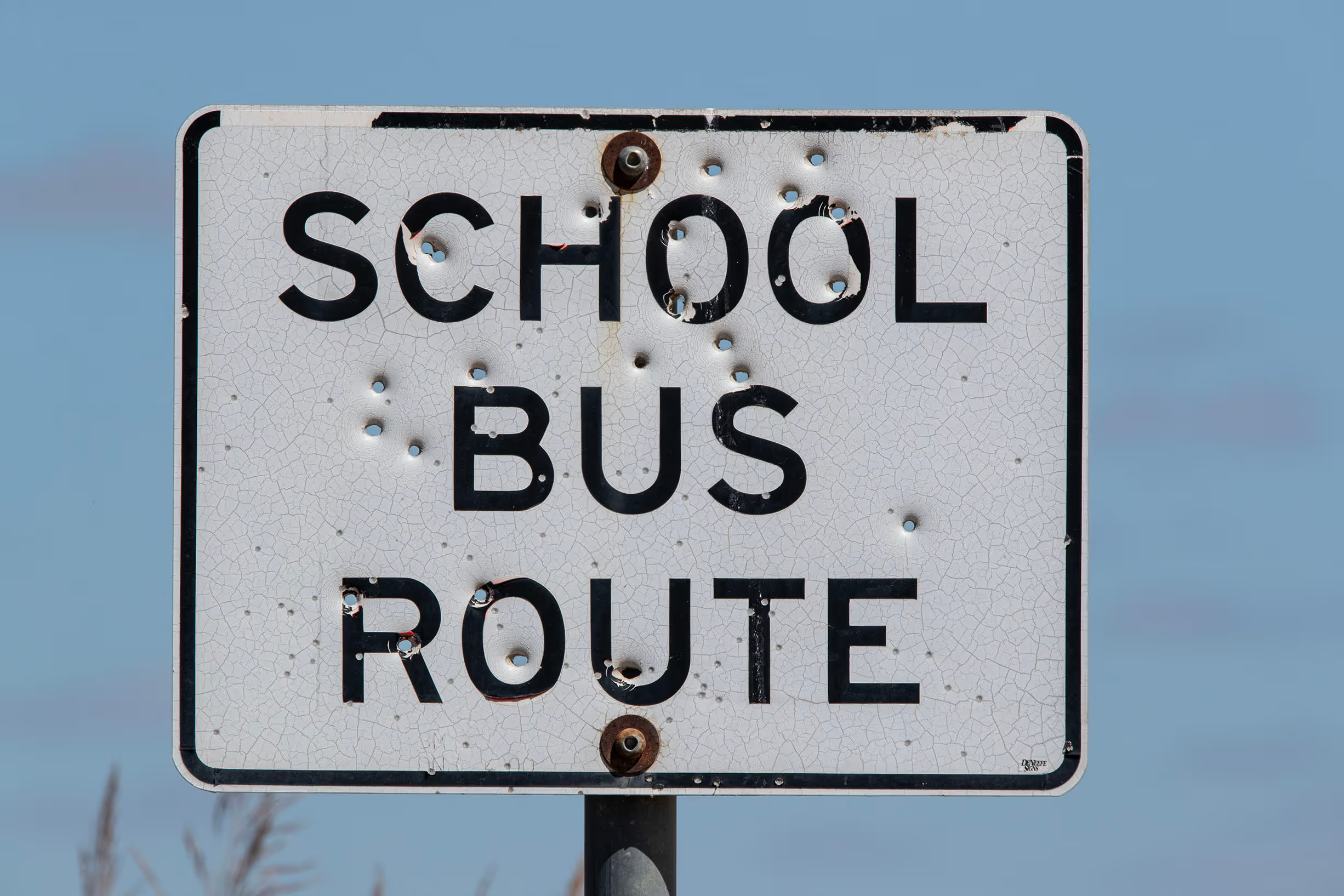
Gun crime has been a direct problem for us, and I won’t go into it here, but to say we have been in the front line of some of the horrors that go on and so for decades, would be an accurate account of it. National Parks and Ramsar sites in Victoria have become, particularly so under Victoria’s current Government, dangerous places to visit.
What we know is that as the fires were burning the commercial shooters were busy killing native animals for commercial gain, this is going on right now, that the very significant shooting of birdlife which commences in March on Victoria’s wetlands and private lands will go ahead and the government will continue blocking wildlife rescues by experienced and highly trained wildlife rescuers, Authority to Control Wildlife Permits (ATCWs) will continue to be issued at scale and the government will continue to exaggerate wildlife populations and the attempts at secretive killing of species like Koalas will continue as will the unprotection of the native species they like the least.
And the last word comes from the Victorian Parliament:
“We have seen the consequences of this broken model. Time and time again the GMA has failed to enforce game hunting laws, turning a blind eye to serious breaches while disproportionately targeting licensed duck rescuers. These are volunteers who enter wetlands for one purpose and one purpose only – to help wounded native waterbirds and perform a task that should fall to the government, not to the public and to volunteers. Yet they are the ones being penalised, fined and banned from wetlands while offenders walk away untouched. It is increasingly clear that this government is hell-bent on killing wildlife in any way that it possibly can, and with just months until Victoria’s annual duck and quail shooting seasons begin, these changes will only make a failing system even worse. I therefore urge the minister to provide transparency on how this restructure will protect our wildlife, rather than the interests of shooters and hunters”. Georgie Purcell MP, 9 December 2025
In Victoria, prior to 2004, large scale fires of a million plus hectares per annum were rare, but not unknown, there were at least two. Since 2004 there have been a series of large fires with the resulting catastrophic impact on wildlife. Climate change compounds the Victorian Government’s conduct and the horrendous impact this appalling behaviour has to the wildlife it is supposed to protect.
As the public wonder why so few native animals are being rescued from the fires and treated in the Victorian Government’s state of the art wildlife hospitals, here is the DEECA messaging.
“We know and understand the concern that wildlife volunteers and members of the public have in relation to wildlife impacted by these fires. And while the impact on iconic species will often attract significant public and media attention, recovery efforts must take a comprehensive, ecosystem wide approach”. Victorian Government
We don’t know what it means!
VicForests, the state-owned native timber business in Victoria, was closed down on June 30, 2024, after commercial native forest logging in Victoria ending on January 1, 2024, with the company's functions and assets transferred to the Victorian Government (DEECA was DELWP). A back door is of course open and native logging continues through salvage logging, that is logging of damaged areas, logging on private land and logging in areas where prescribed burning has occurred. So the damage continues as climate change bites ever harder.
“In Victoria we analysed satellite data, logging records, on-ground surveys and drone photography, and discovered that nearly 20 per cent of logged areas failed to regenerate. This represents more than 8,000 hectares of forest lost. All that remains in these areas are grassy clearings, dense shrublands or bare soils. We also found the rate of regeneration failure had increased over the past decade. While failure was rare in the 1980s, it became much more common over time, affecting more than 80 per cent of logged sites by 2019”. Australian National University

Here is the Nature Knowledge Channel’s assessment of yet another disgraceful episode in the endangerment of Koalas in Victoria.
Australia’s National Climate Risk Assessment makes it clear, biodiversity and ecosystem health across Australia face severe risks under projected climate scenarios.
In 2024 and at the behest of state and territory governments in Australia, 4.6 million animals from around 70 ‘protected’ Australian species of mammals and birds were killed.
As fires in Victoria rage, how many native animals are being rescued from public lands? This is the timeline of the Grampians Gariwerd fires.
Manfred Zabinskas OAM and Peter Hylands discuss the circumstances that Australia’s wildlife in Victoria is now facing.
This analysis details the number of ATCWs issued in Victoria in 2024 by species and number of animals targeted. It shows a significant increase in the number of protected wildlife being killed using this permit.
The Nature Knowledge Channel was blocked from attending the opening media event of the Koala Hospital in August 2022.
This report contains reflections on a trip in Western Victoria in June 2022.