We are starting to notice a silence

Life on land


Your support will assist us to continue our research and content development, the greater our resources, the more we can do.
The more we have an accurate understanding of what is happening to nature, the more we can all do to protect what remains of our living planet.
This is also an opportunity for philanthropists to be part of an ongoing project that tells independent stories about the natural world, stories that will help us to better understand what is happening to species and places on our precious planet Earth.
Note: Creative Cowboy Films does NOT have tax deductible charity status.
Becoming a member of Creative cowboy films The Nature Knowledge Channel is a very real way you can help the precious natural world and support the work we do in creating knowledge about what is happening to it.

The Nature Knowledge Channel is a very real way you can help the precious natural world and support the work we do in creating knowledge about the natural world.
Annual membership of the Creative cowboy films - Nature Knowledge Channel gives you full access to content, stories and films, available on this website. Becoming a member of the Creative cowboy films - Nature Knowledge Channel is a very real way you can help the natural world and support our work in creating a greater understanding about what is happening to it.
A point of difference
Creative cowboy films is independent, is not funded by governments or industry, and is not influenced by their associated interest groups. For reasons of independent research and content development, Creative cowboy films does NOT have tax deductible charity status.
Life on land
Our warm thanks to Ray Mjadwesch for preparing the per square kilometer and per capita data.
In 2024 and at the behest of state and territory governments in Australia, 4.6 million animals from around 70 ‘protected’ species of mammals and birds were killed.
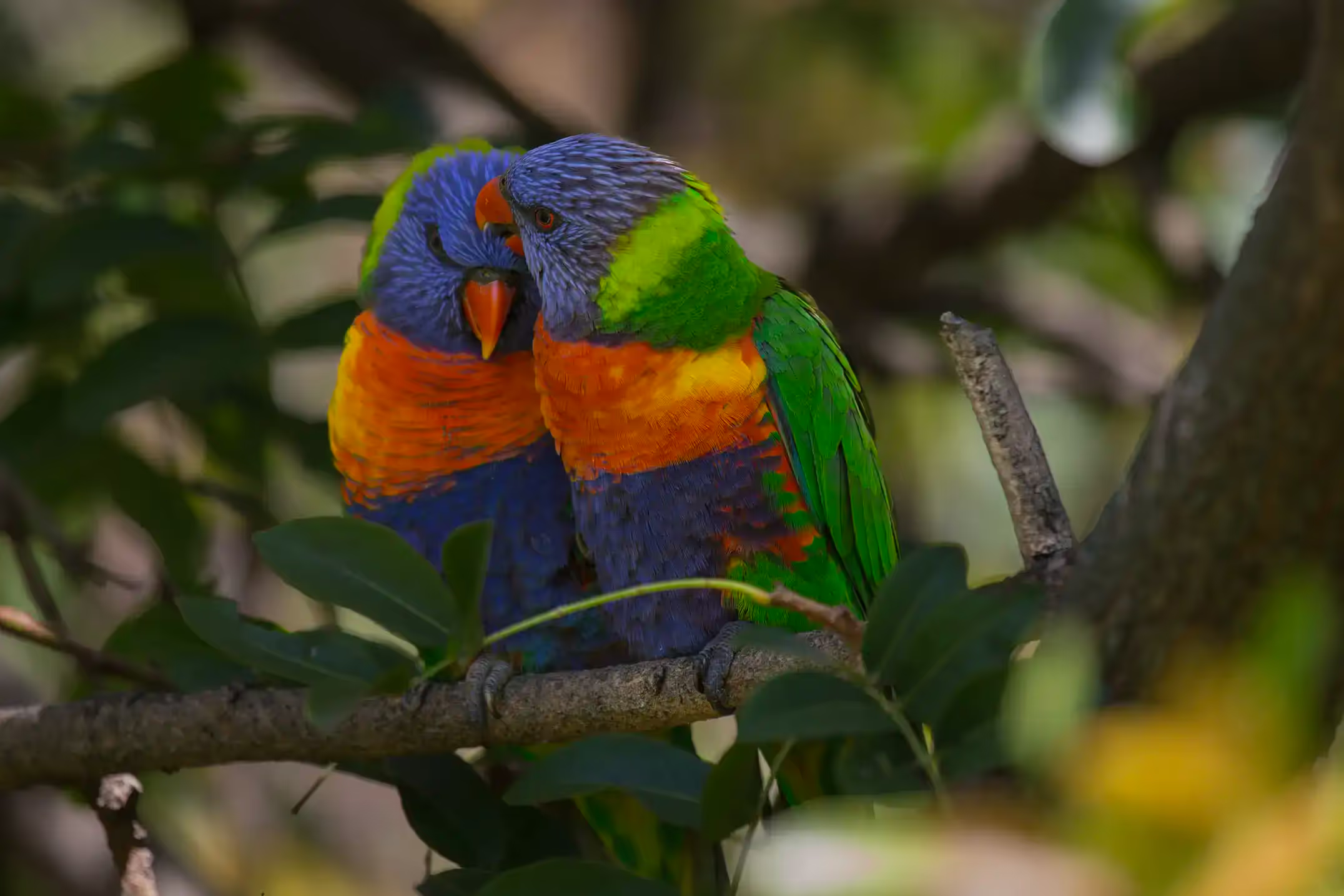
Australia is a very noisy place, birdlife in particular, adding to the cacophony that is so compellingly Australian. Birdlife is in the frontline of the killing as some places fall silent. The devastating impacts of climate change have not slowed the pace and intent to kill.
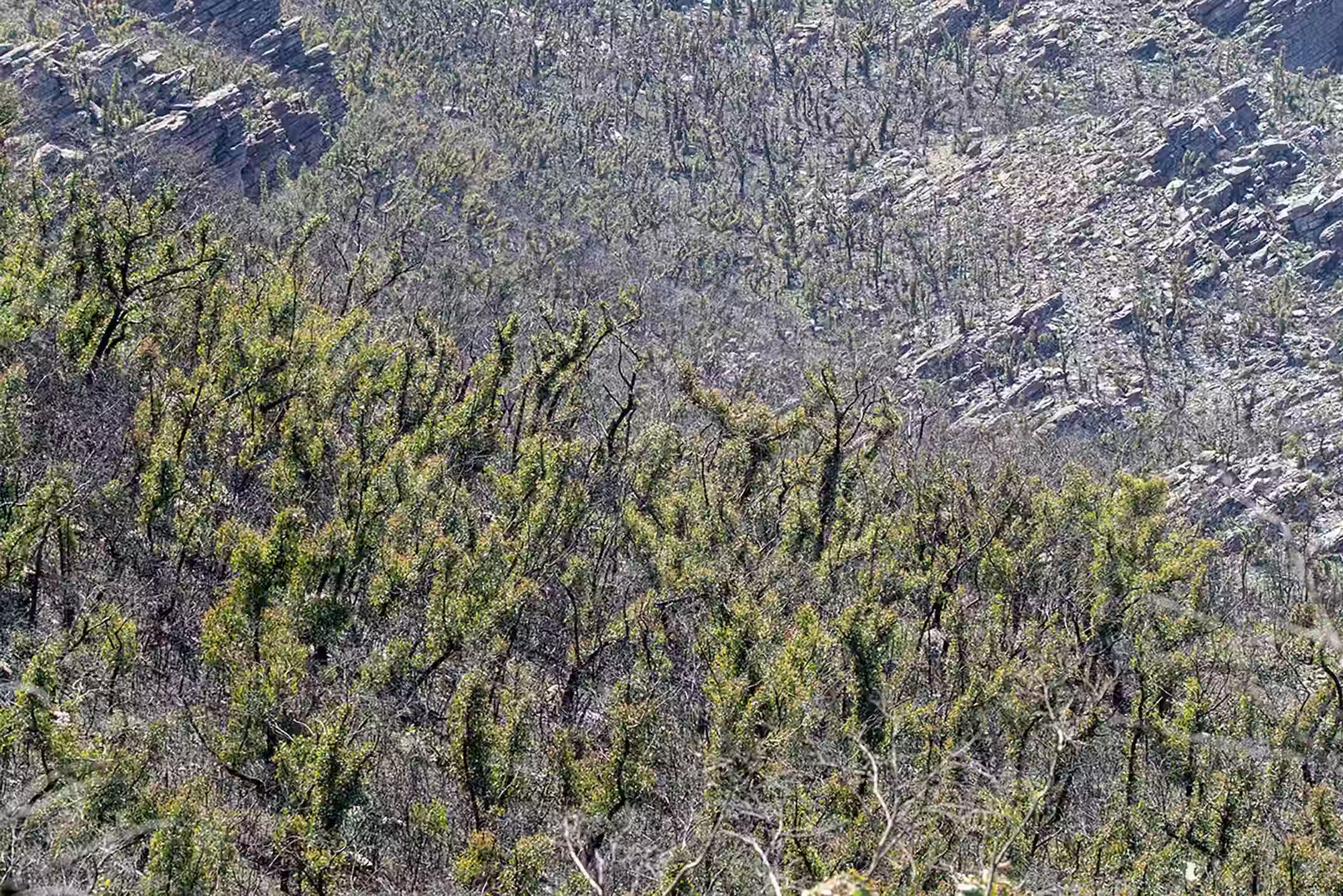
As 2025 draws to its close we take the time to review the extent of Australia’s state and territory government’s enabled (and sadly sometimes promoted) killing of ‘protected’ Australian species in 2024. We provide just one number for each state and territory for mainland Australia plus Tasmania. These numbers are not the numbers they intended to kill, which in general are far higher, but what was reported as actually happening (with a few of our estimates thrown in based on previous years reporting when we did not have the numbers).
An example of the way these numbers have been compiled is in the case of commercial exploitation of Macropod species on mainland Australia, in 2024 they intended to kill just on five million Kangaroos for commercial gain, the reported actual was 1,316,575, plus an estimated and unaccounted for 350,000 joeys, which were beaten to death, decapitated or if they escaped, starved to death (apparently this is humane). So we use a commercial take of 1,666,575 (divided across states as per their reporting) in the numbers below.
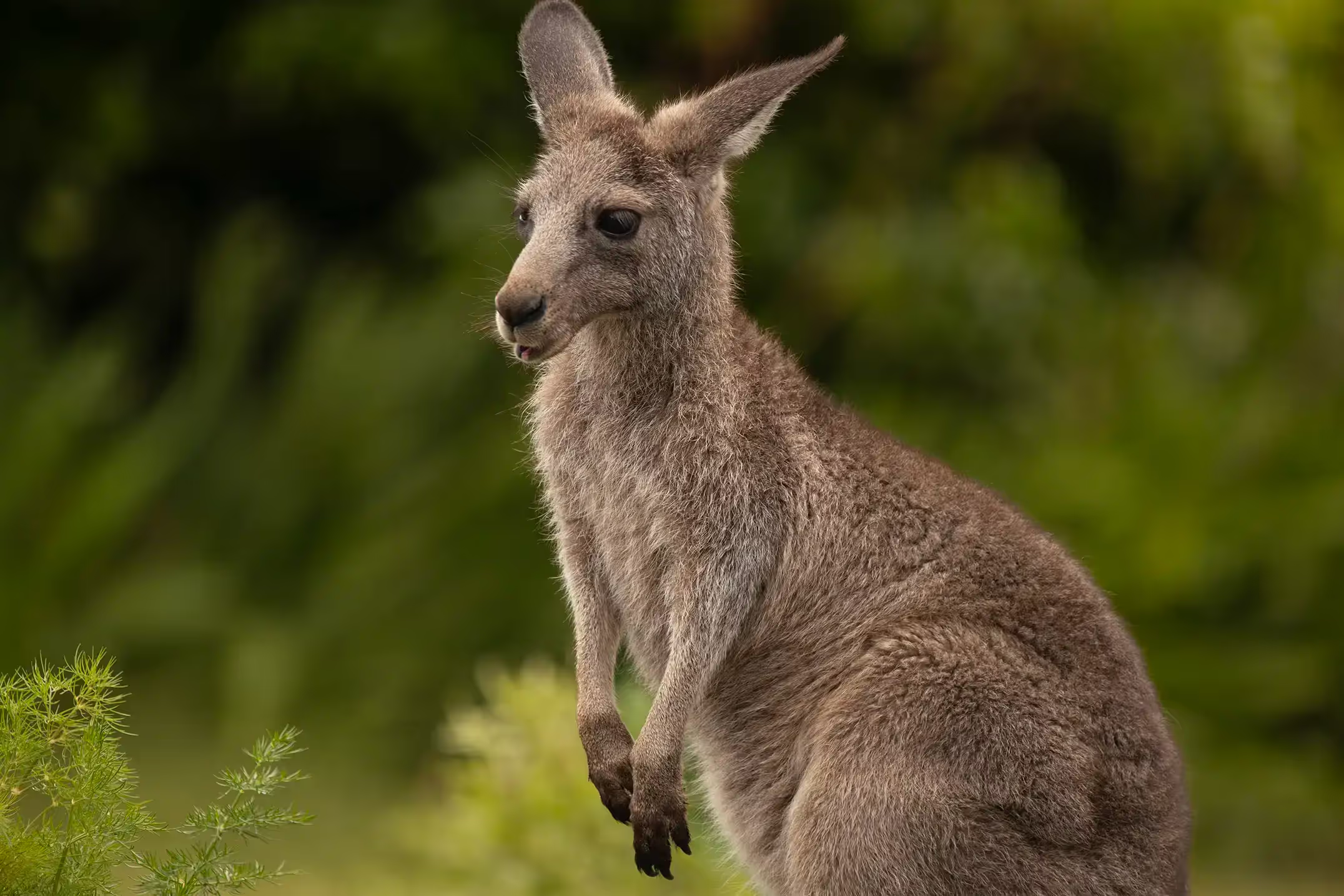
We should note that in 2018 in New South Wales, 887,993 Kangaroos (3 species) were targeted in that year by non-commercial permits, called licenses to harm native animals in that state. The commercial quota in that year in New South Wales was an additional 2,253,914 plus a special quota of 216,042, the latter a switch of harms permits to commercial. The actual commercial take in that year was 593,796, an indication that the New South Wales Government population estimates were yet again, far too high.
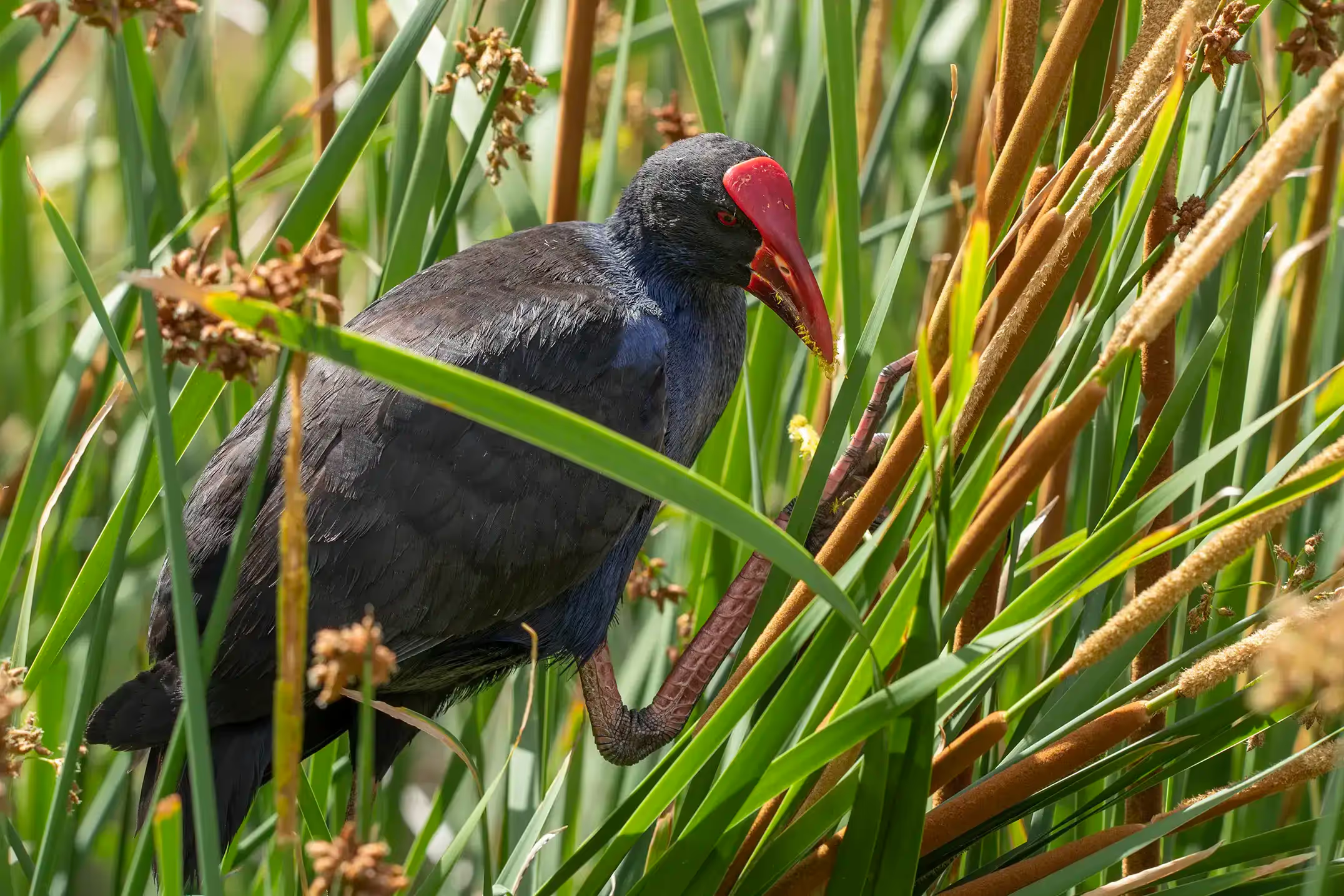
We should note the recreational killing of protected Australian birdlife (which becomes unprotected) occurs in Victoria (the biggest killers), Tasmania, South Australia and the Northern Territory and on private land in New South Wales. Duck species, quail and in the case of the Northern Territory, also geese, are victims of the annual and prolonged slaughter. We have noticed a very significant decline in duck numbers while governments like to pretend there is nothing to see here.
We should stress this is our rough cut of the numbers, well perhaps not so rough. This will however give you some understanding of the vast scale of government enabled ‘protected’ wildlife killing that occurs in Australia each and every year.
We should also add that the killing of wildlife involves children, sometimes very young children, and in the case of Victoria for example, the government actually promotes the killing of wildlife to children of 12 and over. Given the damage this does to young people and the very high level of domestic violence and the killing of women that occurs in Australia, we find the government’s conduct beyond comprehension.
What has shocked us the most in all of this is that even in regions where protected Australian wildlife populations have been completely devastated, the killing, to mop up the remnant few, continues. As I write this I sit in just one of these places and the evidence that this killing continues at pace is within meters of where I sit.
Numbers are rounded because there are known unknowns.
Actual commercial take (includes minor estimates for missing data), harms permits variously named across different parts of Australia covering a large number of protected Australian species, recreational killing of birdlife, some unprotection is in (what we know) and some is out (what we don’t know) and secret killing regimes such as for Koalas. These numbers only include protected Australian bird and mammal species, leaving a vast array of classes of life unaccounted for, including life in water. We have included an estimate (pretty accurate) of the unaccounted for young killed in the slaughter of Kangaroos for commercial gain. In the case of the Australian Capital Territory (ACT) the numbers include killing of protected wildlife in the Canberra ‘Nature’ Park system as well as the ACT Government’s ‘rural culling’ program.
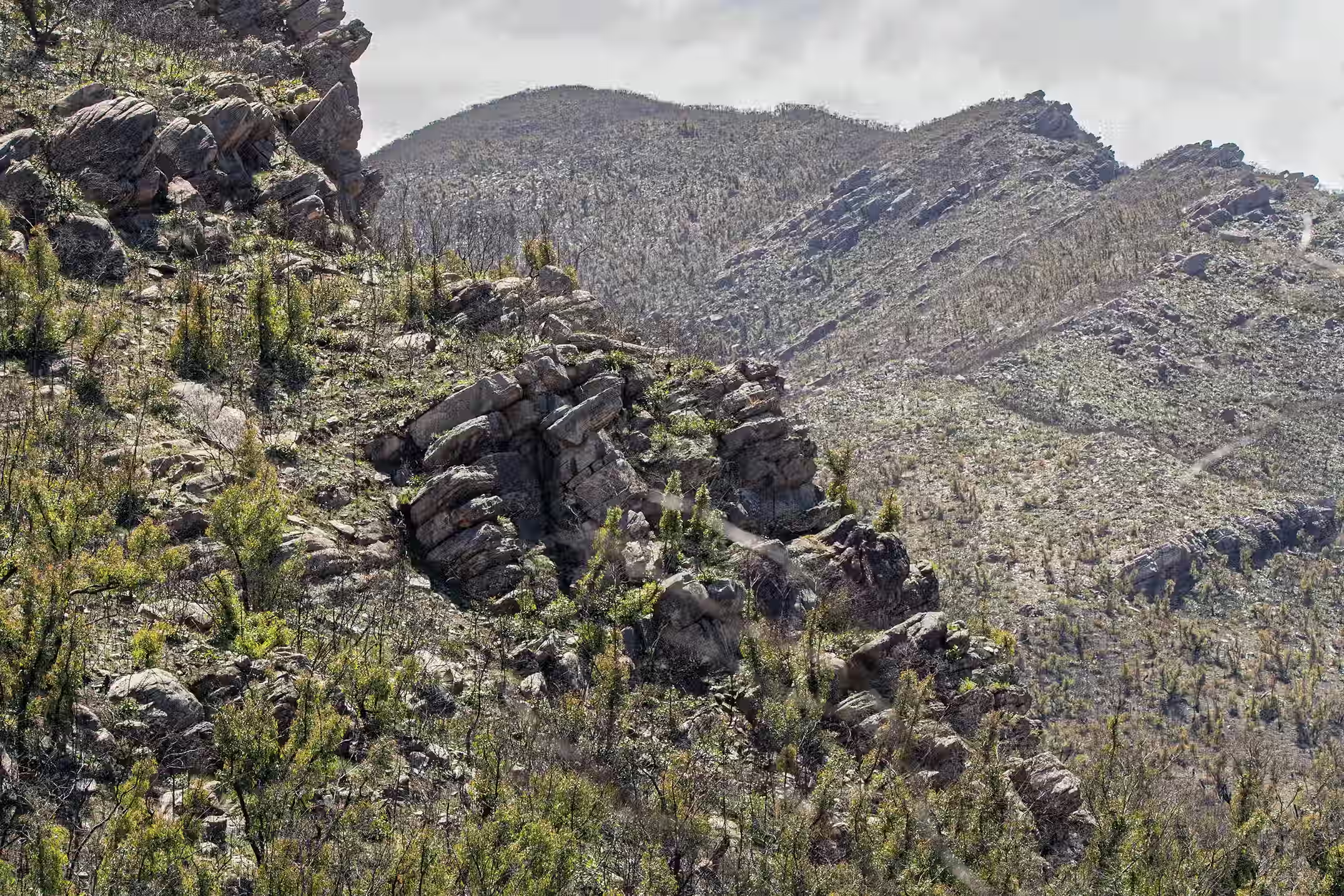
Death of Australian protected species as a result of climate change driven events including floods and fire, some unprotection killing, the large number of native animals killed on Australian roads as a result of poor planning (including a complete disregard for animal welfare), the impact of development and extensive changes in land use including large scale industrial developments in regional Australia, the catastrophic impact of land clearing (for example during the 1990s the estimates for the number of Koalas killed (just in Queensland) because of land clearing was 20,000 per annum, that is until they ran out of them. The killing of protected Australian species by Indigenous peoples is not included here.
The illegal trade in wildlife which impacts bird species and reptiles in particular is not included. We have not included the unaccounted for young killed as a result of various permit types (with the exception of killing for commercial gain of Macropod species on mainland Australia).
Even the grass is not safe. Australian landscapes are covered by plant life from somewhere else, some of these plants cause harm to Australian wildlife, including Phalaris, a grass toxic to Macropods, causing the distressing to watch, Phalaris staggers, caused by the neurological damage this grass causes when eaten.
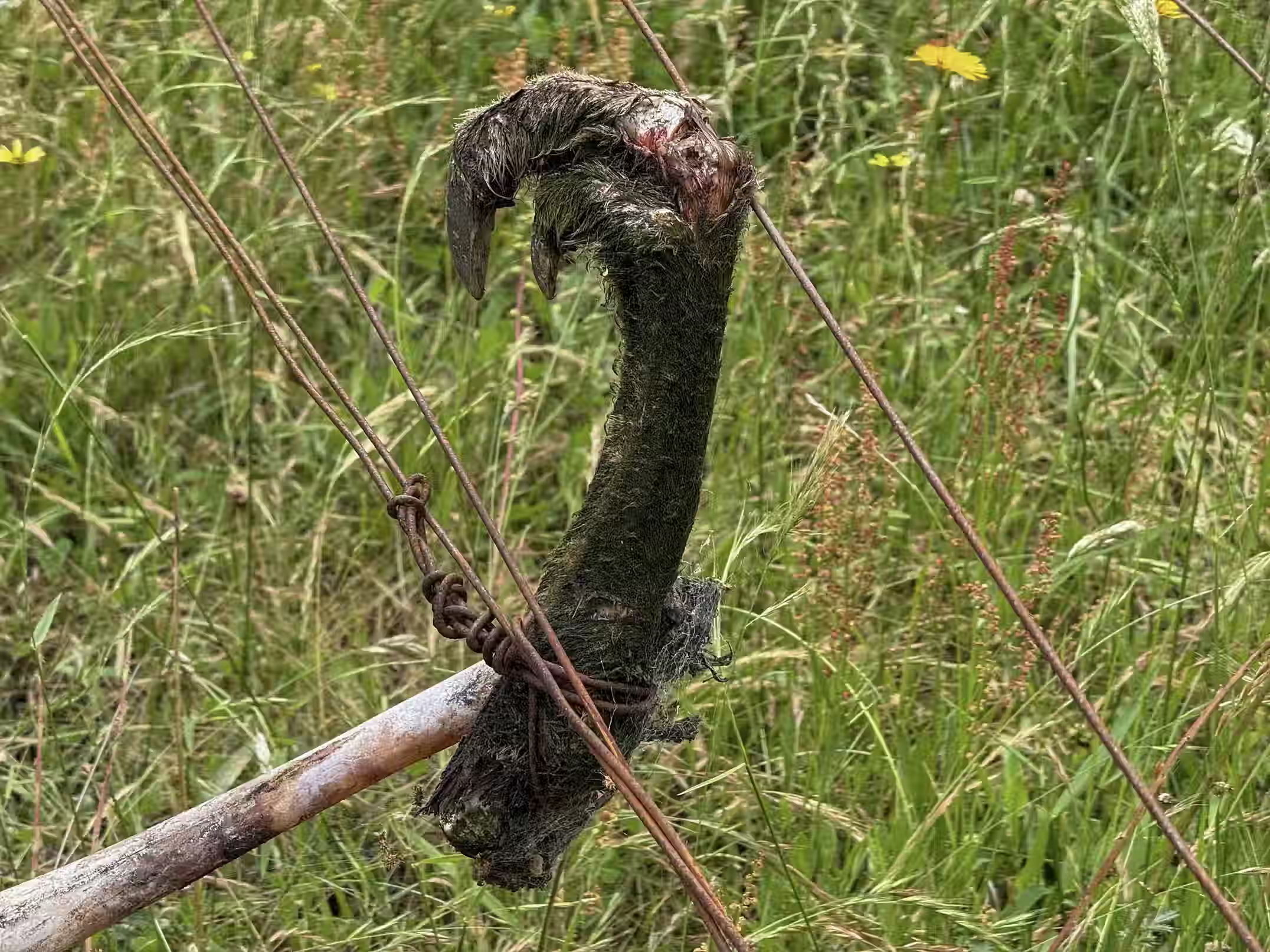
Animals also die as they get caught in fences, these fences are now far grimmer in nature, entrapment fences set at 45 degrees, once stuck wildlife cannot extract themselves, exclusion fencing that traps and kills large numbers of native animals, the extensive use of barbed wire, so deadly to wildlife, all of it blocking access to water and locking wildlife out onto roadsides where the inevitable happens. Many of these fences are built from grants provided by governments.
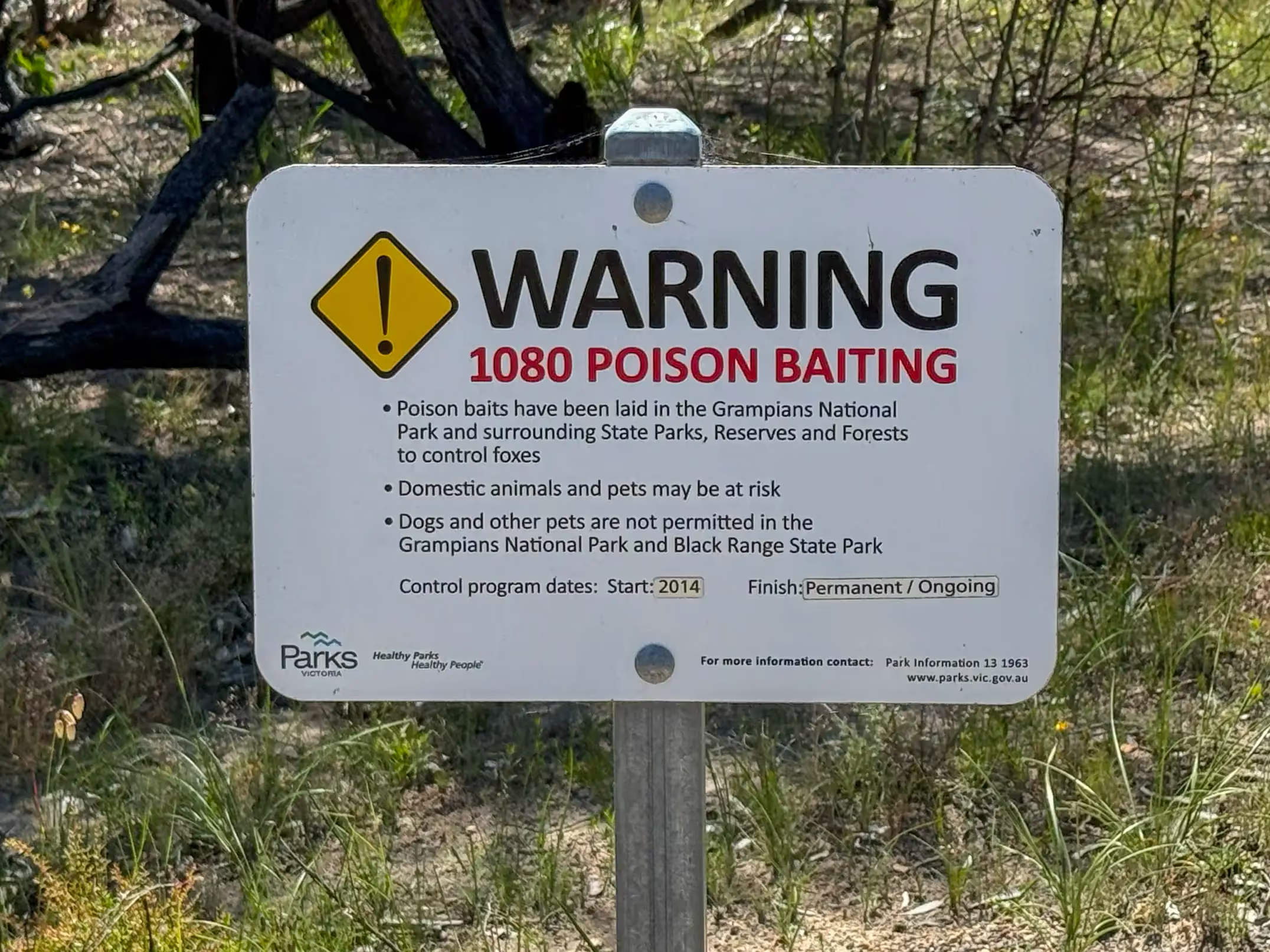
Australia also uses poisons to kill foxes, ‘wild dogs’ and other species such as rabbits, and shockingly protected Australian species, the latter in at least some states, this killing is vast scale and indiscriminate and include 1080 (banned in most countries) and Pindone poisons. Vectors for the poisons include carrots, oats and Kangaroo meat. These poisons are used extensively in National Parks and Ramsar sites as well as on other public and private land and there are various methods of distribution, including dropping 1080 baited Kangaroo meat from helicopters. Protected native species impacted by these activities include reptiles, birds of prey (including Owls), Marsupials of various kinds including carnivorous and herbivorous species. The use of poisons is so indiscriminate and wide use we cannot know the outcome.
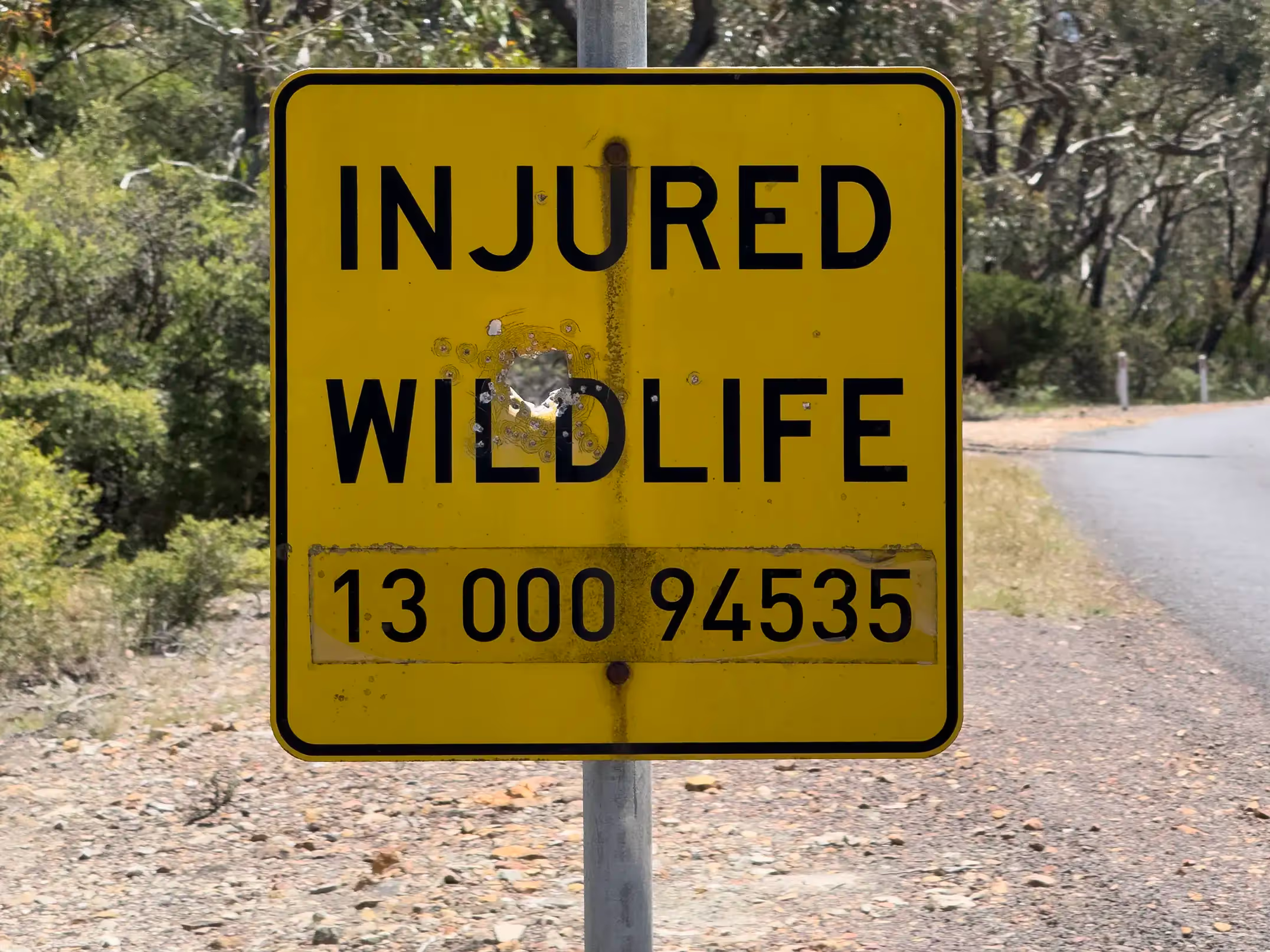
All of this is underpinned, and I made that point to Australia’s Environment Minister Murray Watt, just this week, by poor standards of governance, mis and disinformation coming from government departments including the carefully crafted holding lines, it is all sustainable, it is all humane, the numbers are booming and other arrant nonsense that has no basis of truth or in reality.
Tasmania has the highest number of animals killed per capita at 1.22 and per square kilometer at 10.23. The Northern Territory has the second highest per capita kill rate at 1.06, while the ACT has the second highest kill rate per square kilometer at 7.21, while it has the lowest kill rate per person at 0.04.
The Victorian Fisheries Authority underwent significant workforce changes in 2025, cutting 35 jobs (from 192 to 157 staff). The current re-organisation brings together the VFA and GMA, with as we understand it, no further job losses.
“Over time, a single entity would enhance data sharing, streamline enforcement, and provide a more consistent regulatory experience for recreational and commercial users, while supporting a holistic approach to ecosystem and species management”.
This is another very big problem for wildlife in Victoria and the likelihood, that in a state were conflicts of interest in environmental matters are already very significant, there will be a further deterioration of standards, particularly directed at those who care about wildlife and conservation in the state.
As a result regarding our analysis, questions and letters regarding the vast scale loss of biodiversity in Australia Senator Mehreen Faruqi raised this question on notice in the Australian Senate:
Question on notice no. 174
Portfolio question number: SQ26-000168
Additional estimates
Environment and Communications Committee, Climate Change, Energy, the
Environment and Water Portfolio
Senator Mehreen Faruqi: asked the Department of Climate Change, Energy, the
Environment and Water on 20 February 2026—
Will the latest changes to the EPBC Act reduce the large scale killing of Australian protected animals (wildlife) conducted under State and Territory Government
'control' (harms permits) , recreational and commercial wildlife killing mechanisms? If so, how?
Answer —
Environment and Communications
Answers to questions on notice
Climate Change, Energy, the Environment and Water Portfolio
Question No: SQ26-000168
Hearing: Additional Estimates
Outcome: 2
Division/Agency: Environment Law Reform Taskforce
Topic: Protection of wildlife under EPBC Act
Question Date: 20 February 2026
Question Type: Written
Senator Faruqi asked:
Will the latest changes to the EPBC Act reduce the large scale killing of Australian protected animals (wildlife) conducted under State and Territory Government ‘control’ (harms permits), recreational and commercial wildlife killing mechanisms? If so, how?
Answer:
Reforms to the Environment Protection and Biodiversity Conservation Act 1999 (EPBC Act) will deliver stronger environmental protection and restoration for matters of national environmental significance.
Actions that have, will have, or are likely to have, a significant impact on a matter of national environmental significance are regulated under the EPBC Act and will be subject to the stronger protections introduced under the reforms, including National Environmental Standards.
State and Territory governments regulate recreational and commercial hunting and fishing, and licencing relating to control of native animals for reasons such as human safety, damage to property or economic hardship. If proposed activities are likely to have a significant impact on a matter of national environmental significance, they would require referral, assessment and approval under the EPBC Act.
A response to a recent email to Australia’s Environment Minister, Murray Watt, draws this response from his Director of Environment policy:
“The Australian Government shares your concerns about protecting our unique flora and fauna. Australia’s Strategy for Nature2024-2030 has set the goal to halt and reverse biodiversity decline in Australia by 2030 to put nature on a path to recovery by 2050. The Strategy was developed jointly with all states and territories and agreed by all Environment Ministers. It establishes six national targets to address the key drivers of biodiversity decline in Australia. Among those targets is a commitment to prevent new extinctions of native species, support the recovery of threatened species and maintain their genetic diversity”.
We of course know that nothing will change and of the millions of protected native animals that will die between now and 2030, not one will be saved by either Federal or State Government policies. Instead the blind eye, the dogma, misinformation and disinformation, poor standards of governance and extreme cruelty, will prevail.

In Tasmania in 2024 there were 4,278 active Property Protection Permits resulting in an actual reported take of Australian protected species of 633,953 animals.
Evacuated and glad to be returning home to Wongaburra, Christine Corbidge talks about her life with her horses and the wildlife she loves.
This analysis details the number of ATCWs issued in Victoria in 2024 by species and number of animals targeted. It shows a significant increase in the number of protected wildlife being killed using this permit.
What happened, the New South Wales Government Inquiry into the Health and wellbeing of Kangaroos and other Macropods in New South Wales?
We visit the home of Australian explorers, Suzan and Jon Muir. Suzan Muir describes the terrible impact of fire on the property and its wildlife that Suzan and Jon love so much.
Baffling as it may seem the ACT Greens have been a central force in the eradication of Kangaroos in the Canberra / ACT park system. This year's kill is more than double the 2024 target and nearly triple the 2023 target.
Licences to harm are non-commercial permits and with few exceptions are issued to kill protected Australian species in NSW.
This analysis is a rebuild of annual Kangaroo population estimates, commercial quotas and actual take from 1980, including the population estimate data removed from the public gaze.
On 16 February 2025, following the devastating Gariwerd Park fires, the commercial Kangaroo shooters returned to Dunkeld.
As fires in Victoria rage, how many native animals are being rescued from public lands? This is the timeline of the Grampians Gariwerd fires.