Where the truth lies? Actual number of Kangaroos killed for commercial gain, Victoria 2025

Life on land


Your support will assist us to continue our research and content development, the greater our resources, the more we can do.
The more we have an accurate understanding of what is happening to nature, the more we can all do to protect what remains of our living planet.
This is also an opportunity for philanthropists to be part of an ongoing project that tells independent stories about the natural world, stories that will help us to better understand what is happening to species and places on our precious planet Earth.
Note: Creative Cowboy Films does NOT have tax deductible charity status.
Becoming a member of Creative cowboy films The Nature Knowledge Channel is a very real way you can help the precious natural world and support the work we do in creating knowledge about what is happening to it.

The Nature Knowledge Channel is a very real way you can help the precious natural world and support the work we do in creating knowledge about the natural world.
Annual membership of the Creative cowboy films - Nature Knowledge Channel gives you full access to content, stories and films, available on this website. Becoming a member of the Creative cowboy films - Nature Knowledge Channel is a very real way you can help the natural world and support our work in creating a greater understanding about what is happening to it.
A point of difference
Creative cowboy films is independent, is not funded by governments or industry, and is not influenced by their associated interest groups. For reasons of independent research and content development, Creative cowboy films does NOT have tax deductible charity status.
Life on land
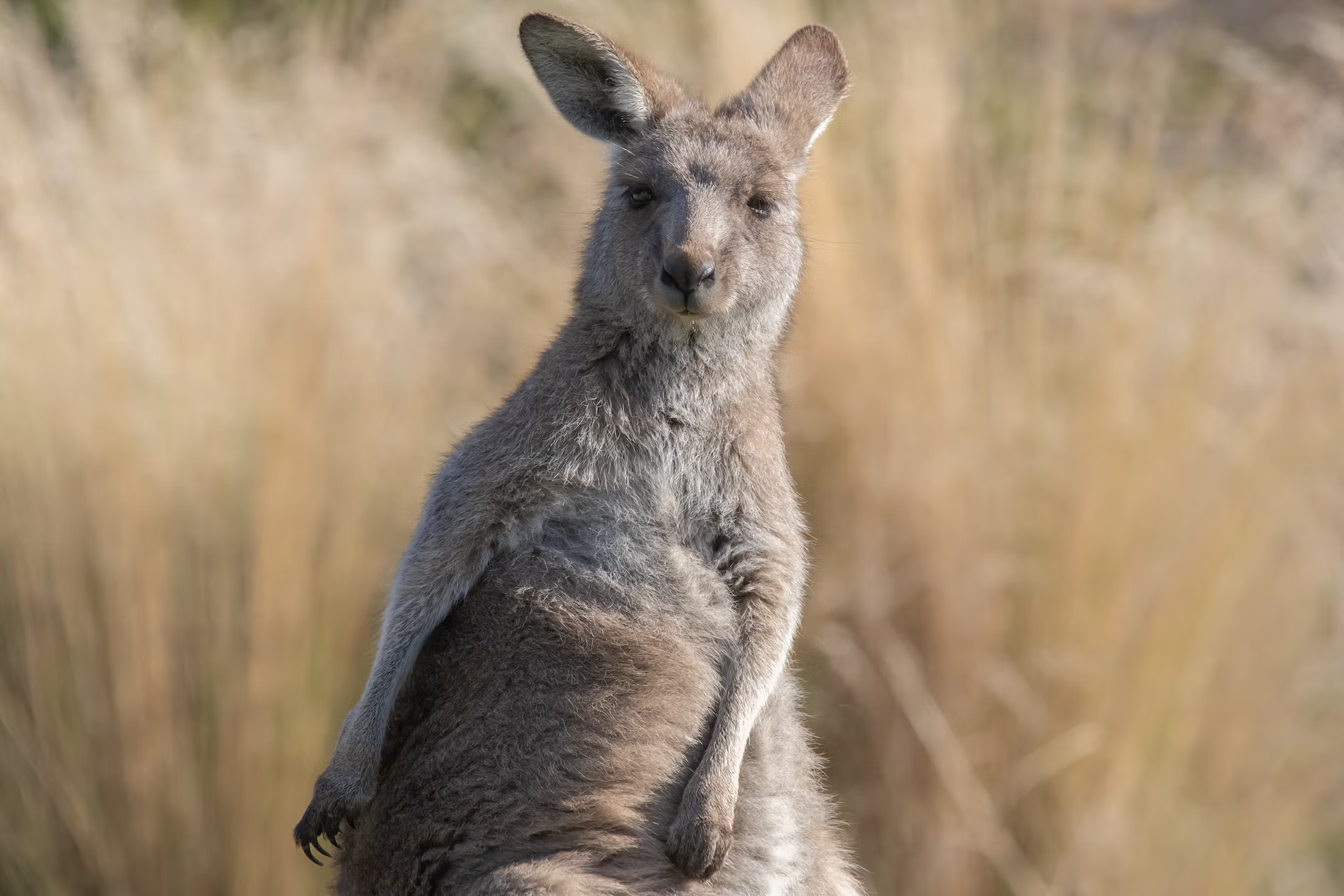
CONTEXT: Status of Macropodidae species in Victoria since European settlement:
Status of Kangaroo, Wallaby, Potoroo and Bettong species and their relatives in Victoria. Even the recent and catastrophic fires and climate change have not stopped the ever growing number of protected Australian animals being killed in Victoria.
In the last 90 days to 16 April top 20 user countries of the Nature Knowledge Channel were:
In the period, 74 countries had active users, for our friends in South America, Brazil was at number 17. We thank our supporters and thank you also for sharing our stories. Top active user countries change over time and in part reflect capacity, peaceful regions and wealth, the foundations of knowledge acquisition. We would love our friends across Africa and South America to join us in greater numbers too.
In 2025, 73,613 Eastern Grey Kangaroos and 2,750 Western Grey Kangaroos were killed for commercial gain in Victoria. The Nature Knowledge Channel’s estimate for actual take in the year was 71,000.
The 2024 population estimate for Western and Eastern Grey Kangaroos in Victoria from which the original 2025 quota was derived was 2,078,000, comprised 211,000 Western Grey Kangaroos and 1,867,000 Eastern Grey Kangaroos. This compares with a population estimate of 2,363,850 from the previous survey in 2022.
All population estimates are overstated and hence quotas were far too large to be sustainable.
The number of Kangaroos in those original quotas from 2025 in Victoria (excludes joeys) were (derived from Kangaroo harvest quotas for Victoria report, 2025, Victorian Government):
In July 2025, the Victorian Government announced a $1.8 million ‘On-farm Kangaroo Control Rebate’ program to ‘aid drought-affected farmers’ in hiring Kangaroo shooters thus acting as a subsidy to increase commercial Kangaroo killing. The program, which continues during the first half of 2026, pays $450 per claim with a maximum of three claims per farm. As is the case in South Australia, bounties and subsidies appear to have had little impact on the numbers of Kangaroos killed for commercial gain.
In late 2025 a further reduction of commercial quota occurred from 106,750 to 94,700.
This is what happened in the state’s five shooting zones (both species combined, that is in Victoria, the Eastern Grey Kangaroo and the Western Grey Kangaroo):
We can conclude from this data that Kangaroos are vanishing from southern parts of Victoria and mopping up of populations continues at pace in the northern regions of the state.
The numbers describe allocations that reverse the Victorian Government’s policy of shifting ATCW permits to commercial permits. This reversal of policy also occurred in 2024.
We should note that the Victorian Kangaroo killing system requires that commercial kills are accounted for and reported, ATCW kills, once the ATCW permits are issued, have no reporting requirement. So for ATCW permits issued, the Victorian Government does not have a clue about what actually happened. Failure to meet commercial quotas is very telling, so shifting more permits across to ATCWs means no one knows what actually happened.
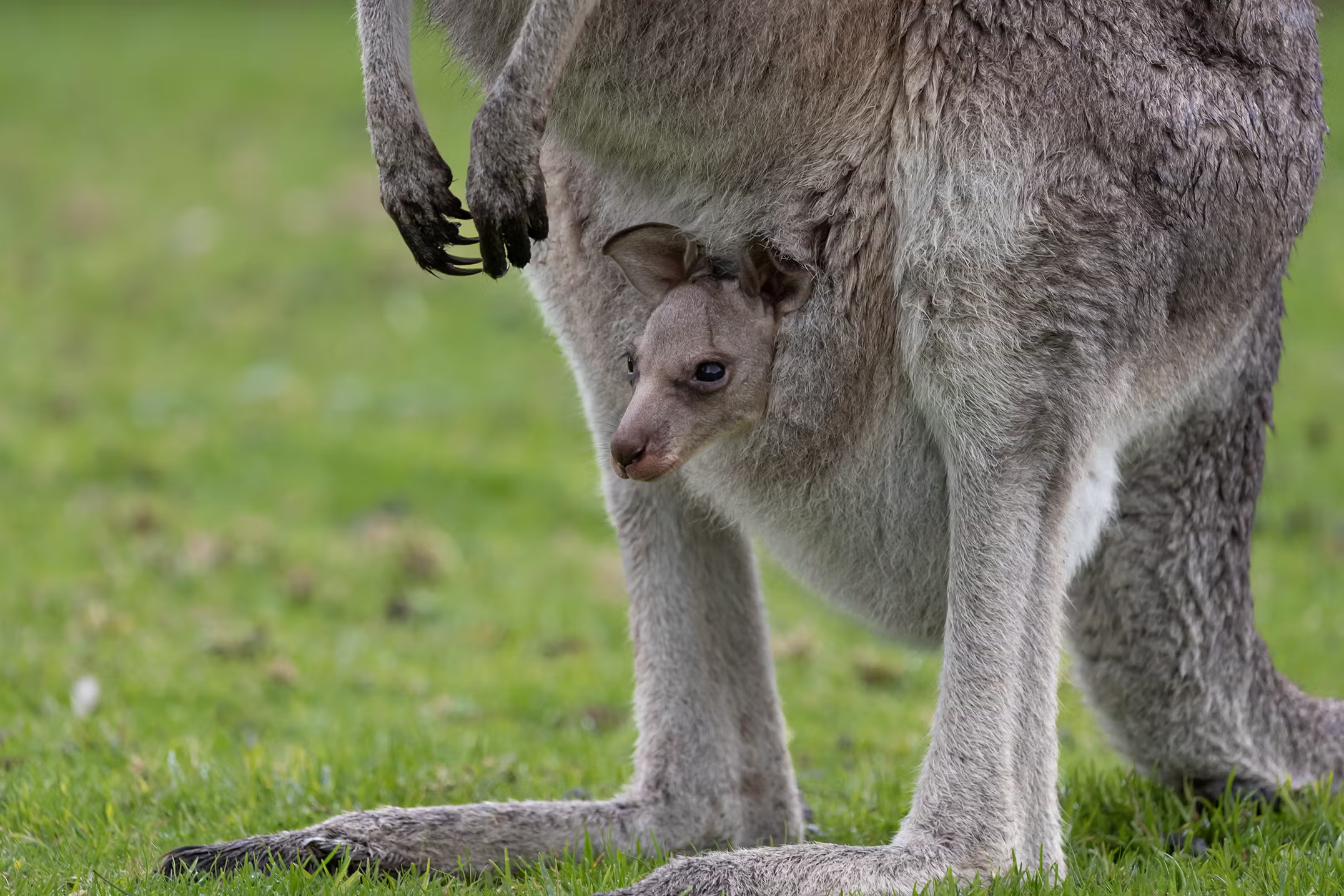
26,646 female Kangaroos were shot for commercial, that is 35 per cent of the total commercial kill in Victoria in 2025. The share of females killed in Victoria is increasing and that means that the number of joeys killed is also likely to increase. Another key indicator of population decline.
As shocking as it seems the Victorian Government claims that there is minimal ecological risk to Kangaroo populations caused by the mass killing of females and their young.
In 2025, 22,136 dependant young were killed by blunt force or decapitation, The Victorian Government once again claiming that the dependant young of female Kangaroos killed for commercial gain must be euthanised humanely in line with requirements under the National Code of Practice for the Humane Shooting of Kangaroos and Wallabies for Commercial purposes.
We may well ask what happened to these Victorian Government guidelines?
Female Kangaroos with obvious young: Conditions of Authorisation under section 28A of the Wildlife Act 1975, to hunt, take, destroy, possess, dispose of and sell Eastern Grey Kangaroos and Western Grey Kangaroos in accordance with the approved Victorian Kangaroo Harvest Management Plan 2021-2023.
The conditions required to comply with an authorisation issued under section 28A of the Wildlife Act 1975, to hunt, take, destroy, possess, dispose of and sell Eastern Grey Kangaroos and Western Grey Kangaroos in accordance with the approved Victorian Kangaroo Harvest Management Plan 2021-2023.
Number 7 of 22 conditions states: Kangaroos with obvious dependent young must not be shot.
Here is the short history of commercial kill in Victoria, never meeting quotas, describes the switch back to the unmonitored outcome of ATCW permits.
The full year commercial quota in 2024 in Victoria was 155,650. The Nature Knowledge Channel’s full year forecast for actual commercial kill in Victoria in 2024 was 72,800. (was 69,900) (the 2023 actual was 72,232).
Full year actual commercial kill was higher than expected, given numbers provided previously at 81,160 of which 27,314 were females. An additional 23,488 joeys were beaten to death or decapitated, these animals are not included in the annual commercial data.
Because a large number of commercial tags issued by the Victorian Government during the year in 2024 were not utilised, no tags were issued in Quarter 4 in 2024 in any of the 7 Victorian shooting zones.
“On 25 September 2024, DEECA further reduced the quota to 111,175 removing all Quarter 4 allocations. Quota is released in four batches, at the start of every quarter. Where quota is not fully allocated, it can be carried over into the following quarter”. Victorian Government
Note: Original quotas have been used for comparison (rather than revised quotas and downward revisions may occur during the year). Never meeting quotas is an indicator that population estimates are far too high.
We should note that the commercial quota for 2024 was revised down to 142,350 Grey Kangaroos in July 2024, a further downward revision occurred in September 2024 to 111,575 (in their Quarter 3 report the Victorian Government states ‘removing all Quarter 4 allocations’). The Victorian Government also stated that ‘where the quota is not fully allocated it can be carried over into the following quarter’.
“Those of us who opposed the slaughter warned that once an industry started, it has its own imperatives and would kill increasing numbers of Kangaroos, even if populations crashed. Even the Queensland Government can claim full marks for its far sightedness on this score, despite its questionable reasoning. It said in 1984, it is important to recognise that while the Kangaroo industry was originally a response to the pest problem caused by these animals it has now come to exist in its own right as the user of a renewable natural resource and thus serves its own interests”. Juliet Gellatley, Kangaroos: myths and realities, AWPC, 2005
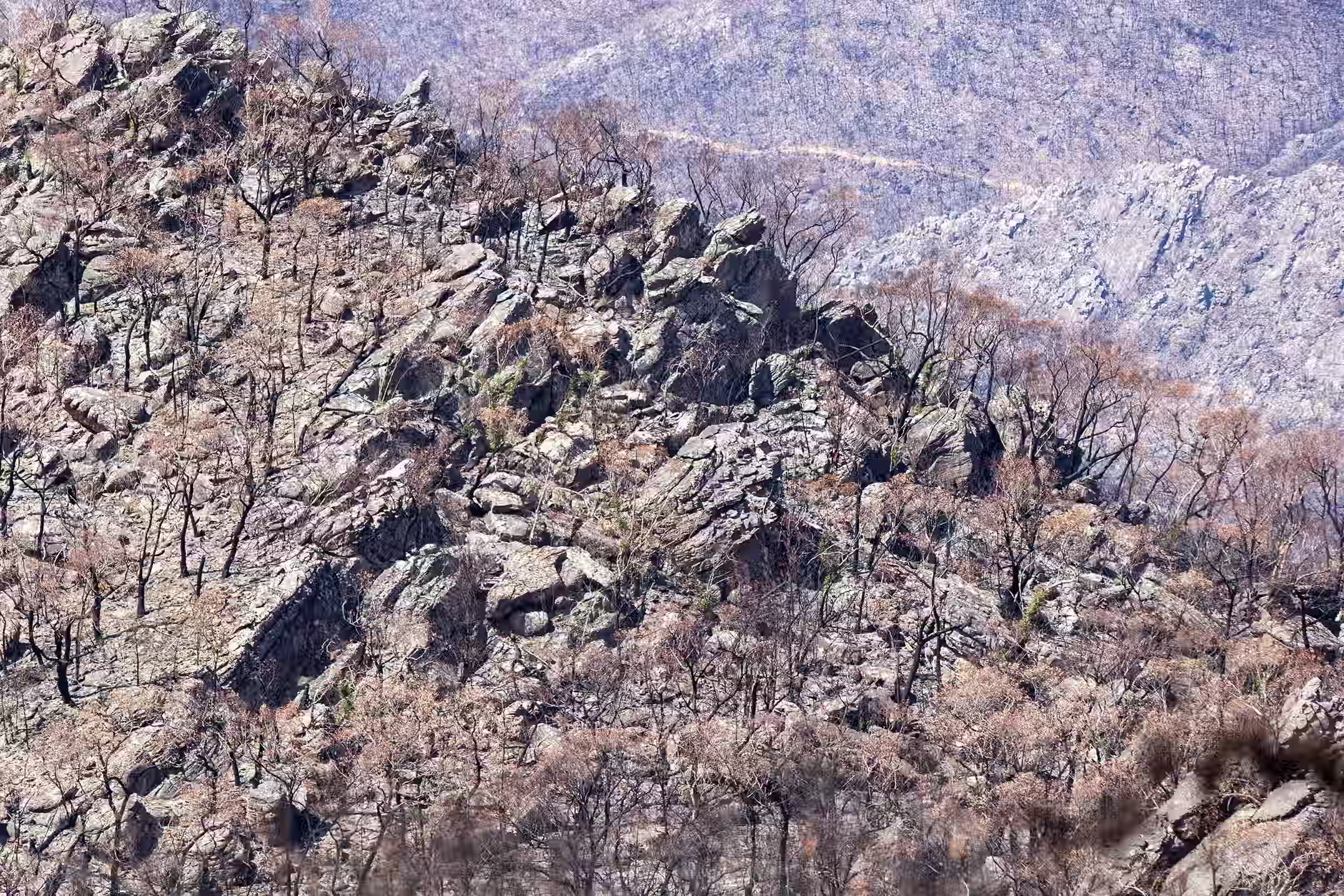
In 2025, two very large and devastating bushfires destroyed much of two very important national parks in Victoria, the Grampians (Gariwerd) National Park and Little Desert National Park, and hence, compared to the rest of the state, places of comparative safety for protected Australian species, including Kangaroos and Wallabies. These two fires combined destroyed a wilderness covering 225,000 hectares, that is roughly an area 3.5 times bigger than Singapore. There were other wildfires too, including the controversial fire in the world heritage listed national park, Budj Bim, where the Victorian Government shot many hundreds of Koalas in tree tops from a helicopter. Kangaroos also died.
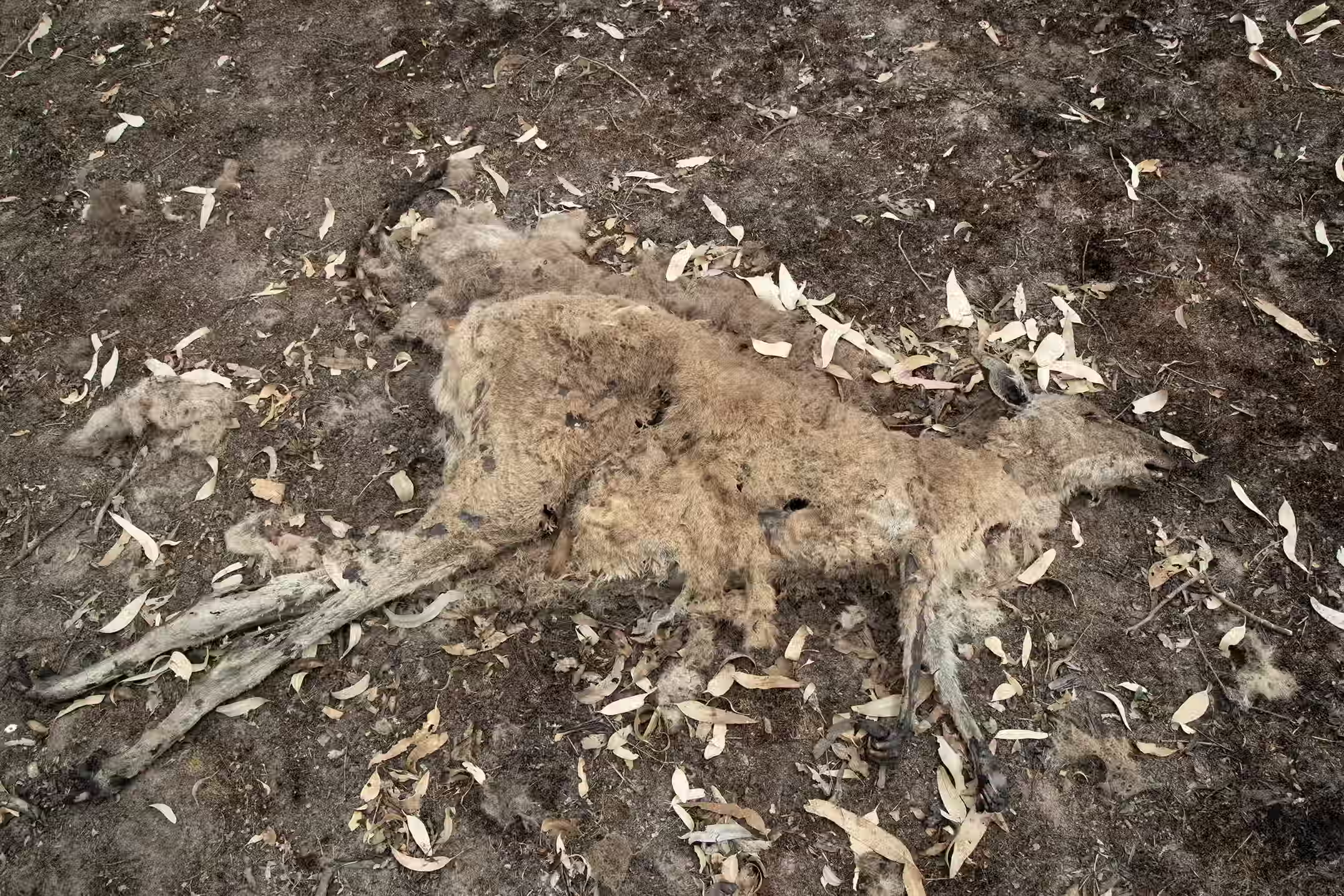
By early February 2025, in just one fire in the Grampians, the Yarram Gap Road fire, our data shows that 1,884 native and protected animals had been shoot, most were Kangaroos. In its latest report the government states that it had destroyed more than 1,700 Kangaroos on and adjacent to the fire impacted Grampians (Gariwerd) National Park and Little Desert National Parks. This latest figure applies to animals killed in these events by government action, while blocking traditional wildlife rescue practices, from 1 January 2025.
Given the vast scale devastation of habitat and animal life, large numbers of Kangaroos not accounted for here died in the actual fires on which we reported in detail from the region while the fires were burning, commercial shooting continued, even as animals fled from the fires and vets were trying to assist injured animals. Animals were also being killed in large numbers via the ATCW permit system.
To ‘speed up’ the killing of Kangaroos in 2025 the Victorian Government went on to issue subsidies to shooters in an attempt to kill more animals, while ‘streamlining the paperwork’.
Not to be deterred, the Victorian Government makes this shocking claim:
“DEECA considers the types, scale and impact of emergency events on the environment and Grey Kangaroo populations, before making decisions on changes to the commercial quota. DEECA assessed the fire footprint, which included areas of the Grampians and Barwon South West Harvest Zones. Following assessment, no changes to the commercial quota were deemed necessary”.
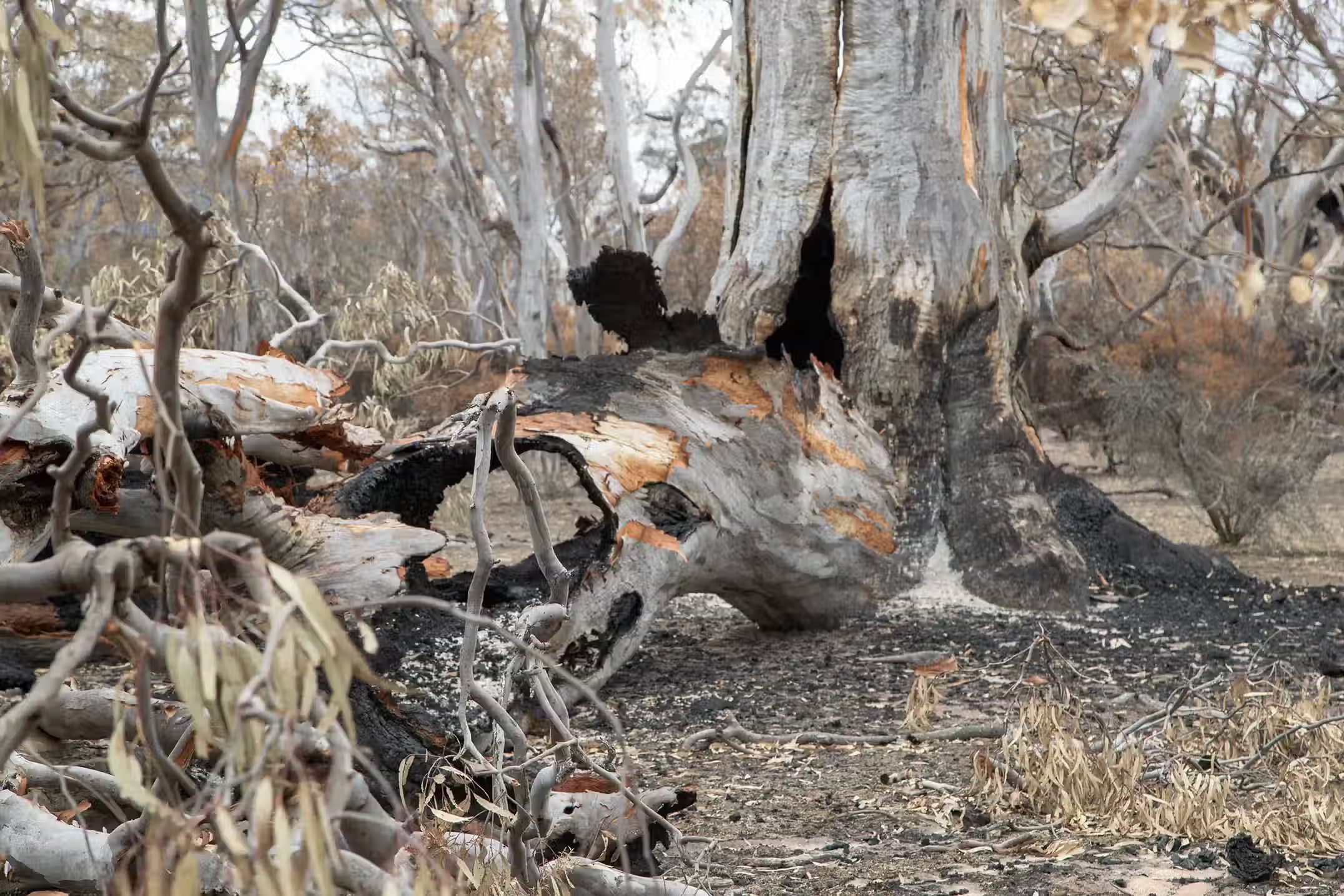
Another revelation which we did not know about, the government stating that the data on ATCWs issued for Grey Kangaroos outside of the five Victorian Government’s now five commercial shooting zones, were not included in the data it released regarding the actual take in 2025.
The Victorian government goes on to say that:
“In 2025, the demand for ATCW permits was the highest on record. Prior to the quarter four quota release, DEECA identified that total take in most Harvest Zones was likely to exceed total quota due to this high demand for ATCW permits. In response, the final commercial quota release for 2025 was fully withheld in the Gippsland, Hume and Loddon Mallee Harvest Zones and partially withheld in the Barwon South West Harvest Zone. However, because of high levels of demand for Kangaroo control, primarily through the ATCW system, the reduction in commercial quota could not maintain control numbers within the recommended total quota”.
The Victorian Government also now admits that:
“As described above, it is likely that the actual number of Kangaroos ‘controlled’ is lower than the figures presented, as ATCW figures reported are the maximum numbers of Kangaroos that were approved for control”.
So we conclude by stating that we cannot be certain of what actually happened in Victoria in 2025, the dubious claims about the need for control and humanness continue year on year as the commercial destruction of protected native Australian animals takes on a life of its own. The role of National Parks in contributing to commercial kill needs ongoing investigation.
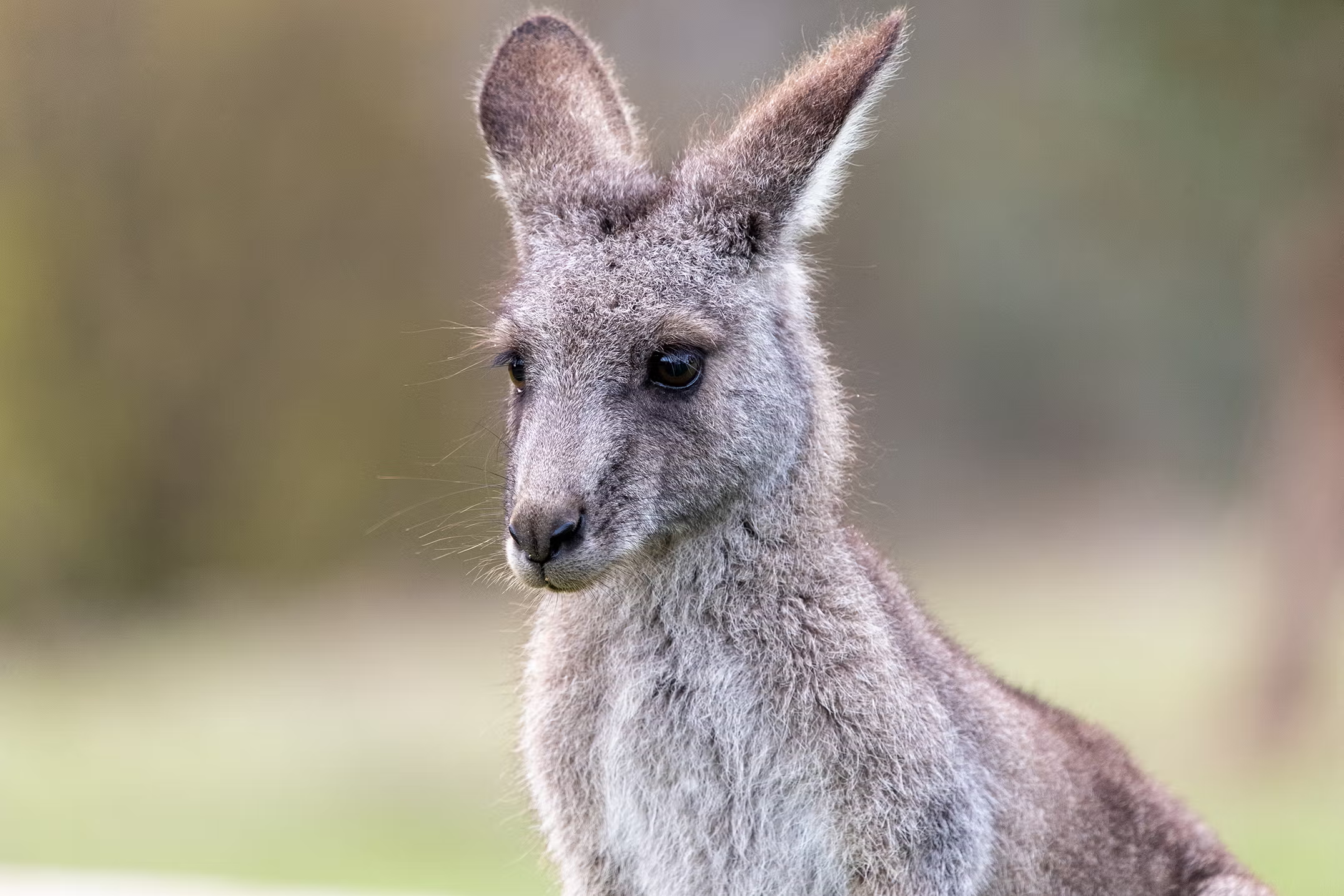

An increase in the population estimate for Grey Kangaroos in Victoria, leading to a 2026 quota of 207,800, a decrease of the commercial quota when compared to 2025 of 22,150 (the commercial component now being 95,450).
The mass, government-sanctioned killing of protected Australian wildlife is fracturing communities across regional Victoria.
January 2022, we are filming Australian wildlife at the edge of a National Park in the West of Victoria.
The suffering of Kangaroos, in terms of scale, the methods of harm, are acknowledged internationally for their extreme cruelty.