Hook, line and sinker: Victoria’s Little Angler Kits

Life in oceans, rivers and seas


Your support will assist us to continue our research and content development, the greater our resources, the more we can do.
The more we have an accurate understanding of what is happening to nature, the more we can all do to protect what remains of our living planet.
This is also an opportunity for philanthropists to be part of an ongoing project that tells independent stories about the natural world, stories that will help us to better understand what is happening to species and places on our precious planet Earth.
Note: Creative Cowboy Films does NOT have tax deductible charity status.
Becoming a member of Creative cowboy films The Nature Knowledge Channel is a very real way you can help the precious natural world and support the work we do in creating knowledge about what is happening to it.

The Nature Knowledge Channel is a very real way you can help the precious natural world and support the work we do in creating knowledge about the natural world.
Annual membership of the Creative cowboy films - Nature Knowledge Channel gives you full access to content, stories and films, available on this website. Becoming a member of the Creative cowboy films - Nature Knowledge Channel is a very real way you can help the natural world and support our work in creating a greater understanding about what is happening to it.
A point of difference
Creative cowboy films is independent, is not funded by governments or industry, and is not influenced by their associated interest groups. For reasons of independent research and content development, Creative cowboy films does NOT have tax deductible charity status.
Life in oceans, rivers and seas
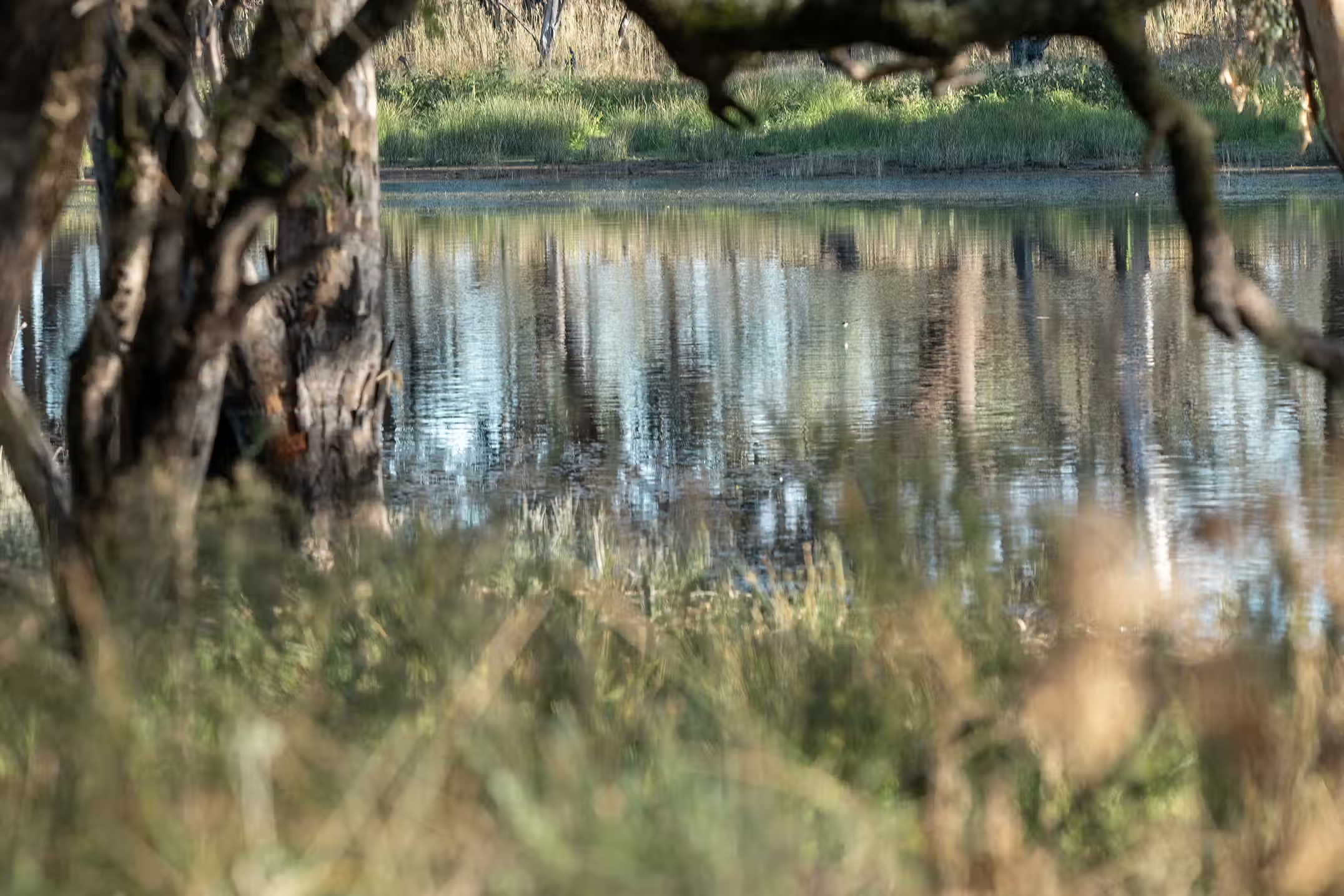
CONTEXT: Nature, culture and commerce are not separate things that live in a silo, they are connected in the most complex ways. The issue here for Victoria is that economic development activities should look to the future and not the past. These things have environmental and economic consequences that are enormous and always Victoria's wetlands, including Ramsar Sites, are blighted by policies that are well past their used by date. And now we have the prospect of H5N1 bird flu.
The Victorian Government has recently expanded its "Little Angler Kits" program, allocating $1.5 million to distribute over 80,000 free fishing kits to Grade 5 students across Victoria. While the stated intention is to encourage children to spend time outdoors and to foster family engagement with nature, this program raises significant concerns regarding its potential to cause environmental harm and to instil questionable values in young children aged 10 or 11 years old. When they are 12 the Victorian Government then encourages children to shoot birdlife on Victoria’s waterways and wetlands, including Ramsar Sites.
The rationale provided by the government highlights economic modelling that anticipates increased recreational expenditure, job creation, and a boost to the state's Gross State Product. However, the credibility of these forecasts is highly debatable, with independent economists questioning both the methodology and the ethical justification of using economic multipliers to validate a socially contentious initiative. The decision to judge the program’s value primarily through anticipated economic benefits detracts from a critical evaluation of its ecological and moral implications.
From an environmental perspective, the rollout of tens of thousands of fishing kits into already under-pressure Victorian wetlands and waterways risks exacerbating ecological stress. Wildlife Victoria, among other conservation organisations, has reported alarming increases in incidents involving discarded fishing lines and hooks, hazardous debris that directly endangers native birds and aquatic species. Such by-products of recreational fishing not only threaten individual animals but also undermine broader efforts to conserve biodiversity in fragile wetland ecosystems.
At the time of the first rod give away (then 95,000 kits) prior to the last state election the Nature Knowledge Channel had this to say:
“Not only is the Victorian Government promoting the idea of shooting birdlife for recreation once the children reach 12 years old, but the government has also dreamed up a major scheme, which apart from being out of time and well outside the interests of most children, the Victorian Government has spent up big on giving away 95,000 fishing rods to primary school children in Victoria in a program it calls Young Anglers. In what is yet more pointless cruelty and probable killing, and a major pollution hazard for birdlife with its lead and nylon line. This time to introduce even younger children to the sport. The cost at least $1.5 million”.
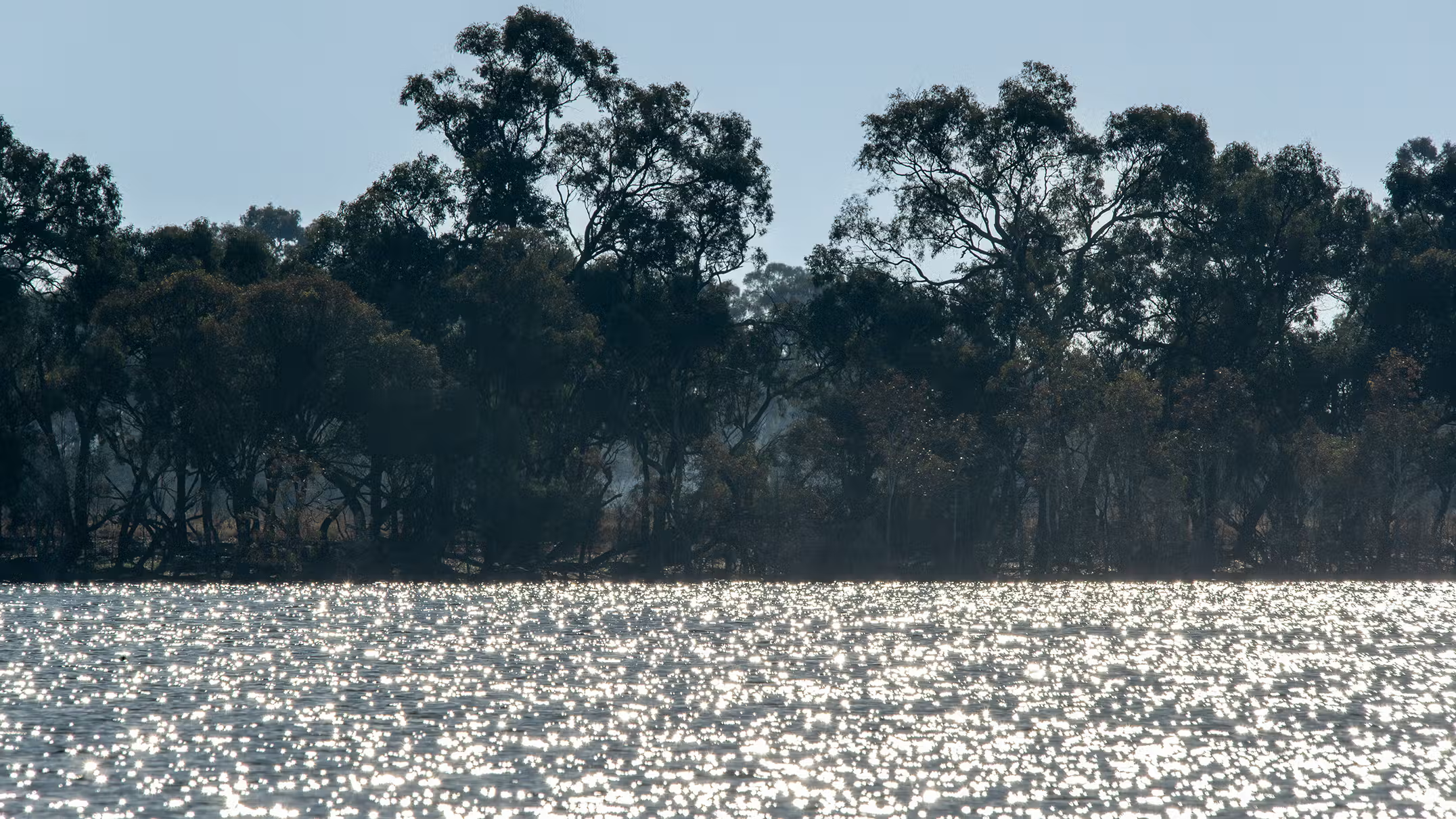
“Little Angler Kits are the perfect way for primary school aged children to try fishing. They include a rod, reel with line, tackle box, some tackle (including hooks and lead sinkers) and information on how to use them all. The State Government is keen to get more children outside and active, connecting with nature and enjoying time in the great outdoors. Fishing is a great way to do that, which is why the State Government is investing $96 million to improve fishing, boating, piers and aquaculture”. Victorian Government
In the earlier giveaway, the fishing line provided in all these fishing kits will stretch nearly all the way from Melbourne to London and yet more lead for Victoria’s waterways. The latest Victorian Government information proclaims lead free sinkers.
Importantly, the distribution of fishing equipment to children as a government endorsed educational activity has far-reaching consequences for how the next generation perceives and interacts with the natural world. Rather than fostering stewardship and respect for living creatures, this program, in effect, encourages children to engage in the killing of animals as a recreational pastime. This approach presents a fundamental contradiction to contemporary environmental education, which emphasises empathy, responsibility, and an understanding of interconnected natural systems.
Substantial public funds are being directed towards this initiative at a time when investment is urgently needed in genuinely sustainable environmental education, habitat restoration, and improved health and educational resources. The notion that teaching children to fish is simultaneously an economic stimulus and an environmentally responsible educational strategy is questionable at best, and at worst, it establishes values that are at odds with cultivating a genuine respect for local environments and wildlife.
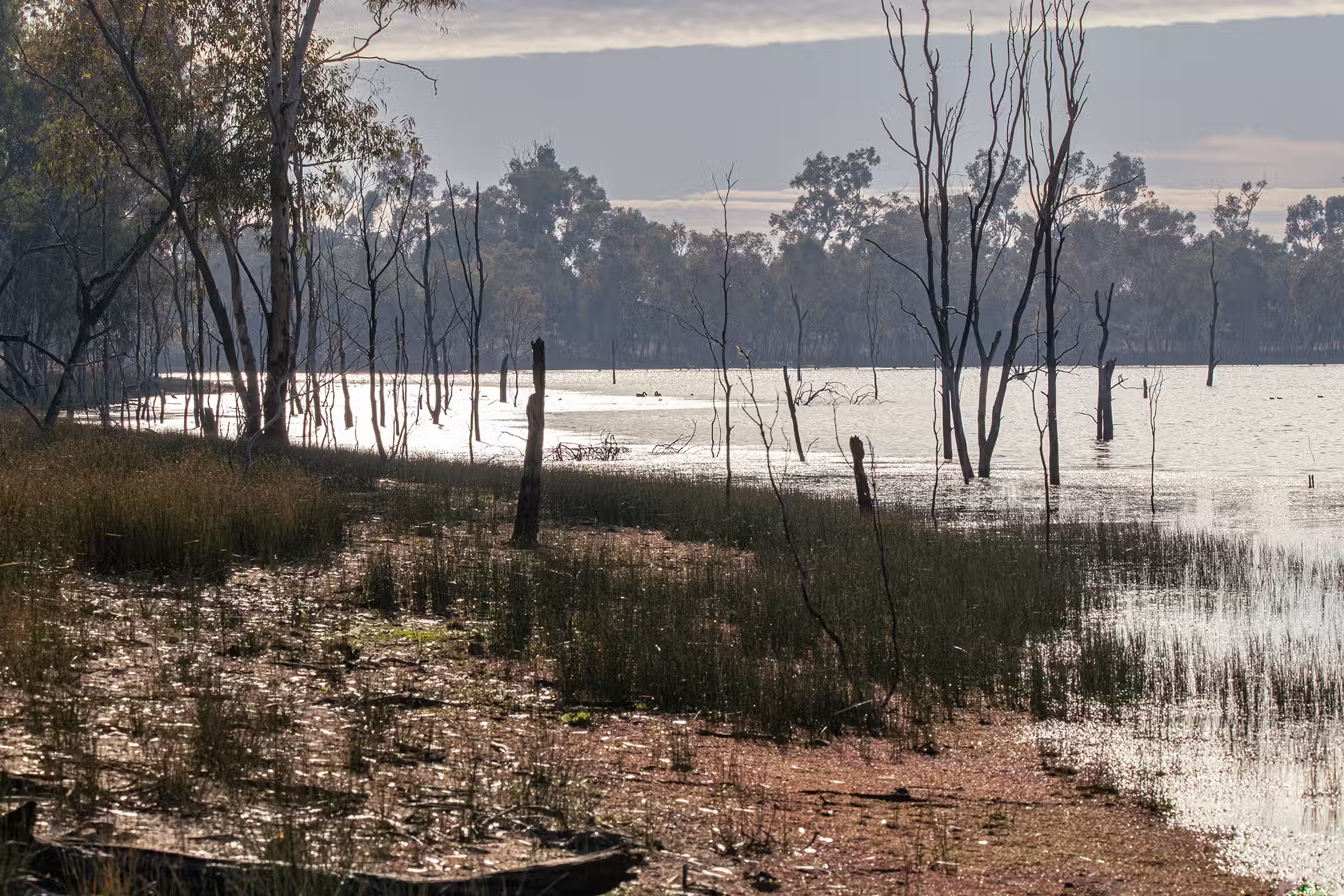
In summary, while the Little Angler Kits program is positioned as a positive initiative for youth engagement and outdoor activity, it is, in reality, a policy that risks significant environmental harm and perpetuates attitudes fundamentally inconsistent with the principles of environmental care. Redirecting these funds and efforts towards educational programs that prioritise ecological restoration, biodiversity, and humane values would be a more responsible and forward looking policy choice.

Visiting Ramsar Sites in Victoria can be a shocking experience, doing so a few weeks before the start of yet another duck shooting season adds to the distress.
Japan, which joined the Ramsar Convention in October 1980, has 53 Ramsar sites, many in the Japanese wild of Hokkaido.