Algal blooms and algorithms: Media reporting and the Australian environment

Life on land


Your support will assist us to continue our research and content development, the greater our resources, the more we can do.
The more we have an accurate understanding of what is happening to nature, the more we can all do to protect what remains of our living planet.
This is also an opportunity for philanthropists to be part of an ongoing project that tells independent stories about the natural world, stories that will help us to better understand what is happening to species and places on our precious planet Earth.
Note: Creative Cowboy Films does NOT have tax deductible charity status.
Becoming a member of Creative cowboy films The Nature Knowledge Channel is a very real way you can help the precious natural world and support the work we do in creating knowledge about what is happening to it.

The Nature Knowledge Channel is a very real way you can help the precious natural world and support the work we do in creating knowledge about the natural world.
Annual membership of the Creative cowboy films - Nature Knowledge Channel gives you full access to content, stories and films, available on this website. Becoming a member of the Creative cowboy films - Nature Knowledge Channel is a very real way you can help the natural world and support our work in creating a greater understanding about what is happening to it.
A point of difference
Creative cowboy films is independent, is not funded by governments or industry, and is not influenced by their associated interest groups. For reasons of independent research and content development, Creative cowboy films does NOT have tax deductible charity status.
Life on land
CONTEXT Creative cowboy films
Project countries: Projects are from Japan, India, Bangladesh, Korea, England, China, France, USA, Spain, Germany, Greece, Singapore, Indonesia, Kenya, Papua New Guinea, Australia, Canada, Tonga and Tibet. Regions include Arnhem Land, the Torres Strait, the Rift Valley, Central Australia and Cape York.
“Our work now focuses on two things, firstly connecting cultures around the world to improve understanding and outcomes for our human society, particularly the young, and secondly describing the impact and outcomes of current human conduct on the natural world, doing so through the production of knowledge based content. Culture and nature are related of course”. Andrea Hylands
A global interest in nature
In the month to 27 March 2026 the top ten Nature Knowledge Channel user countries for the period (and it does change from month to month with the top ten fairly consistent) are:
For example, in March there were approximately six times more active users in Germany than there were in Australia. Countries including India, which have a significant number of people who care about natural history, also appear regularly in the top ten user countries.
Peter Hylands writes, as someone who has spent a lifetime in producing knowledge based content around the world, when it comes to reporting on the Australian environment, particularly its biodiversity, Australia’s media has drawn my attention, particularly one organisation that should know better, Australia’s national broadcaster, the ABC. The other ‘mainstream media’ mostly follow in their behaviours.
In the case of the ABC, my interactions in relation to these matters go back several decades, and as a result of our networks and archive, the documentation of these matters span 60 years. Our role here has been to try and moderate the ABC’s conduct as it has significant impacts relating to both native animal welfare and human harms.
As an employee and executive working in a leading and high quality international publishing and information business (UK based and listed) for almost 30 years (businesses including TV and film) leaving England in 1974, to work internationally for the company, as a co-founder of a media consulting company, based in Singapore and Australia, including working extensively on matters relating to internet developments and integration with a particular focus on the US and Asia, as a long term judge of the US web awards and as a co-founder of the multi international award winning creative cowboy films, I do have some understanding of how things work in the world that is media.

So what am I talking about? Here are just a few examples of many:
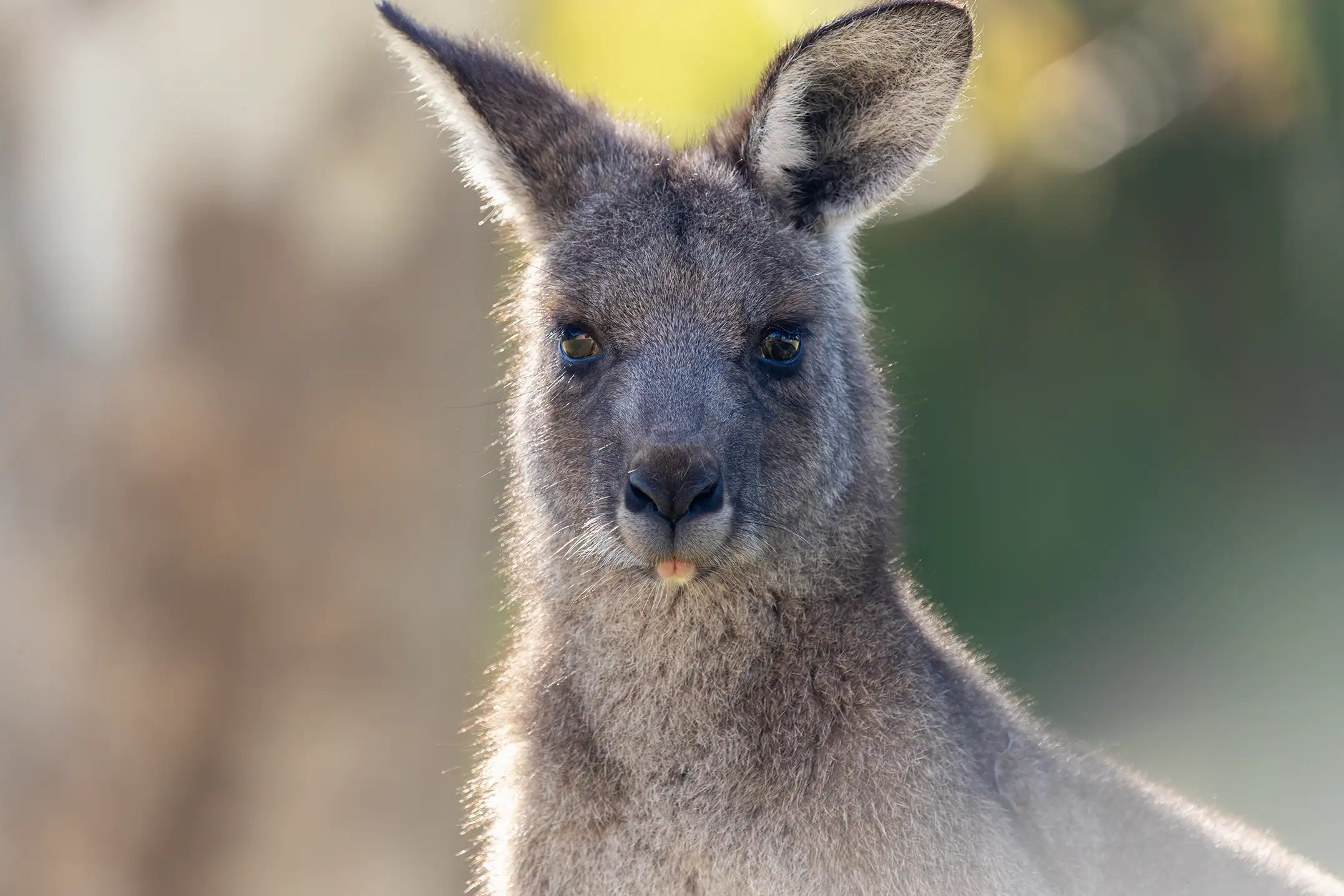
“The desperation for food is so great, their numbers so large, that Kangaroos are even destroying the native landscape in which they evolved in”. Luke Radford, ABC South Australia
"Kangaroo numbers are booming in the north-west of NSW, but they are dying of hunger around Broken Hill". Bill Ormonde, ABC Broken Hill
Despite several requests from me (and follow up phone calls) suggesting I visit these two regions (which we know) to document what they are describing, neither Bill nor Luke even bothered to answer, they did not offer proof of their claims.
As an indicator of attitudes and a phone call just before going on air:
“I don’t want you on my program, I am not interested in facts (about Kangaroos), I am interested in meat. I know I have done the research”. Richelle Hunt, ABC Melbourne
Over several decades and in each and every state, the ABC has reported on booming populations of Kangaroos, often these are population increases that are biologically impossible, without checking to see if the information from state governments and shooters etc could be correct. The ABC and its journalists have been told over decades that the information they are reporting about Kangaroos needs proper investigation and looks to be inaccurate. A brief investigation and a bit of number crunching would have told the ABC reporters involved that a very different story to the one they were telling was likely to be the case. So verified it is NOT. We refer to the information that the ABC reports on these matters, and hence the general public tend to believe, as misinformation. That is the ABC are reporting information they have been given that has a high probability of being incorrect.
It gets worse, with some reporters at the ABC so carried away with their zeal reporting Kangaroo booms, that we get ridiculous claims as per the one regarding South Australia that their numbers were so large, that Kangaroos are even destroying the native landscape in which they evolved in. This claim is false and hence it ranks higher in the list of media crimes, and we call this disinformation. That is the ABC are creating narratives that are not correct.
And it gets even worse, so when people who are concerned about the standard of, and misleading nature of, the reporting when it comes to Kangaroos and complain to the ABC, this includes individuals directly impacted by what goes on, including professionals including lawyers, this is what always happens. Complainants receive rebuttals and denials from the ABC complaints department and that response has been pretty standard. So, the ABC have created their own closed loop of dis and misinformation that has had a life across generations of ABC journalists.
My view is that the most serious of all is that we live in a world of curated news and information and what is never reported by the ABC, that is, what is omitted, is yet another form of disinformation - so this takes us back to Kangaroos and other struggling Australian wildlife and the horrific mass killing that occurs each and every day and is never reported, the same applies to the resulting harm done to both Australian species and the people who care about them, much of it shocking in its extremis and seldom, if at all, reported by Australia’s national broadcaster. The very poor reporting, if it exists at all, on government inquiries relating to Kangaroos is yet another indicator of the culture and conduct described here.
As I write this, the ABC staff are on strike, and that is very telling. On the surface it is about money, but it is also likely to be the case that the problems are much broader and that also harms the quality and content of journalism in an increasingly difficult media and publishing environment.

Our experience of South Australian landscapes is one of total absence. The myths of booming populations and mass starvation, are precisely that, myths. The population estimates for 2026 show a 31 per cent decline in the population of Red Kangaroos.
What is not reported by this public broadcaster when it comes to Kangaroos and other Australian wildlife is just as bad as the misinformation / disinformation it spins.
The Nature Knowledge Channels’ submission to the South Australian Government Inquiry into Kangaroo and Wallaby populations.