Kangaroos in South Australia: Myths and realities

Life on land


Your support will assist us to continue our research and content development, the greater our resources, the more we can do.
The more we have an accurate understanding of what is happening to nature, the more we can all do to protect what remains of our living planet.
This is also an opportunity for philanthropists to be part of an ongoing project that tells independent stories about the natural world, stories that will help us to better understand what is happening to species and places on our precious planet Earth.
Note: Creative Cowboy Films does NOT have tax deductible charity status.
Becoming a member of Creative cowboy films The Nature Knowledge Channel is a very real way you can help the precious natural world and support the work we do in creating knowledge about what is happening to it.

The Nature Knowledge Channel is a very real way you can help the precious natural world and support the work we do in creating knowledge about the natural world.
Annual membership of the Creative cowboy films - Nature Knowledge Channel gives you full access to content, stories and films, available on this website. Becoming a member of the Creative cowboy films - Nature Knowledge Channel is a very real way you can help the natural world and support our work in creating a greater understanding about what is happening to it.
A point of difference
Creative cowboy films is independent, is not funded by governments or industry, and is not influenced by their associated interest groups. For reasons of independent research and content development, Creative cowboy films does NOT have tax deductible charity status.
Life on land
CONTEXT: South Australia and its Kangaroos
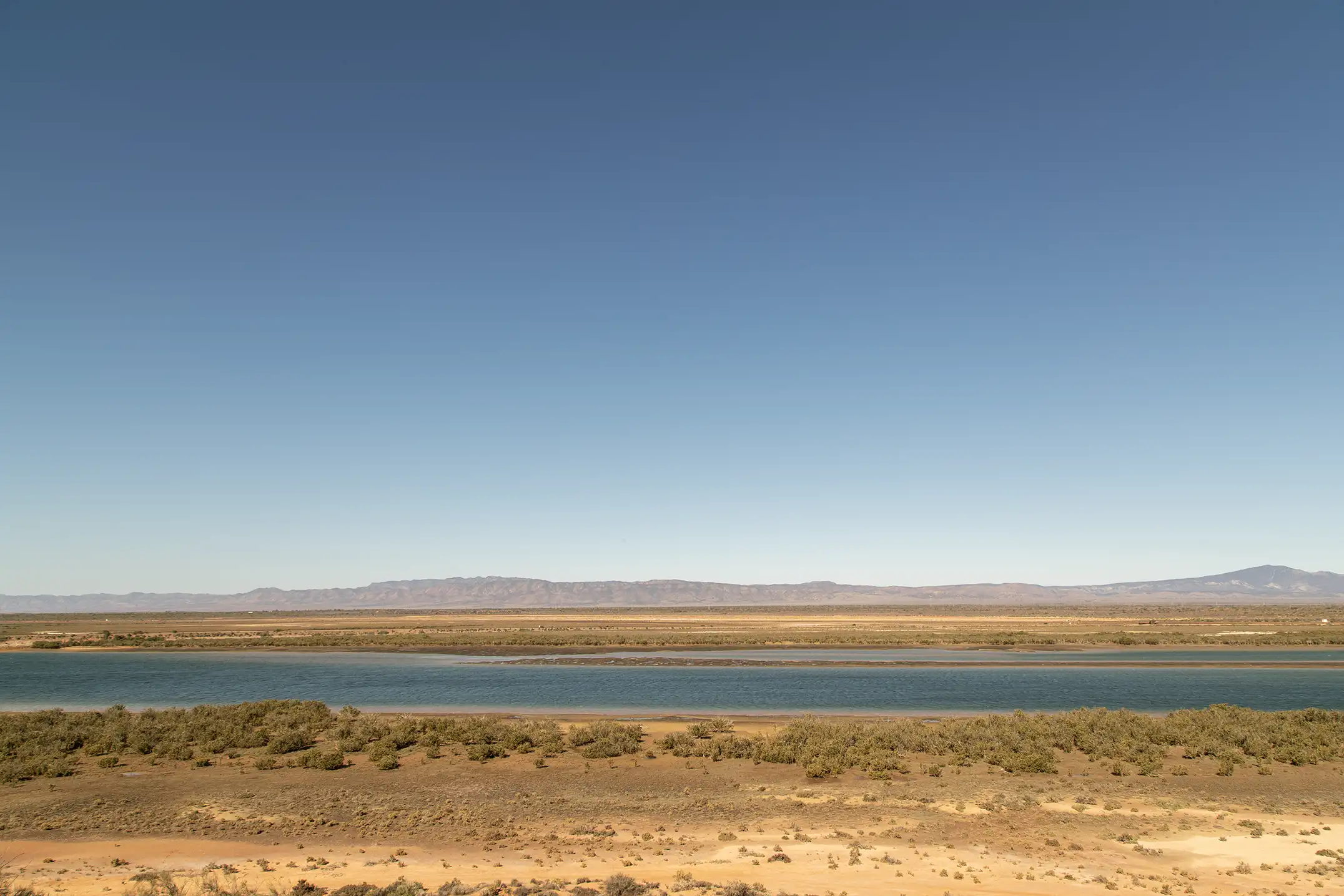
South Australia is worth a special mention, because of all mainland Australian states, it has the greatest sustained loss of its Macropod populations. with serial declines, year on year, for the last 30 years, due to over exploitation. Despite the claims of booming populations, a trip around South Australia tells a very different story.
The South Australian Government's Kangaroo bounties introduced in 2025 will intensify harm to remaining Kangaroo populations in the state. The latest addition to the bounties towards year end being, and I quota the government here:
“A total of $350,000 is available for this initiative to provide incentives for primary producers, to remove starving Kangaroos. These incentives are the subject of these guidelines…. under this incentive, PIRSA is paying primary producers”.
This and more regulation to remove Kangaroo populations from the state, including public land, all going on at pace while the Inquiry into Kangaroo and Wallaby Populations in South Australia was underway. The inquiry has not been completed, and remains so, following South Australia March 2026 election.
The South Australian Government has expanded the zones in which Kangaroos can be shot for commercial gain (now covering most of the state), added new species to the commercial list and allowed shooting in conservation areas including National Parks, while creating and increasing bounties and incentives to kill more and more animals. While the state’s never completed Inquiry into Kangaroo and Wallaby populations in South Australia was underway, adding their killing plans to individual conservation area planning documents and nature laws.
Despite all these efforts to expand the opportunities to kill more Kangaroos, actual take against quota continues to decline. All these failures in intent describe a thirty year long decline in Kangaroo populations in the state. Yet the myths continue, as do the claims about popualtion inceases when it is obvious they are biologically impossible. If they took the trouble to compare what is possible for shooters now when compared to just 10 years ago and if the numerous changes had not occurred, the actual take against quota would be just 10 per cent or less.
How do they keep getting away with it is the question for Australia’s Environment Minister, Murray Watt?
Latest actual for 2024 (Meat Processor data) is 106,503, 17 per cent of that year’s quota of 635,400. Previously we had reported 105,845 from shooters returns. There was no Special Land Management Quota issued for 2024.
The data described is from permits issues and ‘harvesting’ returns for the period. The following species are included in the data: Reda Kangaroo, Western Grey Kangaroos, Eastern Grey Kangaroo, Euro, Tammar Wallaby and Red-necked Wallaby (latter NOT on commercial species list in South Australia).
Number of Kangaroos killed for commercial gain in the period 26 November 2024 to 20 January 2026 was 136,223 (our estimate calendar year 2025, 120,000). For the full period shown, species comprise Red Kangaroo 80,949, Western Grey Kangaroo 38,001, Eastern Grey Kangaroo 11,938 and Euro 5,335. That means just 15 per cent of the commercial quota of 805,800 was achieved in 2025.
Destruction permits issued in the period covering all species except Tammar Wallaby but including the Kangaroo Island Sooty Kangaroo (WG) were for 182,164 animals. Just 8,211 were reported killed. For Tammar Wallabies (Kangaroo Island), for destruction permits issued, the number of Tammars was 16,750 and just 580 were reported killed.
While claiming over abundant populations of Kangaroos, the ABC news media claiming, “The desperation for food is so great, their numbers so large, that Kangaroos are even destroying the native landscape in which they evolved in”, the reality is very different, the hype leading to killing Kangaroo species in parts of South Australia were the data shows that they are functionally EXTINCT.
So of the 1,004,714 animals targeted in the period described, just 145,014 were actually killed (just 14.5 per cent), and that is despite the propaganda, the demand for more and more permits and killing and subsidies and bounties to kill more animals in 2025.
The data reported for January to end November 2025, which includes the impact of the commercial component of the various bounties introduced in the year, is 109,139, that is 13.5 per cent of the 2025 commercial quota of 805,800. This number does not include the Special Land Management Quota. The full year South Australian Government projection (DEW) is 119,892, 15 per cent of the full year quota.
Our latest thinking on the impact of the various and generous incentives to kill yet more Kangaroos in South Australia, given results in previous years and Nature Knowledge Channel estimates, is that the incentives of AUD 900,000 (not all expended) have resulted in the deaths of an additional 10,000 Kangaroos (likely including joeys), many of which ended up in a pet food can. So certainly not the 50,000 to 100,000 additional animals claimed by the Hon. Claire Scriven MLC when the bounties were introduced.
A letter (July 2025) to Peter Hylands from South Australia’s Minister for Primary Industries and Regional Development / Minister for Forest Industries, contains the following paragraph.
“The program aims to reduce the impact of Kangaroos on farmers’ pastures and crops, as well as mitigating the poor animal welfare outcomes due to lack of food and water available for Kangaroos. Consecutive good seasons has meant Kangaroo numbers have boomed, and the current drought has left them with little to eat. Kangaroo populations are surveyed each year, and the science to estimate Kangaroo population numbers has been extensively peer-reviewed. Currently, it is estimated there are 5 million to 6 million Kangaroos in South Australia, with only approximately 100,000 harvested per year. The additional measures are estimated to remove between 50,000 to 100,000 additional Kangaroos”. Hon Claire Scriven MLC
And hardly the booming populations claimed by reporters on the ABC. I quote ABC journalist Luke Radford:
“The desperation for food is so great, their numbers so large, that Kangaroos are even destroying the native landscape in which they evolved in”.
The intention of this program was to increase capacity and skills and therefore no harvesting details are recorded/monitored. Expenditure in the period totalled AUD 79,989. Payments were made between 1 October 2025 and 12 January 2026
Fifteen applicants applied for the Field Harvester Support Grant between 1 October 2025 and 12 January 2026 of which thirteen applications were successful in obtaining funding, one applicant withdrew their application and one application was in the assessment stage of the process.
Six applicants applied for the Primary Producer Incentives Grant and all applicants were successful in obtaining funding. Total expended AUD 5,000, remaining allocation was AUD 345,000, expenditures resulting in the killing of 1,000 Kangaroo (we assume including joeys).
The expenditure refers to payments made between 1 October 2025 and 30 November 2025, including the daily incentive for specific regions and the incentive per Kangaroo. The information for December 2025 was not available at time of writing. A total of AUD 92,503 was expended in the period (includes AUD 798 for the December bounty). Bounty payments for October / November / December for the 225 Kangaroos killed but not for commercial gain totalled AUD 2,103. Monies paid for October / November from the Field Harvester Incentives Grant (subsidy) for 14,828 Kangaroos that were killed for commercial gain totalled AUD 90,400. The latter, likely a subsidy for animals (the majority of) that would have been killed for commercial gain had there been no subsidy in place.
There were thirtyseven applicants for the Field Harvester Incentives Grant in the period and all applicants were successful in obtaining funding. The expenditure does not include daily incentive funds for operating in less popular/less serviced area.
The number of Kangaroos ‘destroyed’ in December 2025 was provided and was 114, the number of Kangaroos killed for commercial gain in December 2025 was not available at the time of writing.
Despite longstanding quotas and ‘management’ frameworks, the actual take within Australia’s commercial Kangaroo 'industry' remains significantly below the intended commercial quotas. Regrettably, both the commercial 'industry' and relevant government authorities have largely avoided a critical examination of this persistent shortfall. Central to the issue is the assumption underlying population estimates and quotas, which are overestimated. The Kangaroo populations required to support such high quotas are simply not present, they do not exist. Without comprehensive scrutiny of on-ground population sizes and the cumulative impacts of the commercial exploitation, combined with extensive mitigation killing (non-commercial killing) by guns, blunt force trauma, or decapitation, the likely sustainability of these populations is not adequately assessed.
One of the key questions that remains unaddressed is what the annual mass killing of adults and their young, inflicted by the commercial 'industry', means for long-term Kangaroo population health and sustainability. Instead of addressing concerns about ecological impacts, discussion typically focuses on a set of recurrent operational excuses as reasons given for the massive shortfall when actual take is measured against quota. All this of course is against a background of declining take, offset by shooting zone extensions, adding Victoria as 7 new shooting zones (now 5 zones), allowing commercial activity to commence on public lands, including national parks, and addition of new species to the commercial list to name just some.
Currently, the commercial Kangaroo ‘industry’ is only achieving a take of between 15 and 25 per cent of set quotas, these percentages would be far lower if the various extensions described above had not occurred.
The ‘industry’ and its government supporters always trot out the same excuses for the shortfall, which include that the work of a Kangaroo shooter is not perceived as attractive or competitive compared to opportunities in sectors like the mining industry, particularly among younger prospective workers. As a result, the workforce is aging, with many experienced shooters leaving and insufficient numbers of new entrants to replace them. Claims include that financial barriers also play a significant role, with rising costs associated with fuel, vehicle maintenance, ammunition, and regulatory fees from government agencies. These expenses are particularly prohibitive for shooters who wish to operate cross border (why would they want to do that, are Kangaroos now gone from their places of work?) for example from Queensland or New South Wales who might wish to participate temporarily in South Australian commercial kill, strange then that bounties and subsidies for this activity appear to make little difference to the number of animals killed.
The excuses also include the demand side issues (while supply side issues are rarely discussed) with claims that market demand for Kangaroo meat remains limited, and opportunities for accessing and expanding into new markets are restricted. While world markets are rejecting the trade in bush meat for health and animal welfare reasons, there is plenty of demand from the pet food industry in Australia, particularly at a time of high meat prices for lamb, pork and beef.
While entry barriers are high, not only for new shooters, who need to invest significantly in specialised vehicles, but also for prospective meat processors for whom up-front costs to establish chiller boxes, fleets, and processing equipment. If supply was however as described and quotas were achieved then revenues would be far higher and the barriers to entry discussion would not be a feature here. Instead shooters are deciding not to invest in this activity because they know that finding Kangaroos to kill has become a significant issue.
Despite governments supporting access arrangements the claims from ‘industry’ include that shooters often find it challenging to secure new properties for the commercial exploitation of Kangaroos, especially within agricultural zones. Logistical challenges further exacerbate the situation and the emissions profile of this diesel and energy hungry activity which gives a very poor carbon related intensity and productivity result per dollar value, makes future government support extremely undesirable.
For example, in South Australia, the costs and practicalities of transporting Kangaroos from isolated regions, such as Kangaroo Island, Eyre Peninsula, and other remote localities are inhibitive, both in price and carbon costs as they apply to this low value activity, particularly when factoring in rough road conditions and long distances. So the ‘industry’ itself describes an activity that has no future in the modern world economy.
Basic economics bear this out, for example, if the total quota in South Australia in 2025 had been met the gross economic value of production would have been in the region of $20 million, instead it was around $3.7 million. In 2026, the story is similar, if quota was to be achieved, the gross economic value of production would be around $18 million, instead it is likely to be $3.3 million. And hasten to say that this activity has a very low multiplier effect on the economy as a whole.
Because nature does not count when it comes to Australia’s economic system, the costs of ecological harm of this activity will be immense and not accounted for, nor will the climate costs be factored in. Add to this, the very large sums that governments spend to support the spin, the defence of this activity, both locally and internationally, especially so in South Australia which has had the greatest decline in Kangaroo populations in percentage terms, and given the tiny economic scale of this damaging activity on its ecology and landscapes. The expenditures on surveys and endless reports and administration of this activity by public servants are a failure of public administration and associated expenditures.
Taken together, these interrelated factors, overestimated populations and quotas, workforce and market issues, poor standards of regulation and oversight, human harms including to children, the extreme impacts of climate change, health and safety issues and the reputational damage the activity causes around the world, it is time this activity ceased.
I asked Kangaroo expert, Ray Mjadwesch, to turn his mind and extensive knowledge about the lives and ecology of Kangaroos to the conundrum of Kangaroo population densities in South Australia. Based on figures in the table below, Ray has a number of carefully considered questions which must be asked of the South Australian Government and the South Australian Kangaroo Management Program managers.
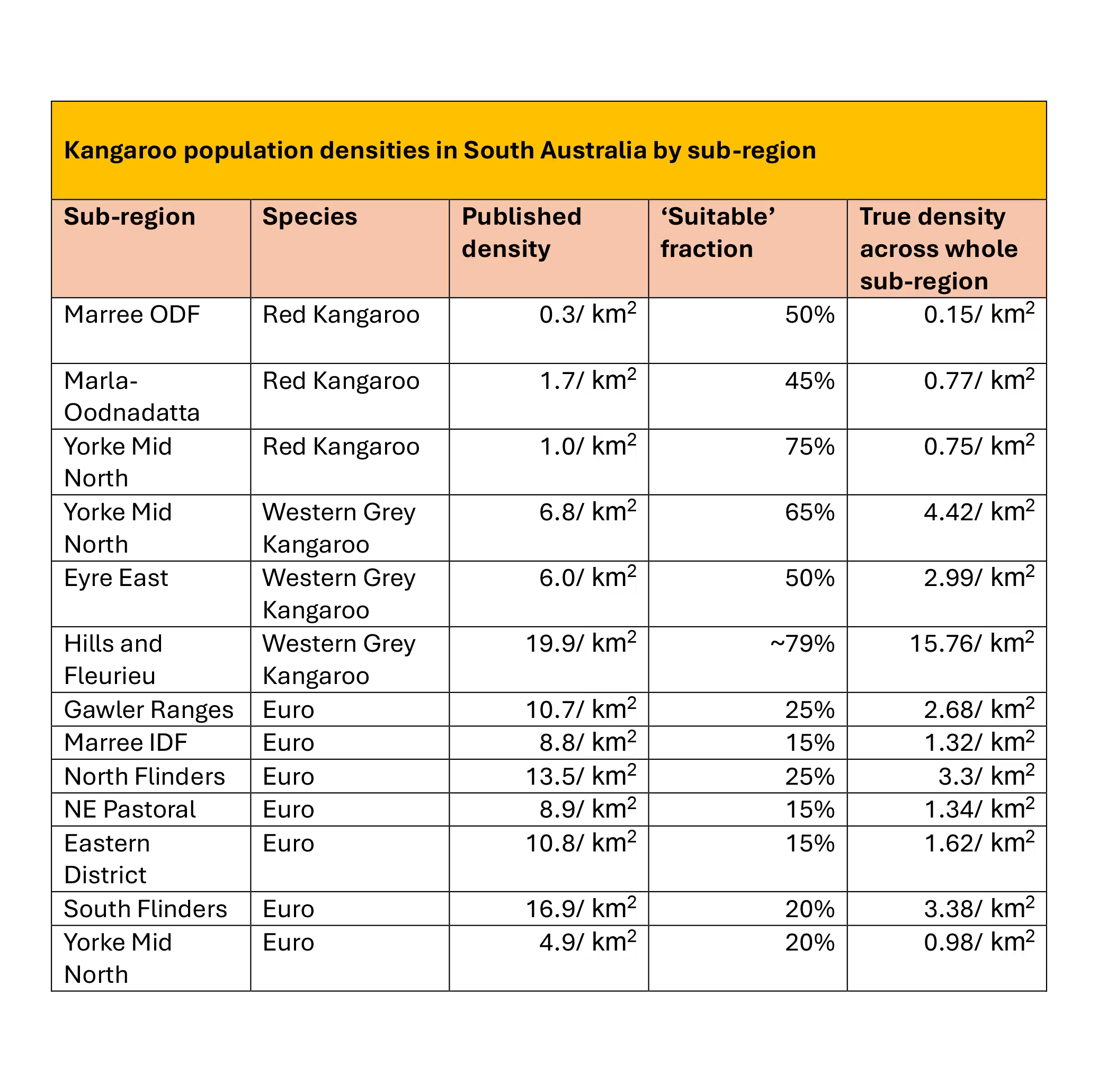
1. On what basis have “suitable fractions” of each Kangaroo management sub-region been determined?
2. Where has the map of suitable vs unsuitable fractions been explained and made available to the public, in the interest of transparency? (Refer to Action 5 of the SA CKMP 2025-29 which states “Media releases … improve program transparency and accountability, and therefore public confidence”)
3a. Given that Red Kangaroos in the Yorke Mid North sub-region was reported to be only 0.4 / km2 in 2022 and 0.8 / km2 in 2023, what role did the inclusion of a 75% “suitable” fraction of the sub-region incorporated into the 2024 quota report play in the reported Red Kangaroo density of 0.4 / km2 in the Yorke Mid North sub-region that year? 3b. What would the density have been for Red Kangaroos in this sub-region if this correction creep had not been applied in the period 2024-2026? 3c. Can the public have any confidence that the dept. is running a valid scientific program when the long term data series includes (but is not necessarily limited to) deliberate manipulations of “published density” data points like this?
4. Given that Kangaroos are almost universally declared to have increased since European settlement, has the South Australian Kangaroo management team found evidence that large areas of South Australia no longer supports Kangaroos and/or Euro, and is now deemed unsuitable?
5. By publishing “densities” for regions that are not a true representation of actual density across the entire sub-region, are the dept. misrepresenting critically low densities (according to limits defined by Hacker et al 2004*) as higher densities that may be more palatable to the public?
6. By publishing “densities” for regions that are not a true representation of actual density across the entire sub-region, are the dept. misrepresenting critically low densities (according to limits defined by Hacker et al 2004*) to avoid dropping below identified thresholds which would otherwise result in the suspension of harvesting?
* Hacker et al 2004 defines populations below 2/sq km as “generally considered to be at risk of extinction” and found that “strategies that produce average densities of less than 5/sq km would result in minimum densities less than 2/sq km and could be considered a threat to species conservation”, “reduction of Kangaroos to less than 5/sq km is … undesirable from a conservation perspective“ and strategies that “maintain Kangaroo density at 3–5/sq km may thus be dismissed from further consideration”, “reduction of Kangaroos to very low densities (less than 5/sq km) over large areas is not … ecologically defensible“ and “reduction of Kangaroo density to less than 5/sq km over large areas would result in the demise of the kangaroo industry“, and “any option resulting in an average long-term density of less than 10/sq km should be rejected since in all such cases the minimum density is likely to fall below the critical level”, and even “some options producing long-term average densities in the range 10–15/sq km also produced minimum densities below the critical level”.
7. Given that every sub-region in the table above with the single exception of Hills & Fleurieu has reduced the actual density of kangaroos across each sub-region to less than 5/km2, with reference to critical levels defined by Hacker et al 2004 (above), how does the SA government maintain their position that the industry is sustainable and populations have not declined to critically low levels (refer also to zone closures for some species), particularly given that normative densities of Kangaroos in un-shot populations can be up to or can even exceed 100/km2?
Hacker R, McLeod S, Druhan J, Tenhumberg B & Pradhan U 2004 Kangaroo Management Options in the Murray-Darling Basin Murray-Darling Basin Commission, Canberra
The pushback from the South Australian Government in relation to the health impacts of the Algal Bloom devastating the state’s coastline has been hard to observe. We would describe the government’s behaviour as extraordinary.
In late March 2025, a significant number of Western Grey Kangaroos were found dead or unwell along Tunkalilla Beach, west of Victor Harbor, on the Fleurieu Peninsula. The affected area was experiencing a major marine algal bloom, notably involving the species Karenia mikimotoi, which caused widespread fish and marine life deaths and affected human health in the region. Seals also died as a result of the bloom.
On a property near Deep Creek adjoining the beach, in total, around 70 out of a local population of 200 Western Grey Kangaroos were reported to have difficulty standing up, all were in the immediate vicinity of Tunkalilla Beach, one of several sites affected by the Algal Bloom.
The only available drinking water for wildlife in this area was a freshwater creek feeding into a lagoon on the beach, which had visible signs of contamination from the bloom (discoloration and dead marine life).
The primary forage in the area consisted of Kikuyu Grass (East African grass species) and not Phalaris (from the Mediterranean region, including southern Europe, northern Africa and western Asia). Observations suggested the Algal Bloom event, reported about a week prior, may have contributed to the contamination of both the lagoon and adjacent pasture.
Some affected Kangaroos were euthanized, seven underwent necropsy and histopathological examination. The South Australian Government claimed that findings resulting from investigations were inconclusive, with two cases showing evidence of Phalaris toxicity. Phalaris toxicity typically emerges after new grass growth or under stressful environmental conditions and can cause "phalaris staggers" (head tremors, loss of coordination, collapse).
Testing also detected brevetoxins (origin of which was the Algal Bloom) in two Kangaroos and paralytic shellfish toxins (PST) in one, though the concentrations were low resulting in the claim that it was unlikely that these toxins had caused the severity of illness.
Following these findings the South Australian Government claimed that chronic dry conditions, limited food availability, and consumption of toxic Phalaris Grass were the most likely causes of the Kangaroo deaths.
A week or so later the South Australian Government confirmed that, what turned out to be a severe, 20,000 km² algal bloom along the South Australian coast which began in March 2025 and still continues a year later, was caused by Karenia species, primarily Karenia cristatus and Kerenia mikimotoi.

The Government of South Australia continued to pay bounties and incentives to kill Kangaroos as wildfires raged.
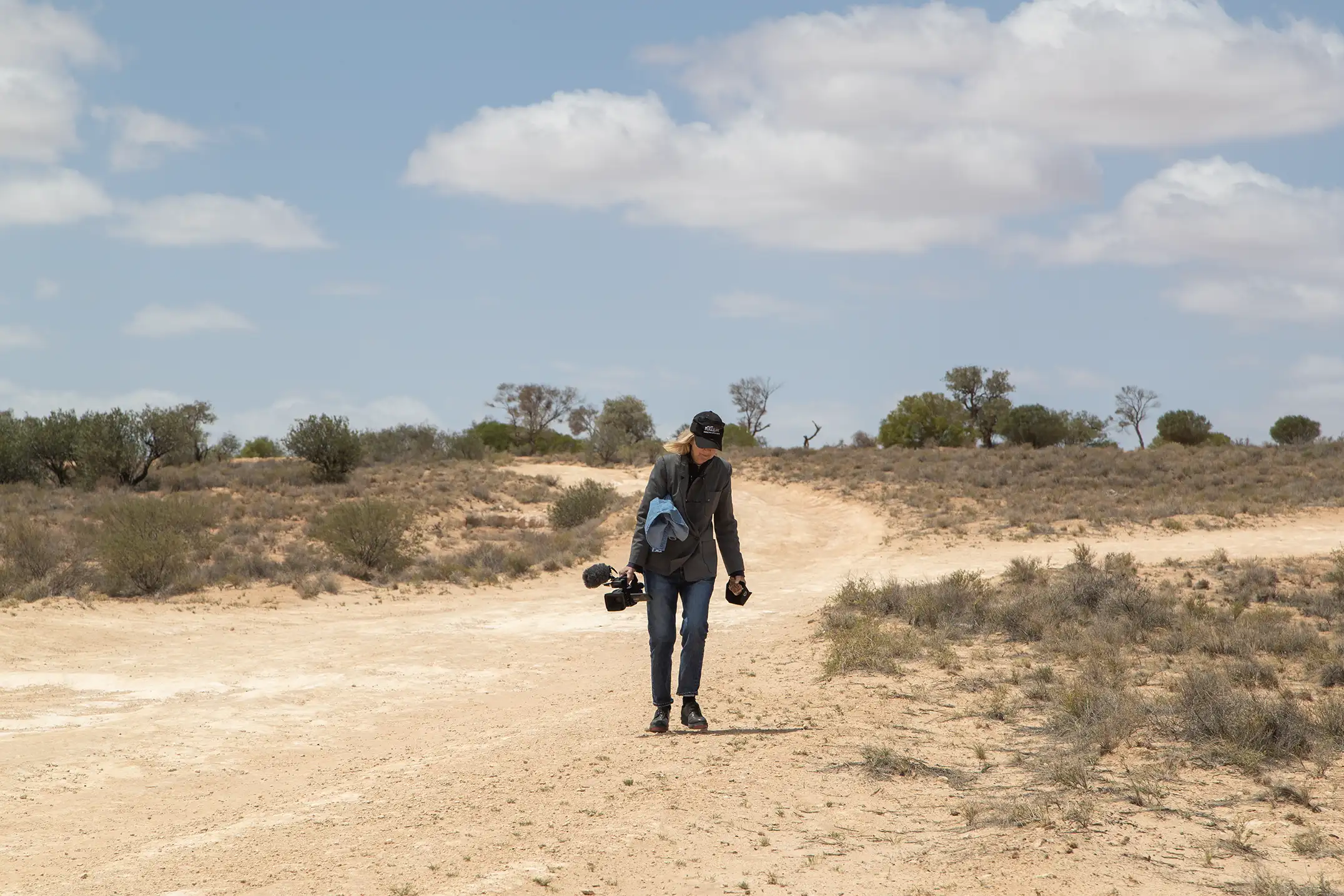
Our experience of South Australian landscapes is one of total absence. The myths of booming populations and mass starvation, are precisely that, myths. The population estimates for 2026 show a 31 per cent decline in the population of Red Kangaroos.
The actual commercial take of Kangaroos in South Australia for the first 6 months of 2025 is running slightly higher than originally forecast by the Nature Knowledge Channel but has only reached 8.5 per cent of the full year quota.
As per our forecast, the actual take was just 17 per cent of the South Australian commercial Kangaroo quota.
A night spent at the opal town, Coober Pedy, in the desert country of South Australia, reveals something unexpected.
The Natural Resources Committee is calling for submissions to its inquiry into Kangaroo and Wallaby populations in South Australia.
Given the up and coming Kangaroo Inquiry in South Australia this analysis will be useful to submitters trying to understand what is occurring.
The Nature Knowledge Channel holds the data for the commercial exploitation of Kangaroos in South Australia back to the early 1970s.