Kangaroo population estimates, commercial quotas and actual kill Australia mainland 1980-2026

Life on land


Your support will assist us to continue our research and content development, the greater our resources, the more we can do.
The more we have an accurate understanding of what is happening to nature, the more we can all do to protect what remains of our living planet.
This is also an opportunity for philanthropists to be part of an ongoing project that tells independent stories about the natural world, stories that will help us to better understand what is happening to species and places on our precious planet Earth.
Note: Creative Cowboy Films does NOT have tax deductible charity status.
Becoming a member of Creative cowboy films The Nature Knowledge Channel is a very real way you can help the precious natural world and support the work we do in creating knowledge about what is happening to it.

The Nature Knowledge Channel is a very real way you can help the precious natural world and support the work we do in creating knowledge about the natural world.
Annual membership of the Creative cowboy films - Nature Knowledge Channel gives you full access to content, stories and films, available on this website. Becoming a member of the Creative cowboy films - Nature Knowledge Channel is a very real way you can help the natural world and support our work in creating a greater understanding about what is happening to it.
A point of difference
Creative cowboy films is independent, is not funded by governments or industry, and is not influenced by their associated interest groups. For reasons of independent research and content development, Creative cowboy films does NOT have tax deductible charity status.
Life on land
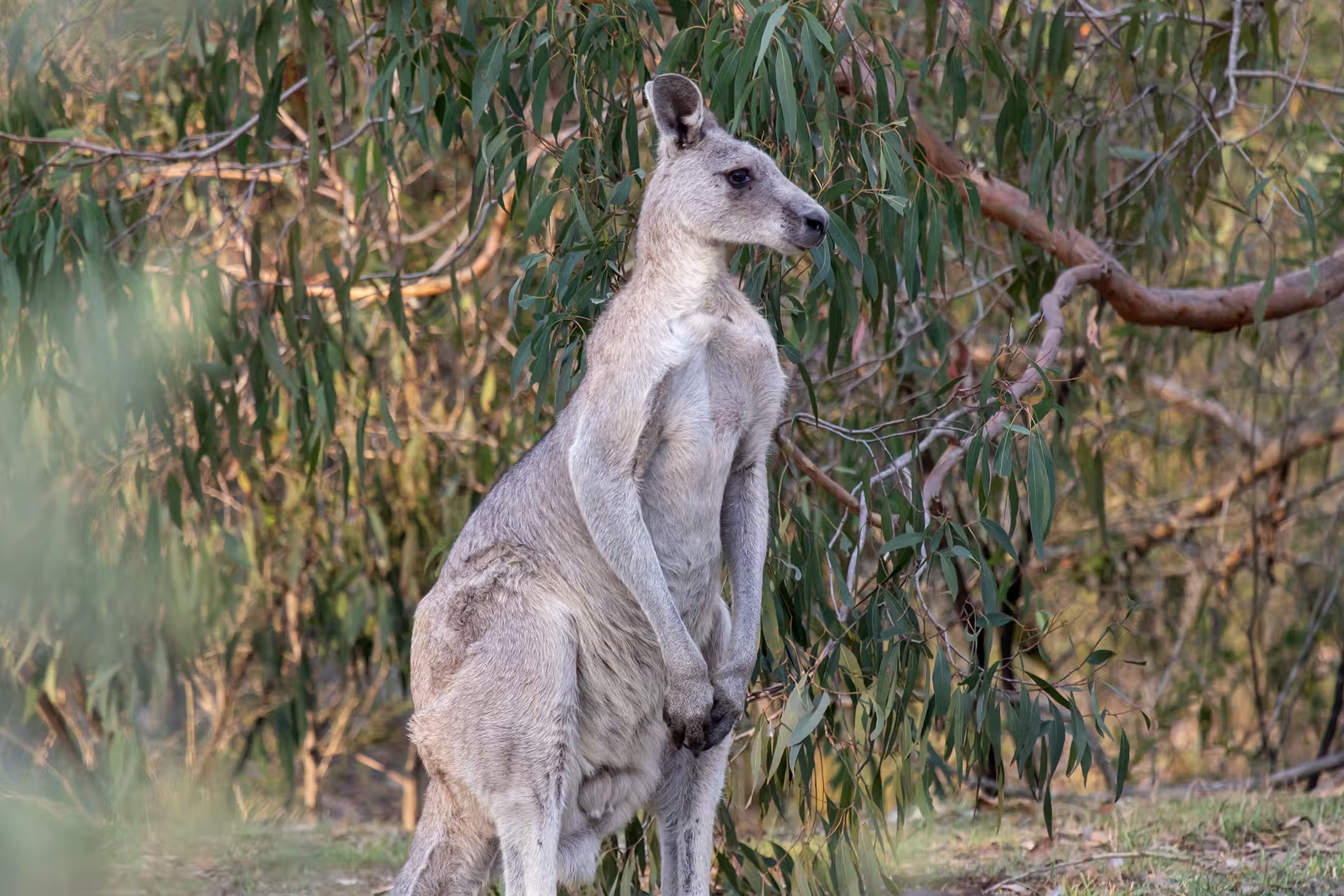
CONTEXT: As the actual number of Kangaroos killed for commercial gain continues to decline, state governments, in an attempt to keep this grim and cruel exploitation of protected species viable, have expanded shooting zones, added additional species to the commercial list, allowed shooting for commercial gain on public lands, including national parks, are shooting more and more females (and killing their joeys), subsidising the killing with bounties and other financial measures, are simplifying the paperwork required and turning a blind eye to extreme cruelty, unhygienic behaviours that fly in the face of food standards and grotesque human rights abuses. While all the time misleading the public about booming populations of Kangaroos, while claiming reproduction rates that are absurd and IMPOSSIBLE, while claiming the slaughter is humane, it is vicariously cruel, and all the while being a very long way from being transparent in their dealings, despite their claims to the contrary. All of this is a grotesque failure of public administration.
Peter Hylands notes that:
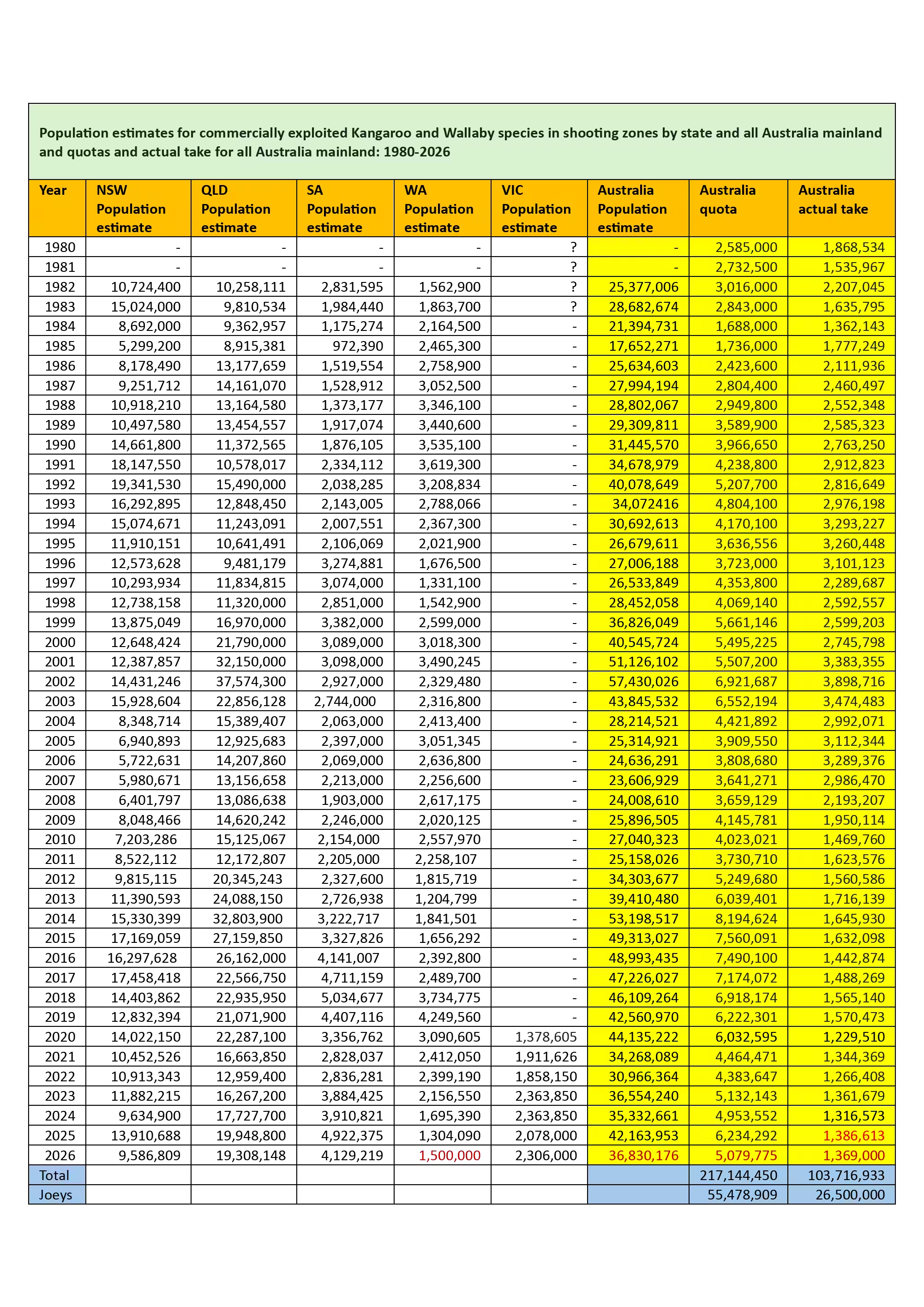
"The purpose of setting out these numbers for the public gaze is to allow people to understand the scale of the killing, both commercial and harms data together, is to describe the vast scale of it all. Even if the numbers differ by a million here or there because the data is poor or outcomes unknown, the numbers are still vast, and without doubt, completely unsustainable. While Kangaroo and Wallaby species are in the forefront of the horrific killing, Australia’s birdlife is also dealt with at large scale, impacting numerous and very beautiful bird species. Australia will have to make up its mind if it wants to conserve its wildlife or have much of it destroyed in our lifetimes”.
As a point of clarification harms permits are non-commercial permits to kill native and ‘protected’ Australian species. Harms permits are issued in addition to the commercial kill. To make the situation even more confusing harms permits have different names in different states, Authority to Control Wildlife, Damage Mitigation Permits, Protection Permits and so on. In a relatively new twist or discovery, harms permits are being converted to commercial in at least some states. This all adds to the confusion. Commercial kills on mainland Australia are tracked by a tagging system so within reasonable accuracy we know how many animals are killed (joeys are an estimate). For harms permits the majority rule is that they are issued, so if we can get the data, we know how many, but when there is no follow up to check what happened, so in some states nobody knows the actual outcome, and that includes the Australian Government and its national environment minister. This alone is deeply shocking.
Here are some examples - after a great deal of effort from us to sort New South Wales Government harms permits by species and year, so we discover that in 2018 the New South Wales Government had issued 5,912 permits (for 6 species) to kill 887,993 Macropods (this was additional to the commercial kill). In NSW in 2025, licences to harm protected native animals were issued to kill 439,620 Kangaroos within the commercial shooting zones, the majority of regions in which Kangaroos live (excluding national parks). Licensees who submitted reports by early May 2026, reported 187,220 Kangaroos were killed in 2025, these licences were to kill 321,917 (73 per cent of total harms) Kangaroos giving a shortfall of 134,697 animals. A number of licensees had not reported at the time of writing, with this group of licences authorising the killing of up to 117,703 Kangaroos.
In Tasmania which differs from the mainland and where things get really hard to track, for the Forester Kangaroo (should be listed as an endangered species), in the years 2015 through to August 2019, 35,664 Forester Kangaroos were killed under permit, about 21,000 of those were used for commercial purposes from converted harms permits. Property Protection Permits and Commercial Purposes Licences are two distinct applications processes with different assessment criteria. The Tasmanian Government says that all permits issued require the holder to provide a return (record actual kill) within 28 days of expiry of the permit, or in the case of permits longer than 12 months, within 28 days of the end of the calendar year, and within 28 days of expiry of the permit. Tasmania again, in the years 2019-2022 it appears that protection (harms) permit returns show that 2,264,179 Wallabies (2 species) were killed using the multi-year Tasmanian harms permit system.
In Victoria, where the numbers describe allocations that reverse the Victorian Government’s policy of shifting ATCW permits to commercial permits. This reversal of policy also occurred in 2024 and fudges over the actual take, so understanding exactly what had happened becomes impossible, the Victorian Government targeting 90,200 Grey Kangaroos (2 species) with ATCWs in 2025 PLUS issuing permits to kill a large number of the rapidly vanishing Red Kangaroo and the state’s Wallaby species.
If you were not confused you will be now.

The population estimate for Kangaroos in New South Wales has fallen to 9,586,809 from 13,910,688, resulting in a decline in commercial quota for 2026 of 733,927 Kangaroos.
Our experience of South Australian landscapes is one of total absence. The myths of booming populations and mass starvation, are precisely that, myths. The population estimates for 2026 show a 31 per cent decline in the population of Red Kangaroos.
The Queensland Government’s population estimate for the 3 commercially exploited species in Queensland's 5 commercial shooting zones is 19,308,148 giving a commercial quota in 2026 of 2,850,900 with a DMP quota of 386,164.
An increase in the population estimate for Grey Kangaroos in Victoria, leading to a 2026 quota of 207,800, a decrease of the commercial quota when compared to 2025 of 22,150 (the commercial component now being 95,450).
While we wait for the 2026 population estimates and commercial quotas (from 2025 surveys) here is the history of exploitation of Kangaroos in Western Australia.
16 reserves were closed and 2,978 Kangaroos were killed. Ratio of females to males killed in 2025 is significantly higher than in previous years. In total 32,413 Kangaroos, including joeys, have been killed in the ACT's 'nature' parks since 2015.