Commercial exploitation of Kangaroos in Australia by mainland Australian state: 2020-2026

Life on land


Your support will assist us to continue our research and content development, the greater our resources, the more we can do.
The more we have an accurate understanding of what is happening to nature, the more we can all do to protect what remains of our living planet.
This is also an opportunity for philanthropists to be part of an ongoing project that tells independent stories about the natural world, stories that will help us to better understand what is happening to species and places on our precious planet Earth.
Note: Creative Cowboy Films does NOT have tax deductible charity status.
Becoming a member of Creative cowboy films The Nature Knowledge Channel is a very real way you can help the precious natural world and support the work we do in creating knowledge about what is happening to it.

The Nature Knowledge Channel is a very real way you can help the precious natural world and support the work we do in creating knowledge about the natural world.
Annual membership of the Creative cowboy films - Nature Knowledge Channel gives you full access to content, stories and films, available on this website. Becoming a member of the Creative cowboy films - Nature Knowledge Channel is a very real way you can help the natural world and support our work in creating a greater understanding about what is happening to it.
A point of difference
Creative cowboy films is independent, is not funded by governments or industry, and is not influenced by their associated interest groups. For reasons of independent research and content development, Creative cowboy films does NOT have tax deductible charity status.
Life on land
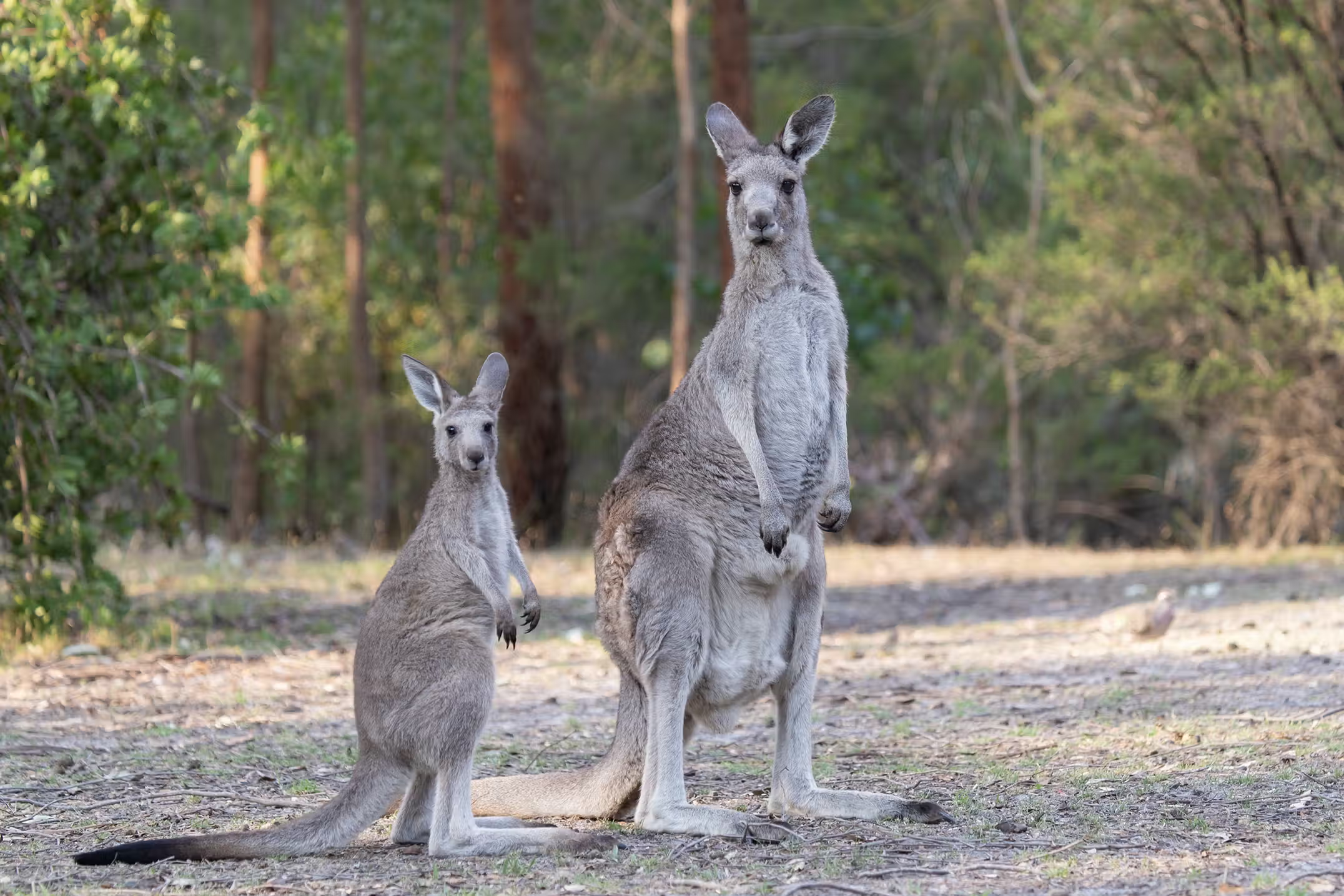
CONTEXT: As the actual number of Kangaroos killed for commercial gain continues to decline, state governments, in an attempt to keep this grim and cruel exploitation of protected species viable, have expanded shooting zones, added additional species to the commercial list, allowed shooting for commercial gain on public lands, including national parks, are shooting more and more females (and killing their joeys), subsidising the killing with bounties and other financial measures, are simplifying the paperwork required and turning a blind eye to extreme cruelty, unhygienic behaviours that fly in the face of food standards and grotesque human rights abuses. While all the time misleading the public about booming populations of Kangaroos, while claiming reproduction rates that are absurd and IMPOSSIBLE, while claiming the slaughter is humane, it is vicariously cruel, and all the while being a very long way from being transparent in their dealings, despite their claims to the contrary. All of this is a grotesque failure of public administration.
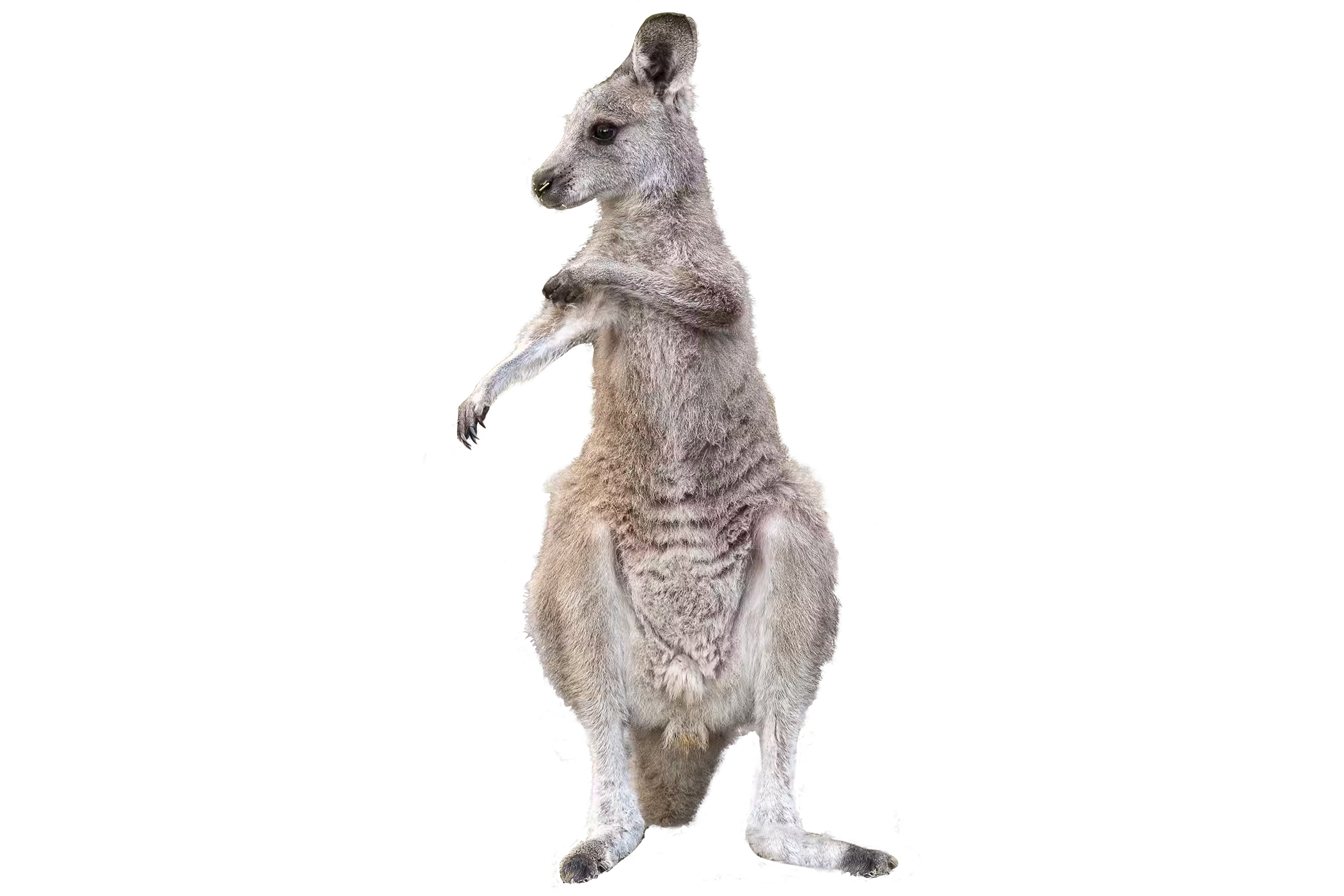
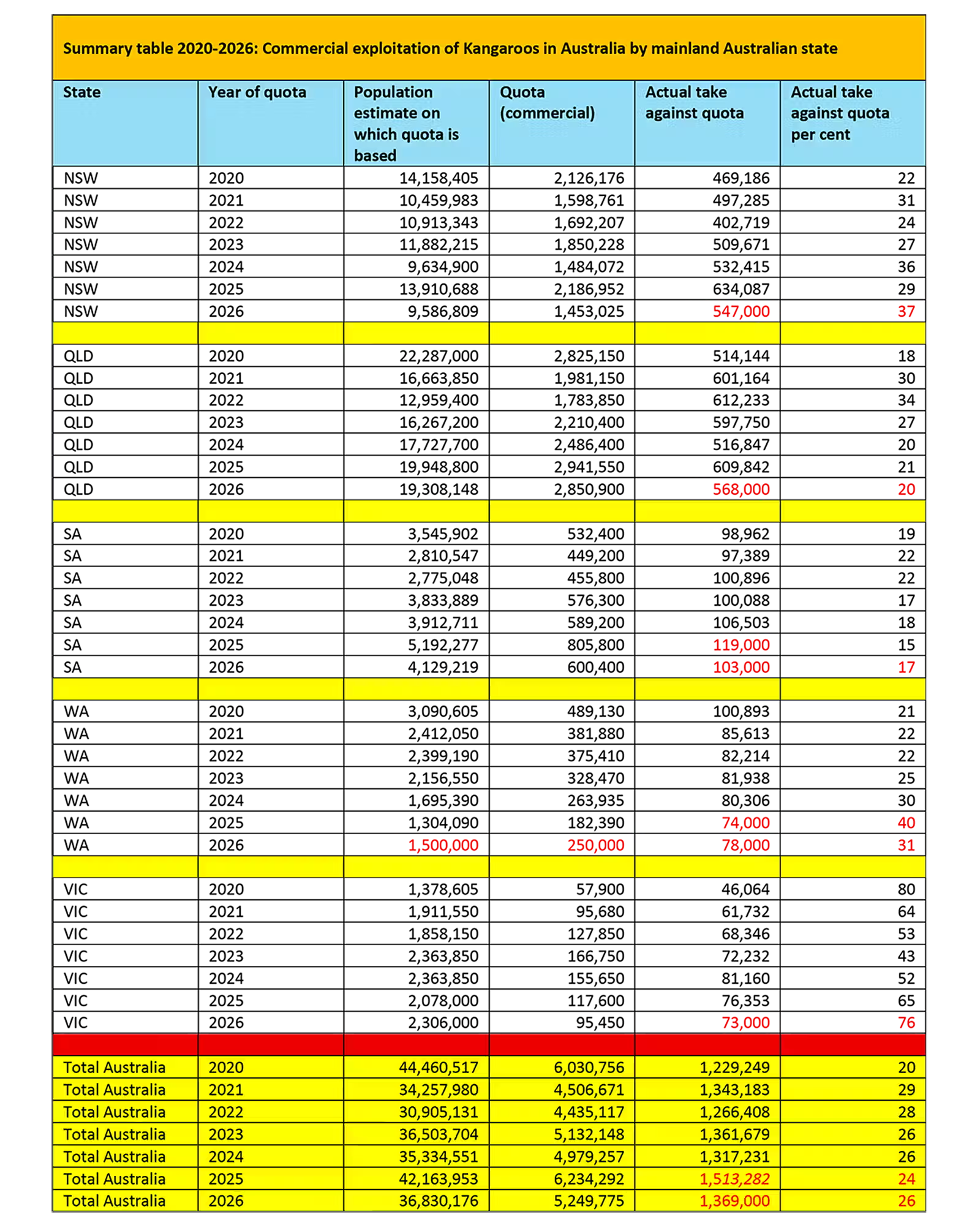
Actual take for 2026 is the Nature Knowledge Channel’s forecast. Other numbers in red are estimates at the time of writing. For 2025 at time of writing, some states had not reported actual take for that year.
Percentage of actual take increases mainly because the quota is lower in a given year. For example, the 2021 quota for all Australia was 1,524,085 lower than the quota in 2020. What was particularly shocking was that for the quota alone, the reduction in the quota between those years was higher than the actual annual take in each year.
South Australia is worth a special mention, because of all mainland Australian states, it has the greatest sustained loss of its Macropod populations. with serial declines, year on year, for the last 30 years, due to over exploitation. Despite the claims of booming populations, a trip around South Australia tells a very different story.
Kangaroo Island Tammar Wallaby: While the species is listed on the commercial list in South Australia its population estimate appears significantly overstated at 87 animals per square kilometer across the entire island and the actual number exploited for commercial gain in 2025 (from the latest data we have) is zero. This adds to the already inflated population estimates in the state and adds to the misconception that the total commercial take of all species in South Australia, as a percentage of population is low, and hence is sustainable.
The South Australian Government's Kangaroo bounties introduced in 2025 will intensify harm to remaining Kangaroo populations in the state. The latest addition to the bounties towards year end being, and I quota the government here:
“A total of $350,000 is available for this initiative to provide incentives for primary producers, to remove starving Kangaroos. These incentives are the subject of these guidelines…. under this incentive, PIRSA is paying primary producers”.
This and more regulation to remove Kangaroo populations from the state, including public land, all going on at pace while the Inquiry into Kangaroo and Wallaby Populations in South Australia was underway. The inquiry has not been completed, and remains so, following the state’s March election.
In 2025 the actual commercial kill was 634,087 (29 per cent of original quota) Kangaroos across all species and zones. In 2025 , there were no reduced or suspended quotas in any zone. The actual commercial kill in 2025 was higher than the earlier estimates which indicated that 545,000 Kangaroo would be killed for commercial gain. The original commercial quota for 2025 was 2,186,952 Kangaroos.
The 2025 commercial actual kill was higher than in 2024 when the kill (now adjusted from earlier reports) was 544,317 Kangaroos.
In 2025, the actual commercial kill by species was:
During 2025, commercial harvest licence conditions required that Kangaroo carcasses delivered to chillers for sale were not to weigh less than 14 kilograms dressed weight or less than 20 kilograms undressed weight. Before1 January 2008, the minimum carcass weights were 12 and 13 kilograms dressed and undressed, respectively. The New South Wales Government says:
“Data collected from shooter returns during 2025 indicate the average carcass weight across all species was 29.5 kilograms for males and 19.5 kilograms for females, higher than the long-term averages, likely to be becauseof the increase in minimum carcass weight requirements made to licence conditions. The New South Wales Government does not require licensees to record individual carcass weights”.
In 2025, licences to harm protected native animals were issued to kill 439,620 Kangaroos within the commercial shooting zones, the majority of regions in which Kangaroos live (excluding national parks). Licensees who submitted reports by early May 2026, reported 187,220 Kangaroos were killed in 2025, these licences were to kill 321,917 (73 per cent of total harms) Kangaroos giving a shortfall of 134,697 animals. A number of licensees had not reported at the time of writing, with this group of licences authorising the killing of up to 117,703 Kangaroos.

The population estimate for Kangaroos in New South Wales has fallen to 9,586,809 from 13,910,688, resulting in a decline in commercial quota for 2026 of 733,927 Kangaroos.
The Queensland Government’s population estimate for the 3 commercially exploited species in Queensland's 5 commercial shooting zones is 19,308,148 giving a commercial quota in 2026 of 2,850,900 with a DMP quota of 386,164.
Our experience of South Australian landscapes is one of total absence. The myths of booming populations and mass starvation, are precisely that, myths. The population estimates for 2026 show a 31 per cent decline in the population of Red Kangaroos.
An increase in the population estimate for Grey Kangaroos in Victoria, leading to a 2026 quota of 207,800, a decrease of the commercial quota when compared to 2025 of 22,150 (the commercial component now being 95,450).
While we wait for the 2026 population estimates and commercial quotas (from 2025 surveys) here is the history of exploitation of Kangaroos in Western Australia.
This is what we know about recent Kangaroo meat exports to the country of export by volume and value as a result of questions on notice, Australian Senate.